
In brief
Your grind setting belongs to a coffee, not to your grinder. Baratza's Encore manual says the setting will need to move "coarser or finer based on variables such as the recipe used, roast level, type of coffee, and taste preference." Röststätte puts it more simply: every coffee has its own recipe.
Start from the setting you used for the last bag, then make one educated guess. Perfect Daily Grind's advice is to grind lighter roasts a little finer and darker roasts a little coarser.
From there, keep everything else the same and move the grind in small steps until the cup tastes balanced. Most of the work is in not changing three things at once.
What you'll need
- Check price — Amazon →
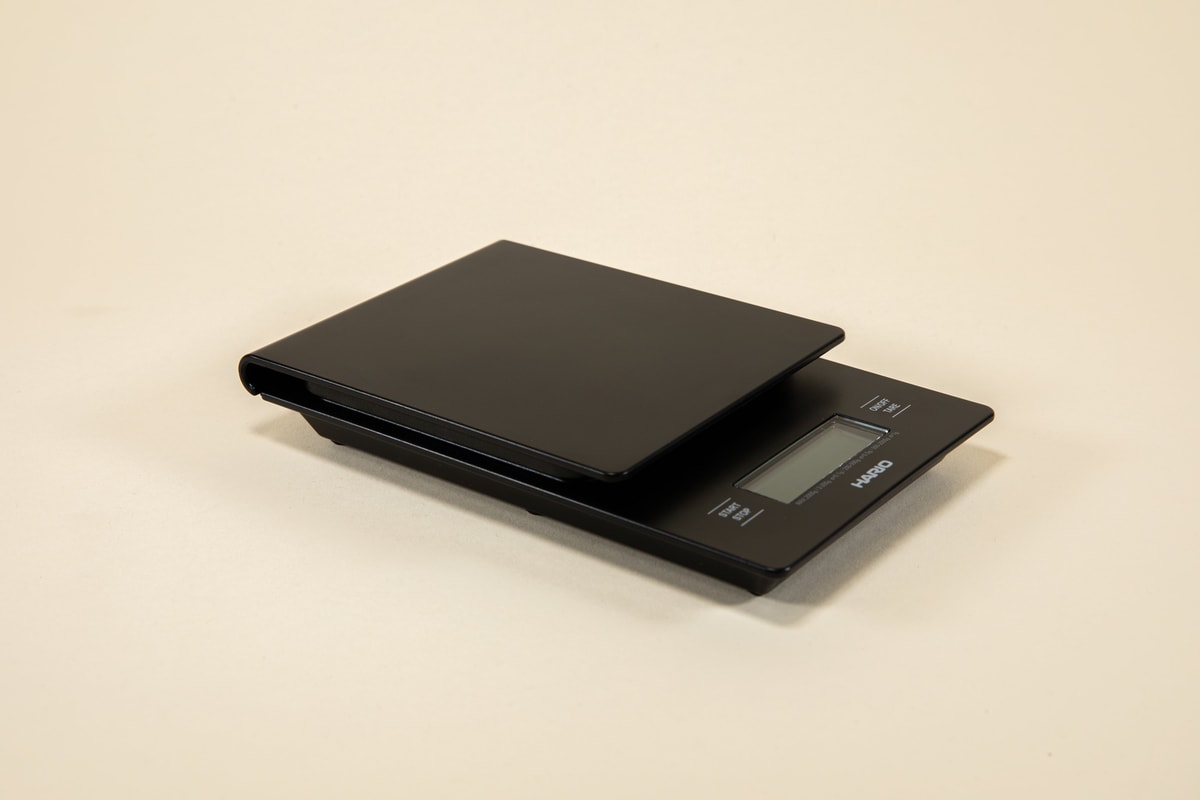 V60 Drip ScaleKeeps dose and water identical between bags, so only the grind changes
As an Amazon Associate, BrewMark earns from qualifying purchases.All the gear our guides use →
On this page · 9 sections
- 1. Start from your last bag's setting
- 2. Check the roast level and nudge the grind
- 3. Check the roast date
- 4. Keep the recipe fixed
- 5. Brew once and read the cup
- 6. Move one or two steps and brew again
- 7. Write it down next to the coffee
- What if the new bag is the same coffee, freshly roasted?
- Should you change the recipe instead of the grind?
1. Start from your last bag's setting
Begin at the setting that worked for the coffee you just finished, with the same recipe. That number already accounts for your grinder, your brewer and your taste, so it is a better starting point than the manual's. If the new coffee is for a different brew method, use the grind converter brew-method presets or your grinder's suggested setting instead.
2. Check the roast level and nudge the grind
Look at how dark the new coffee is compared with the old one. Perfect Daily Grind recommends grinding a light roast "a little finer," because light roasts extract more slowly. Darker roasts extract more readily and tend toward bitterness, so a slightly coarser setting often suits them.
There's a second reason. Darker roasts are more brittle and break into smaller pieces at the same setting. In research Perfect Daily Grind cites, coffee roasted just past first crack had a median particle size of 305 microns, while coffee taken past second crack measured 120 microns.
3. Check the roast date
Find the roast date on the bag. Perfect Daily Grind suggests using beans within two weeks of buying them. If the new bag is older than you're used to, it may need a different setting: grind an older light roast finer to get more out of it, and an older dark roast coarser to avoid harshness.
4. Keep the recipe fixed
Use the same dose, water weight, temperature and pour you used for the last bag. Weighing both coffee and water is the easiest way to make sure only one thing changes. Baratza's dialing-in guide makes the same point for espresso: keep the dose consistent while you adjust the grind.
5. Brew once and read the cup
Make the coffee and note the brew time and taste. For a V60, Baratza's guide aims for under 3 minutes in total. For espresso, it starts from 18 g in, 36 g out, in 25 to 32 seconds.
Then decide which way to go. Baratza's V60 guide reads it like this: a brew that drips too quickly or tastes sharp needs a finer grind; one that runs long, tastes bitter and heavy, or tastes hollow needs a coarser one. For espresso, sour and fast means finer, bitter and slow means coarser.
6. Move one or two steps and brew again
Change the grind by a small amount and repeat the same recipe. Baratza's V60 guide moves one or two settings at a time, and its espresso guide says to adjust in small increments. If you over-shoot, go back halfway. Stop when the cup tastes balanced and sweet rather than when the timer hits a number.
7. Write it down next to the coffee
Note the coffee, roaster, roast date, recipe and final setting. Röststätte recommends writing down your brew ratio and grind size every day. After a few bags you'll see a pattern, such as your light roasts always landing two steps finer, and your first guess on the next bag will be closer.
What if the new bag is the same coffee, freshly roasted?
Start at the same setting and expect only a small change, if any. Fresher beans and a different roast batch can still shift things slightly, so brew once before you adjust. If a setting that used to work is now clearly off with the same coffee, the grinder may have drifted. How to calibrate a grinder explains how to check.
Should you change the recipe instead of the grind?
Grind is the first thing to change, because it moves extraction most predictably. Perfect Daily Grind also suggests hotter water for lighter roasts and cooler water for darker ones. If you've moved the grind and the cup still isn't right, that's a reasonable next variable. Change it on its own, the same way.
Sources
- Perfect Daily Grind: Adjusting a brewing recipe to your coffee roast level
- Perfect Daily Grind: Why are some coffee beans harder to grind than others?
- Baratza: Hario V60 brew guide
- Baratza: Dialing in espresso
- Baratza: Encore operations manual (v4.3, December 2022)
- Röststätte: 10 tips for setting the grind size correctly
By Jeff Gluck · Checked Oct 21, 2026