
In brief
Coffee goes stale through contact with air, moisture, heat and light. The National Coffee Association calls these "their greatest enemies." Good storage keeps all four away.
For daily coffee, that means whole beans in an airtight, opaque container in a cool, dark cupboard, ground just before you brew. Buy only what you will use in a week or two.
For anything longer, freeze the beans in sealed, single-use portions and grind them straight from frozen. Skip the fridge.
What you'll need
- Check price — Amazon →
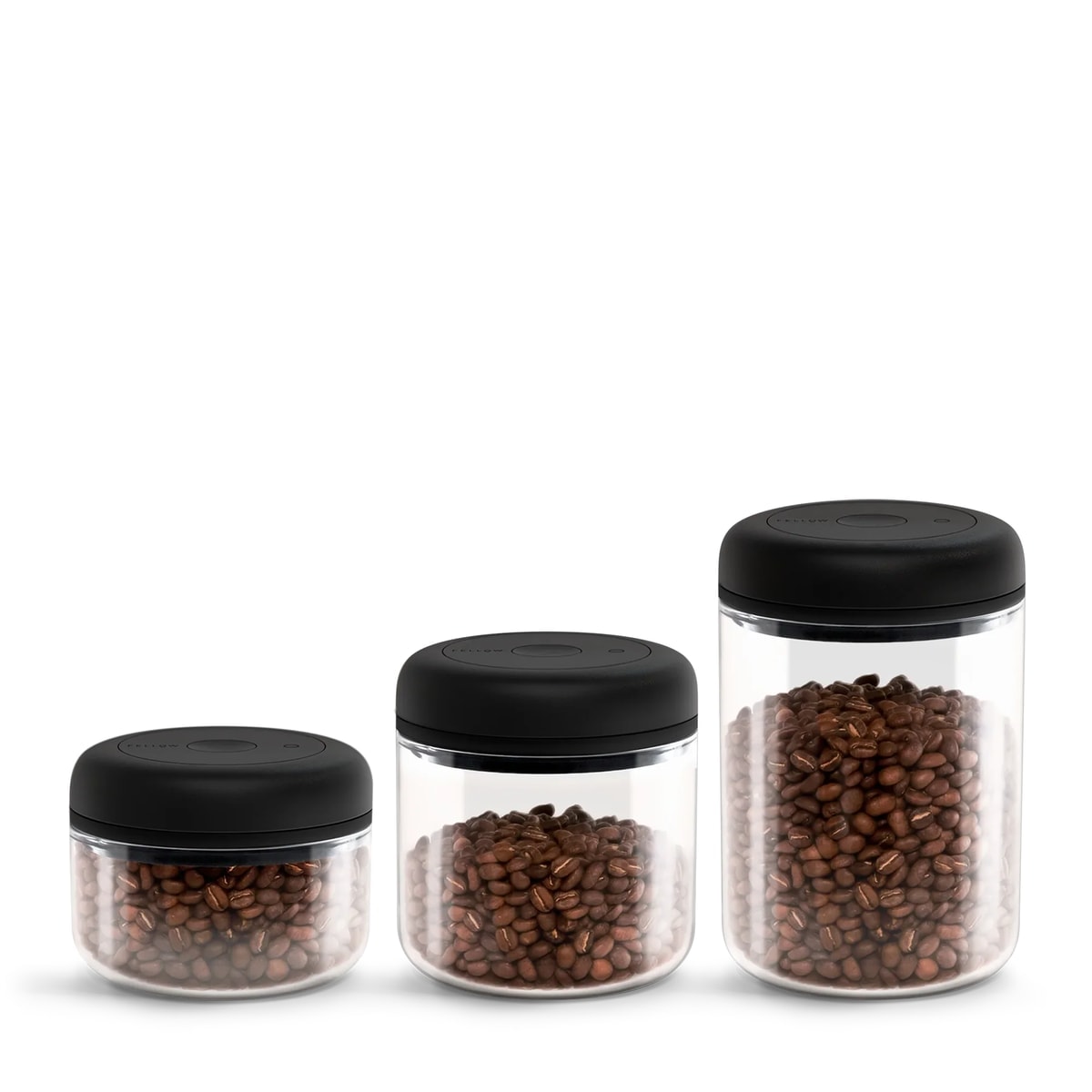 Atmos Vacuum CanisterOpaque steel canister you twist to pull out air, slowing oxidation
As an Amazon Associate, BrewMark earns from qualifying purchases.All the gear our guides use →
On this page · 8 sections
- 1. Buy smaller amounts, more often
- 2. Keep the beans whole
- 3. Move them into an airtight, opaque container
- 4. Store the container somewhere cool and dark
- 5. Freeze what you will not use in two weeks
- 6. Grind from frozen, or thaw sealed
- Should you store coffee in the fridge?
- How long do coffee beans really last?
1. Buy smaller amounts, more often
Buy roughly one to two weeks of coffee at a time. The NCA recommends buying "smaller batches of freshly roasted coffee" because coffee starts losing freshness as soon as it is roasted. Stone Creek Coffee suggests using beans within two to four weeks of roasting for peak flavor.
Check the roast date on the bag, not a best-by date. A bag roasted a few days ago gives you the most time.
2. Keep the beans whole
Grind only what you need, right before you brew. Stone Creek notes that ground coffee oxidizes faster than whole beans. The NCA's own guidance is to "wait to grind your coffee beans," and Stone Creek lists pre-grinding as a storage myth.
The NCA's timeline shows the gap. It gives whole beans one to three weeks at room temperature and ground coffee one to two weeks. If you are still buying pre-ground coffee, a burr grinder is the biggest freshness upgrade you can make. See how to upgrade from a blade grinder or browse grinders.
3. Move them into an airtight, opaque container
Transfer the beans from the retail bag into a container that seals and blocks light. The NCA recommends an airtight container and warns that "clear canisters let in light." Stone Creek suggests glass jars with rubber seals or stainless steel canisters made for coffee.
Many specialty bags have a one-way valve that lets carbon dioxide out without letting air in. Coffee ad Astra explains that the carbon dioxide from fresh coffee pushes oxygen out of a sealed bag at first, but once you open it, oxygen gets in and starts to stale the beans.
Vacuum canisters go a step further by removing air. Fellow's Atmos canister works by twisting the lid to pull air out. Fellow recommends twisting it again every four to five days to keep the vacuum.
4. Store the container somewhere cool and dark
Keep the container in a cupboard or pantry away from appliances and sun. The NCA says to avoid "cabinets near the oven or dishwasher, as well as any areas that get strong afternoon sun." Stone Creek adds that countertops near the stove see constant swings in temperature.
5. Freeze what you will not use in two weeks
If you have more coffee than you can drink while it is fresh, freeze it. The NCA gives whole beans frozen in proper packaging three to four months.
Do it in portions. Perfect Daily Grind recommends freezing beans in "pre-weighed single doses," so you never open and close one big container. Use airtight, freezer-safe containers or vacuum-sealed bags. Perfect Daily Grind reports that professionals see vacuum sealing as the proven way to keep frozen coffee fresh longest. Its quoted roaster George Howell puts it plainly: single doses "will last a week or two, but if you want to wait a month or longer, you need to vacuum seal."
If you freeze a larger container instead, the NCA's rule is to take out no more than a week's worth at a time and put the rest back before condensation forms.
6. Grind from frozen, or thaw sealed
Grind single doses straight from the freezer. Perfect Daily Grind says frozen beans are more brittle and grind into more even particles with fewer fines.
If you thaw beans instead, leave the container sealed until it reaches room temperature. Stone Creek warns that opening a cold container lets moisture condense on the beans.
Should you store coffee in the fridge?
Sources disagree, but the case against it is stronger. The NCA's timeline lists two weeks for whole beans in the fridge, which is no better than a cupboard. Stone Creek calls the fridge a myth: it is "humid and full of odors," and beans "can absorb both and go stale faster." The NCA describes coffee as hygroscopic, meaning it absorbs moisture and odors, so a cool, dark cupboard for daily use and the freezer for long storage is the safer pair.
How long do coffee beans really last?
It depends on how they are stored, and the numbers vary widely by source:
| Storage | Freshness, per source |
|---|---|
| Whole beans, room temperature | 1–3 weeks (NCA) |
| Whole beans, frozen | 3–4 months (NCA) |
| Vacuum-sealed and frozen | More than a year (Coffee ad Astra) |
| Airtight bag | Up to 9 months (Fellow) |
The spread is wide because the sources measure different things. The NCA's figures are short windows for everyday storage. Coffee ad Astra's year-plus result relies on vacuum sealing and freezing together, and Fellow says a vacuum can extend shelf life by up to 50 percent over an airtight bag. For the best-tasting cup, plan around the shorter numbers.
Sources
- National Coffee Association: Storage and shelf life
- Stone Creek Coffee: How to store coffee beans
- Perfect Daily Grind: Are we still freezing coffee?
- Coffee ad Astra: Some strategies to keep your coffee fresh
- Fellow: How vacuum sealing prevents coffee from going bad
By Jeff Gluck · Checked Oct 21, 2026