
In brief
A blade grinder chops beans with a spinning blade, so how fine the coffee ends up depends on how long you hold the button. A burr grinder crushes beans between two burrs set a fixed distance apart, so you choose the size on a dial. In America's Test Kitchen's testing, its favorite burr grinders averaged upwards of 60% medium-size pieces, against 27–44% for blade grinders.
Whether that matters in your cup is honestly contested. In ATK's side-by-side tastings of drip coffee, tasters found "little to no difference" between blade and burr. ATK still prefers burr grinders for their consistency and flexibility, and notes that blade grinders make more fines, which can taste bitter.
So the upgrade is clearest if you brew pour-over or espresso, switch between methods, or want to repeat a cup exactly. If you only make drip coffee and like it, a blade grinder used well is a fair choice.
What you'll need
- Check price — Amazon →
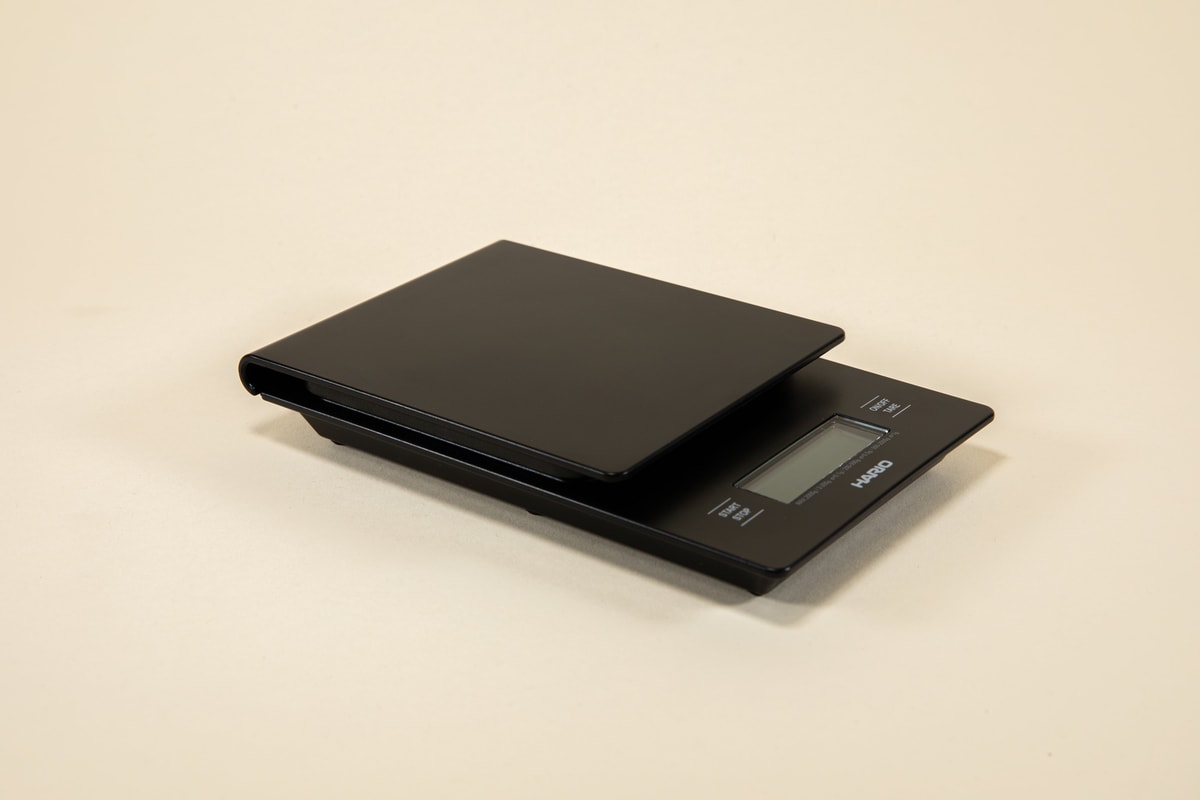 V60 Drip ScaleA burr grinder is set by dial, not by seconds, so you dose by weight
As an Amazon Associate, BrewMark earns from qualifying purchases.All the gear our guides use →
On this page · 9 sections
- 1. Decide what you are upgrading for
- 2. Get more from the blade grinder in the meantime
- 3. Choose hand or electric
- 4. Check the grind range covers your brewers
- 5. Look at cleaning and retention
- 6. Set it up and start from the manual's setting
- 7. Weigh your dose instead of timing the grind
- Is a blade grinder fine for French press?
- Should your first burr grinder be cheap?
1. Decide what you are upgrading for
Start with how you brew. For automatic drip, ATK's taste results suggest you may notice little change. For pour-over, the spread of particle sizes shows up more directly in how the water drains and how the cup tastes. For espresso, you need a burr grinder with fine, repeatable adjustment; ATK suggests 40 or more settings if espresso matters to you. The grinder finder asks about your methods and narrows the list.
2. Get more from the blade grinder in the meantime
If you're not ready to buy, two changes help. In its testing of blade grinders for spices, ATK recommends shaking the grinder gently while it runs and filling it above the blade line. The same habits are worth trying with coffee. Grind for the same length of time each morning so at least the result is repeatable.
3. Choose hand or electric
Decide how much grinding you want to do by hand. A hand grinder suits one or two cups at a time and travels well. An electric grinder is easier when you grind for a full pot or several cups every morning. ATK's top burr picks are both electric: the Baratza Encore ESP as the winner and the Baratza Sette 270 as the upgrade, whose best result was 79% medium-size pieces, among the highest ATK measured.
4. Check the grind range covers your brewers
Make sure the grinder reaches every method you use. ATK suggests at least 10 grind settings for everyday versatility. Look at where the maker puts each method on the dial: the Encore manual's suggested settings run from 8 for espresso to 28 for French press, on a 40-step dial. A grinder built mainly for filter may not grind fine enough for espresso, so check before you buy. You can see dials side by side in grinder comparisons.
5. Look at cleaning and retention
Pick a grinder that is easy to take apart and doesn't leave grounds behind. ATK looked for minimal stray grounds and static cling, and for detachable, replaceable parts that are easy to clean. ATK found no discernible taste difference between conical and flat burrs, so burr shape shouldn't be the deciding factor at this level.
6. Set it up and start from the manual's setting
Grind your usual coffee at the manufacturer's suggested setting for your method. The Encore manual, for instance, suggests 15 for a Hario V60 and 18 for an automatic brewer. Expect the burrs to settle for a week or two of daily brewing; Baratza says no special break-in routine is needed. How to dial in a new grinder walks through the first week.
7. Weigh your dose instead of timing the grind
Switch from grinding "for ten seconds" to weighing the beans. With a burr grinder, the dial sets the size and the scale sets the amount, so you can repeat a recipe exactly. The brew calculator works out the coffee and water for the size of cup you want.
Is a blade grinder fine for French press?
It can work, and ATK's drip tasting suggests the gap is smaller than many guides claim. The catch is control. ATK found blade grinders make more fines, and with a blade the size depends on how long you grind, so it changes from one morning to the next. A burr grinder makes the coarse setting repeatable. If French press is your main method, check that any grinder you consider reaches a properly coarse setting.
Should your first burr grinder be cheap?
Buy for the methods you brew rather than the lowest price. ATK notes that good burr grinders often cost a good deal more than blade models, and that the payoff is consistency and flexibility. A grinder that covers your brewers, is easy to clean and holds its setting will do more for your coffee than extra settings you never use.
Sources
- America's Test Kitchen: The best blade grinders
- America's Test Kitchen: The best burr coffee grinders
- Baratza: Encore operations manual (v4.3, December 2022)
- Baratza: Breaking in your grinder
By Jeff Gluck · Checked Oct 21, 2026