
Which to buy · Every setting
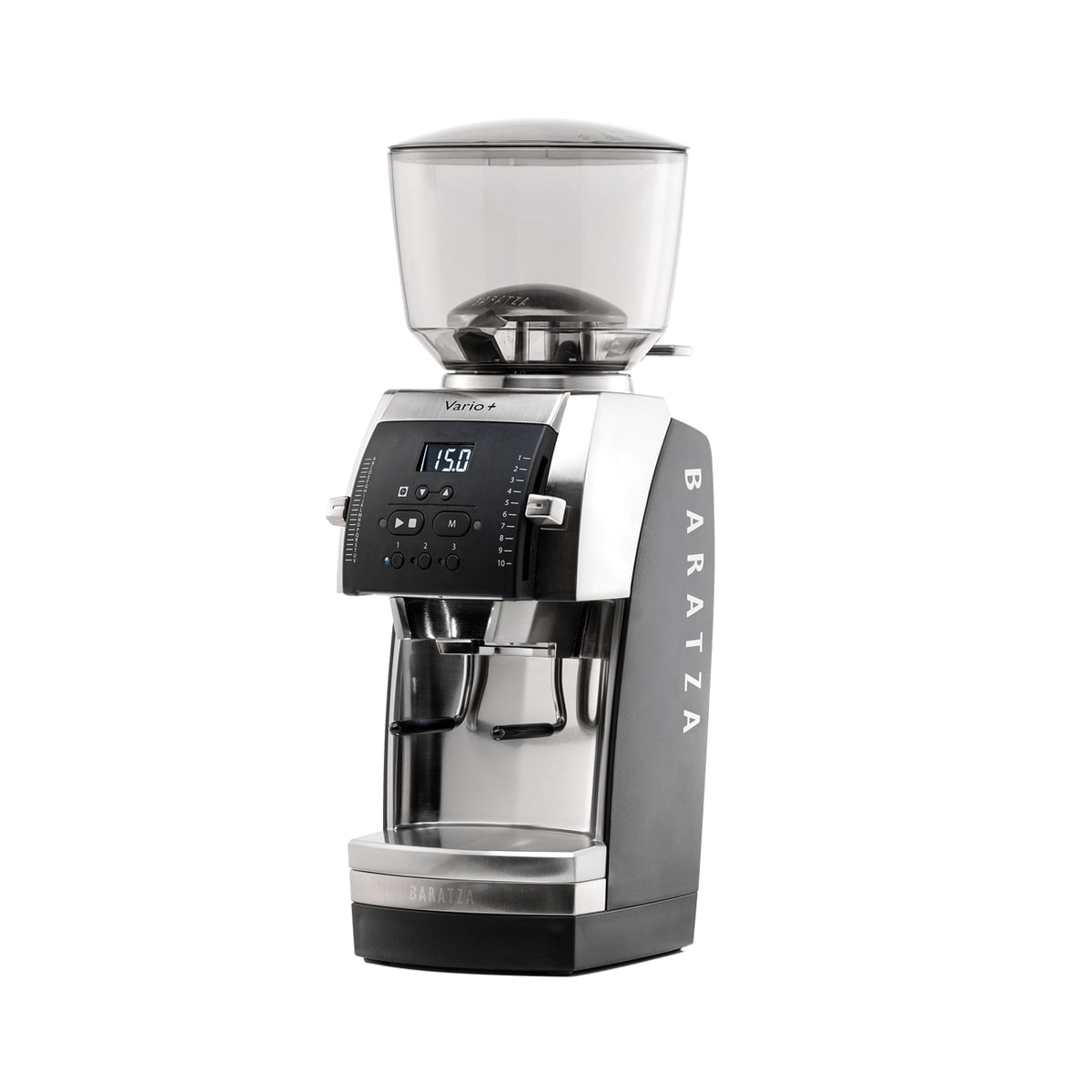
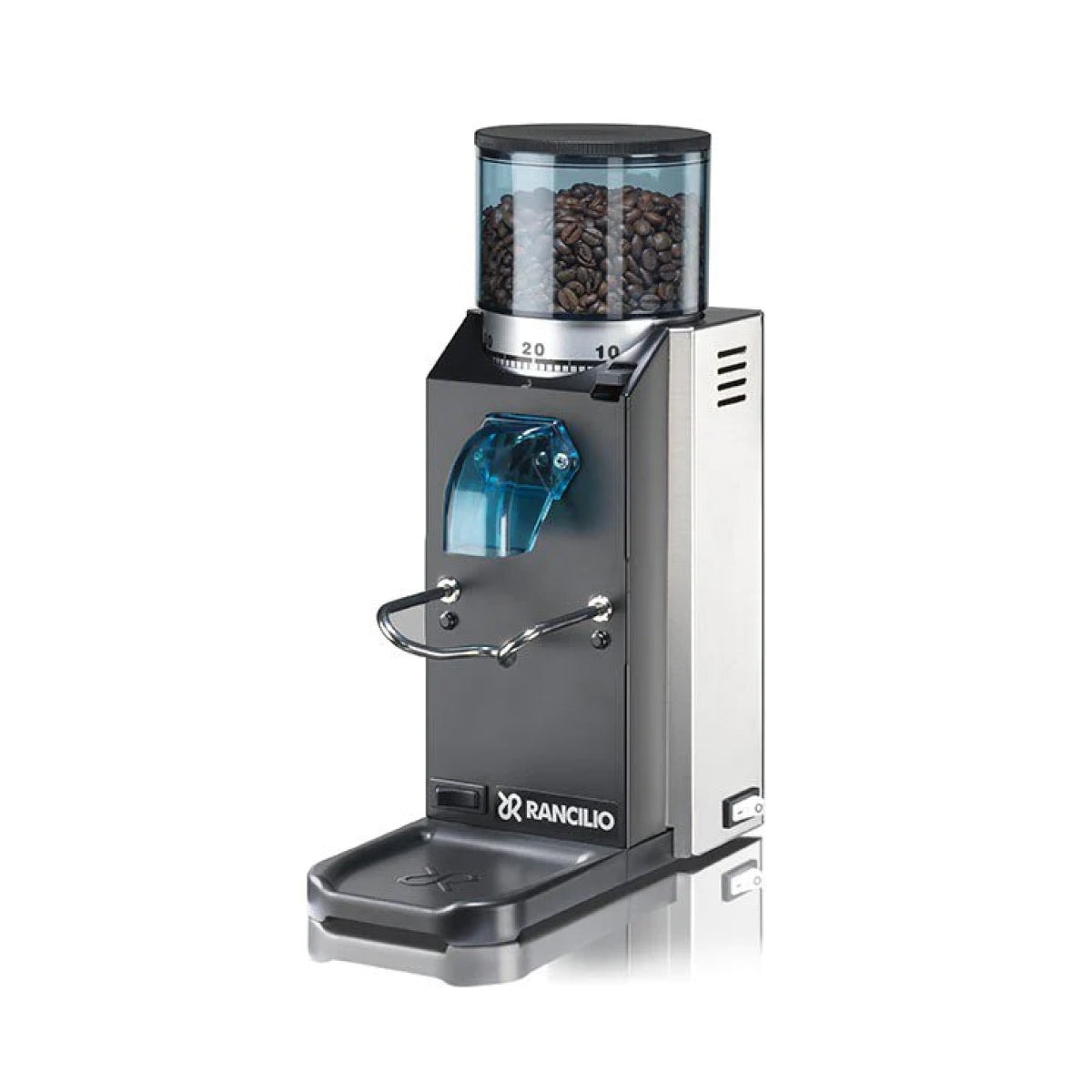
Baratza Vario+ vs Rancilio Rocky
Two grinders cross-shopped at the same money. The Vario+ is numbered 1–130; the Rocky is numbered 0–55.
Which to buy
Choose the
Vario+ if you…
- want timed dosing with three programmable presets
- grind into a portafilter — a PortaHolder comes with it
- want macro and micro levers to set the grind
Choose the
Rocky if you…
- are buying used — Rancilio no longer sells it new
- want one front ring with up to 50 stepped settings
- dose by hand — it has no programmable doses
Shop links are affiliate links: BrewMark earns a commission if you buy through one, at no extra cost to you. The verdicts were written without regard to it.
Rancilio no longer lists the Rocky (its page now returns 404) and sells the Stile as its home grinder, so you'd be buying the Rocky used.
Sources: Baratza — Vario+ · Baratza — Vario+ manual · Rancilio Group — Rocky (archived Jan 2022) · Rancilio Group — Rocky SD specifications (archived May 2022) · Rancilio Group — Stile
| Vario+ | Rocky | |
|---|---|---|
| Brand | Baratza | Rancilio |
| Scale | Numbered dial | Numbered dial |
| Dial range | 1 – 130 | 0 – 55 |
| Burrs | Flat | Flat |
| Espresso → filter | 48.5 numbers | 20 numbers |
| Filter → coarse | 53.3 numbers | 23 numbers |
The same number means different things
Both grinders use a numbered dial, which makes it tempting to copy a number straight across. Setting 28 sits at grind index 0 on the Vario+ but 47.5 on the Rocky — far enough apart to change the cup.
Converting a setting
If a recipe quotes a setting for one of these grinders, read across for the equivalent on the other. Rows are spaced evenly by grind size, not by dial number — on a conical burr those are not the same thing.
| Vario+ | Rocky |
|---|---|
| 2P | 5 |
| 2R | 9 |
| 2V | 14 |
| 4M | 18 |
| 5P | 22 |
| 6S | 26 |
| 7S | 29 |
| 8S | 32 |
| 9T | 36 |
| 10N | 39 |
| 10Q | 42 |
| 10S | 45 |
| 10V | 48 |
| Rocky | Vario+ |
|---|---|
| 5 | 2P |
| 9 | 2R |
| 14 | 2V |
| 18 | 4M |
| 22 | 5P |
| 26 | 6S |
| 29 | 7S |
| 32 | 8S |
| 36 | 9T |
| 39 | 10N |
| 42 | 10Q |
| 45 | 10S |
| 48 | 10V |
Side by side, by brew method
Where each grinder lands for the same brew, worked out from its own dial curve.
| Method | Vario+ | Rocky |
|---|---|---|
| Espresso | 2Q | 8 |
| Moka pot | 2S | 13 |
| AeroPress (short steep) | 4M | 18 |
| Pour over — V60 / cone | 6M | 24 |
| Siphon | 6T | 26 |
| Pour over — flat bottom | 7L | 27 |
| Steep and release — Clever / Switch | 7P | 28 |
| Drip / batch brew | 7S | 29 |
| Cupping | 7V | 30 |
| Chemex | 8S | 32 |
| French press | 10M | 38 |
| Cold brew | 10R | 44 |
The shape of each dial
Where the connectors bunch, that grinder’s dial is compressed and single steps count for more. Comparing the two shapes tells you which gives finer control, and where.
Baratza Vario+
Rancilio Rocky
Dialing in the Vario+
Two-stage adjustment: a macro lever in steps and a micro slider between them. That means a given "setting" is really a pair, and quoting one number without the other loses information — worth remembering when comparing notes with other Vario owners.
Dialing in the Rocky
A stepped espresso grinder that has been the budget recommendation for a very long time. The 55 steps across 50mm flat burrs are its limitation — for espresso you will sometimes want a setting between two of them and there is not one, and a single step can move a shot by seconds. Twenty of those steps cover espresso through filter, which is more resolution than the fine end usually gets at this price. Two things make it an espresso grinder in practice rather than a general one: changing setting means holding the locking lever while twisting the hopper, and it keeps a couple of grams in the chute, so every switch between espresso and pour over costs you both fiddling and coffee. Most owners pick one end and stay there.