
Which to buy · Every setting
DF64 DF64 V2 vs Mahlkönig EK43
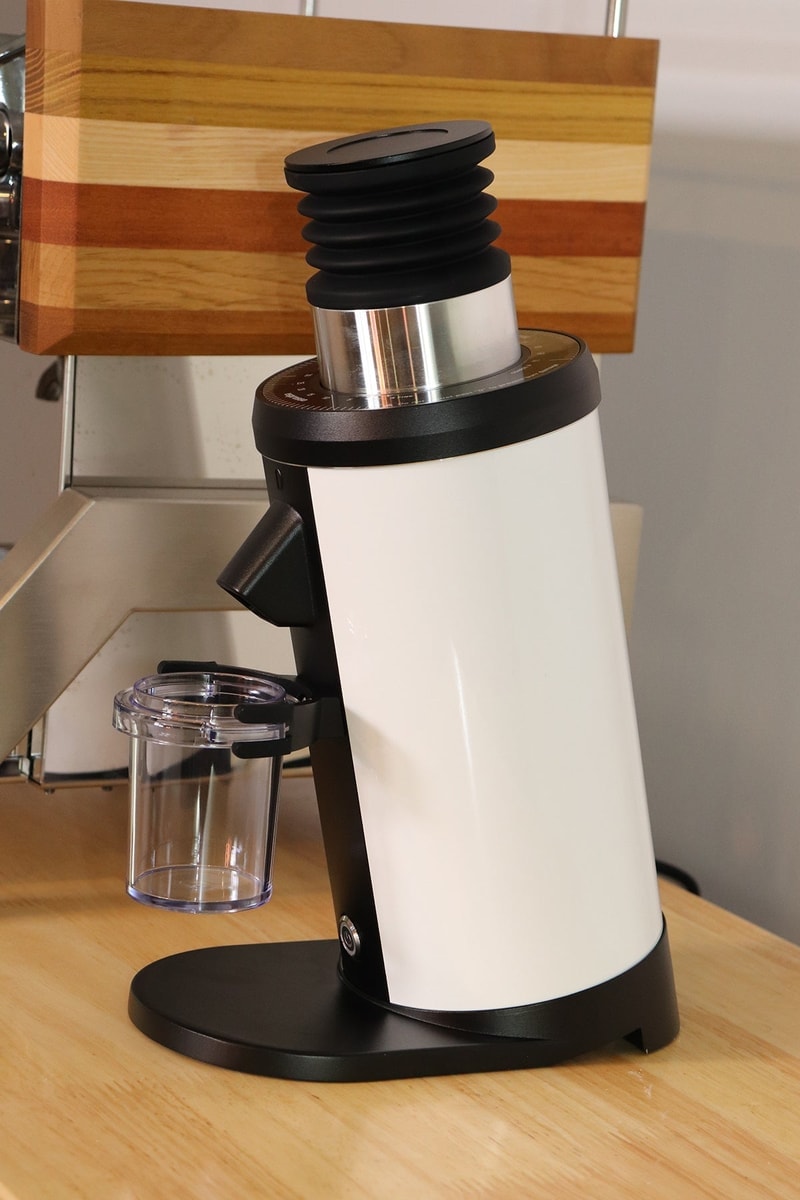
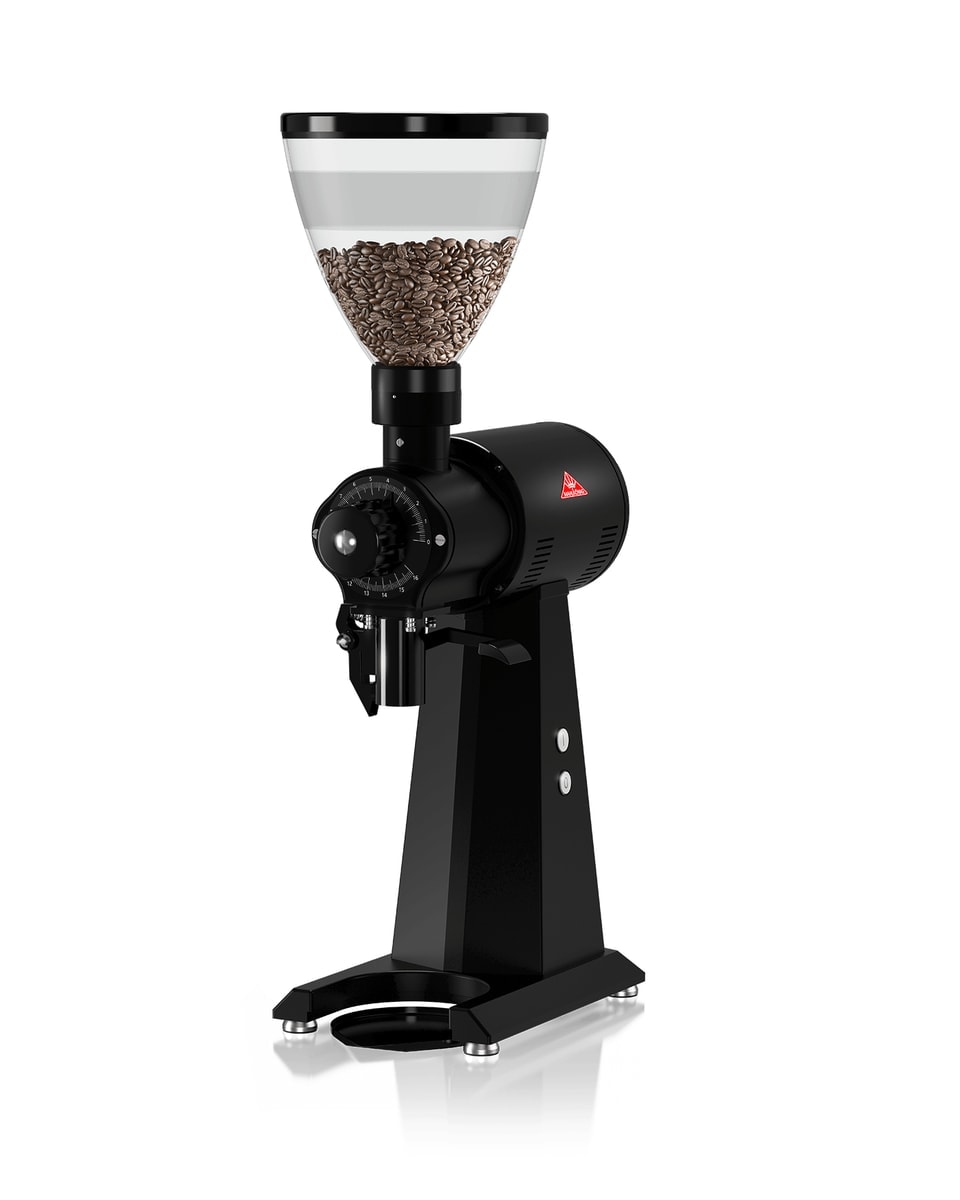
Two grinders cross-shopped at the same money. The DF64 V2 is numbered 0–90; the EK43 is numbered 0–16.
Which to buy
Choose the
DF64 V2 if you…
- single-dose — a 50 g bellows hopper and a 58 mm dosing cup
- want stepless adjustment, with burrs you can swap for Mazzer Super Jolly or Red Speed sets
- are buying used — Turin now lists the first generation only for parts
Choose the
EK43 if you…
- grind in volume — about 19–21 g a second from a 1,200 g hopper
- want 98 mm cast steel flat burrs, stepless from Turkish fine to coarse filter
- have room for a 26 kg grinder, 82.8 cm tall
Shop links are affiliate links: BrewMark earns a commission if you buy through one, at no extra cost to you. The verdicts were written without regard to it.
Turin no longer sells the first-generation DF64; it now sells the DF64 Gen 2 and lists Gen 1 only for parts.
Sources: Turin — DF64 (archived, Aug 2022) · Turin — catalogue · Mahlkönig — EK43 · Mahlkönig USA — EK43
| DF64 V2 | EK43 | |
|---|---|---|
| Brand | DF64 | Mahlkönig |
| Scale | Numbered dial | Numbered dial |
| Dial range | 0 – 90 | 0 – 16 |
| Burrs | Flat | Flat |
| Espresso → filter | 55.5 numbers | 7 numbers |
| Filter → coarse | 22.2 numbers | 7 numbers |
The same number means different things
Both grinders use a numbered dial, which makes it tempting to copy a number straight across. Setting 8 sits at grind index 0 on the DF64 V2 but 27.5 on the EK43 — far enough apart to change the cup.
Converting a setting
If a recipe quotes a setting for one of these grinders, read across for the equivalent on the other. Rows are spaced evenly by grind size, not by dial number — on a conical burr those are not the same thing.
| DF64 V2 | EK43 |
|---|---|
| 12.2 | 2 |
| 20.8 | 4.8 |
| 30.4 | 7.1 |
| 43.7 | 7.8 |
| 57 | 8.5 |
| 68 | 9.3 |
| 69.2 | 10.7 |
| 70.5 | 12.1 |
| 71.8 | 13.4 |
| 75.2 | 14.3 |
| 80.1 | 14.9 |
| 85 | 15.4 |
| 89.9 | 16 |
| EK43 | DF64 V2 |
|---|---|
| 2 | 12.2 |
| 4.8 | 20.8 |
| 7.1 | 30.4 |
| 7.8 | 43.7 |
| 8.5 | 57 |
| 9.3 | 68 |
| 10.7 | 69.2 |
| 12.1 | 70.5 |
| 13.4 | 71.8 |
| 14.3 | 75.2 |
| 14.9 | 80.1 |
| 15.4 | 85 |
| 16 | 89.9 |
Side by side, by brew method
Where each grinder lands for the same brew, worked out from its own dial curve.
| Method | DF64 V2 | EK43 |
|---|---|---|
| Espresso | 17.4 | 3.7 |
| Moka pot | 27.7 | 7 |
| AeroPress (short steep) | 35 | 7.8 |
| Pour over — V60 / cone | 64.5 | 8.8 |
| Siphon | 68 | 9.3 |
| Pour over — flat bottom | 68.5 | 9.8 |
| Steep and release — Clever / Switch | 68.9 | 10.3 |
| Drip / batch brew | 69.2 | 10.7 |
| Cupping | 69.5 | 11 |
| Chemex | 70.5 | 12 |
| French press | 73.5 | 14.1 |
| Cold brew | 82.9 | 15.2 |
The shape of each dial
Where the connectors bunch, that grinder’s dial is compressed and single steps count for more. Comparing the two shapes tells you which gives finer control, and where.
DF64 DF64 V2
Mahlkönig EK43
Dialing in the DF64 V2
A single-dose flat-burr grinder that became popular by putting commercial-size burrs at a domestic price. The burr set fitted matters more to grind character than the dial does, and swapping burrs is common enough that published numbers vary between owners.
Dialing in the EK43
The grinder that changed what filter coffee was supposed to taste like, and still the reference for high-clarity brewing. Its very large flat burrs produce an unusually narrow particle distribution, which is why coffee ground on an EK often tastes cleaner at the same nominal setting than it does elsewhere. Stepless, so treat the numbers as targets.