
In brief
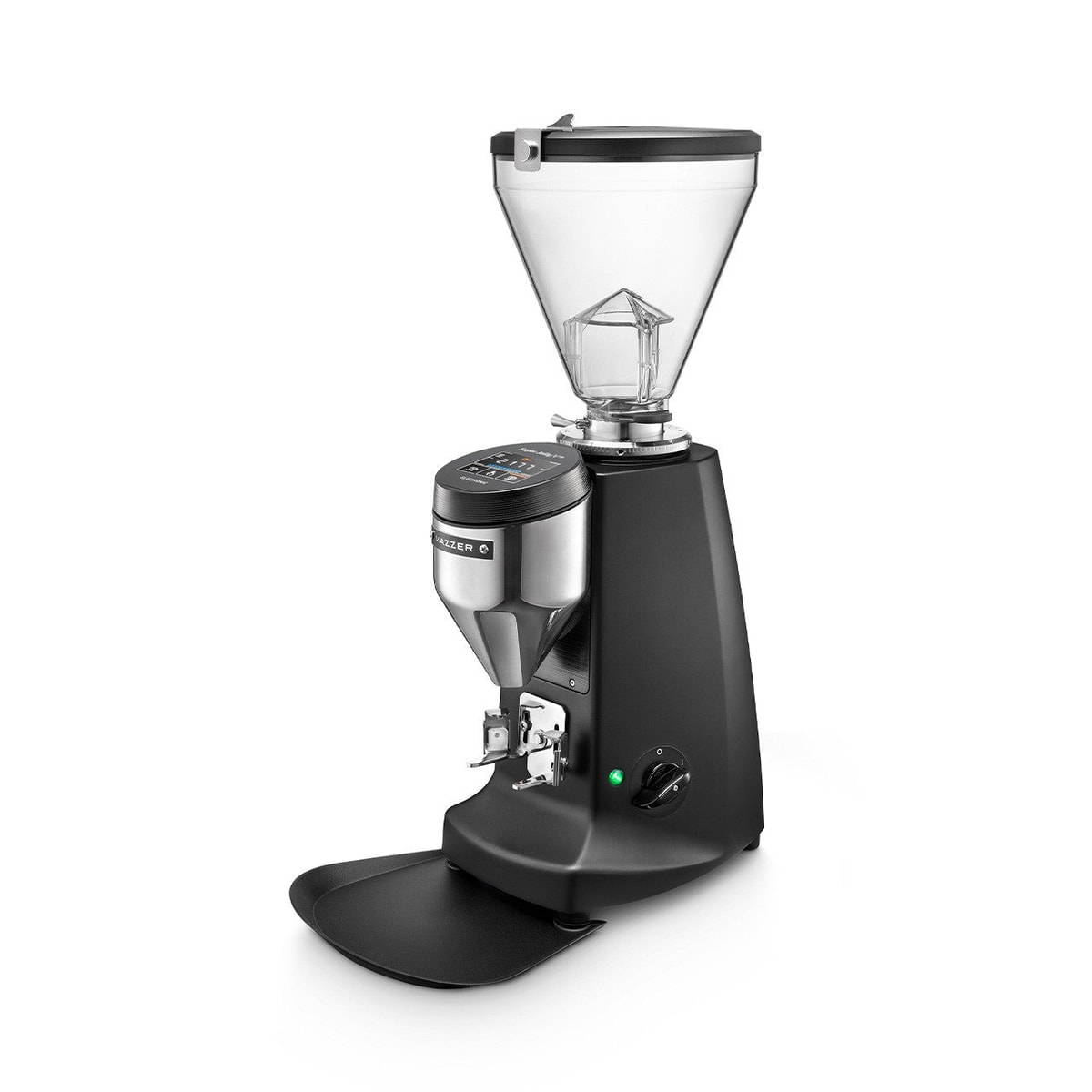
The Super Jolly is Mazzer's mid-size café grinder. Mazzer pitches it at small to medium cafés and says it pays tribute to the 1971 Jolly. Home baristas buy it for the same reason cafés do: it is built to run all day.
Mazzer sells several versions. The price on this page is for the Super Jolly V Up, which Mazzer lists as the Super Jolly Up.
It has 64 mm flat burrs, a touch display and timed doses. Mazzer also sells a newer Super Jolly with a Memory Track System for indexing settings and optional IoT.
The trade-off is size. This is a café machine on a home counter, with the height and workflow that comes with that.
What it does well
- 64 mm burr platform that Prima Coffee notes accepts many aftermarket burrs, such as SSP
- Stepless adjustment, programmable timed doses and hands-free grinding, per Mazzer
- Mazzer's Grind Flow Control damper to cut clumping and counter mess
- A Home-Barista owner reports little to no retention on a Super Jolly with a bellows
Where it falls short
- Prima says the V Up lacks the V Pro's zero-reference system for reassembly without losing your setting
- Very tall: Mazzer lists 595 mm with the standard hopper
- Built for café espresso; Mazzer lists espresso as its extraction method
Specs
- Type
- Electric, Flat burrs
- Burrs
- 64 mm flat, steel
- Adjustment
- Stepless micrometric
- Speed
- 3–4 g/s (Prima Coffee, V Up)
- Dosing
- Touch display, timed doses, portafilter-activated button
- Capacity
- 1.1 kg hopper
- Size
- 595 mm tall with standard hopper (Mazzer)
- Weight
- 16.5 kg (Mazzer)
On this page · 5 sections
What it does well
The burr platform is the big draw. Mazzer says its re-engineered 64 mm burrs cut dosing time by 20%, and Prima Coffee puts output at 3 to 4 g per second.
Prima adds that the 64 mm platform accepts aftermarket burrs, such as SSP's.
Adjustment is stepless. Mazzer lists stepless micrometric adjustment, so espresso can be set anywhere between two marks.
Workflow is café-simple. Mazzer and Prima list a portafilter-activated button for hands-free grinding, a height-adjustable fork and programmable doses. Prima says the dose buttons adjust in hundredths of a second, with a pause if a dose is interrupted.
Mazzer fits its Grind Flow Control damper. Prima describes it as a clump crusher for fluffier, low-static grounds and easier chute cleaning.
Retention can be low with technique. Mazzer calls it a low-retention grinder.
On Home-Barista, a Super Jolly owner reports "very little to no retention" when using a bellows. That is one owner, and the model year is not stated.
Where it falls short
The V Up is the stripped-down version. Prima says it drops the V Pro's MTR system, which lets the Pro be reassembled without disturbing the grind setting or zero point. On the V Up, expect to re-find your setting after a deep clean.
It is very tall. Mazzer lists 595 mm with the standard 1.1 kg hopper. Mazzer lists a 0.32 kg hopper that brings it to 495 mm, so check your cabinets before you buy.
Dosing is by time from a hopper. That suits one house espresso, not a shelf of different beans weighed out each morning. Our page on grind retention explains why that matters when you switch coffees.
It is an espresso grinder. Mazzer lists espresso as its extraction method, and none of the retailers above pitch it for pour-over.
Who should buy it, and who shouldn't
Buy it if you pull a lot of espresso, want a long-running café model line, and like the idea of trying aftermarket burrs. It also fits a small café or coffee cart.
Skip it if your kitchen has low upper cabinets, you brew mostly filter, or you weigh and swap beans for every cup. A single-dose home grinder will suit you better.
How it compares
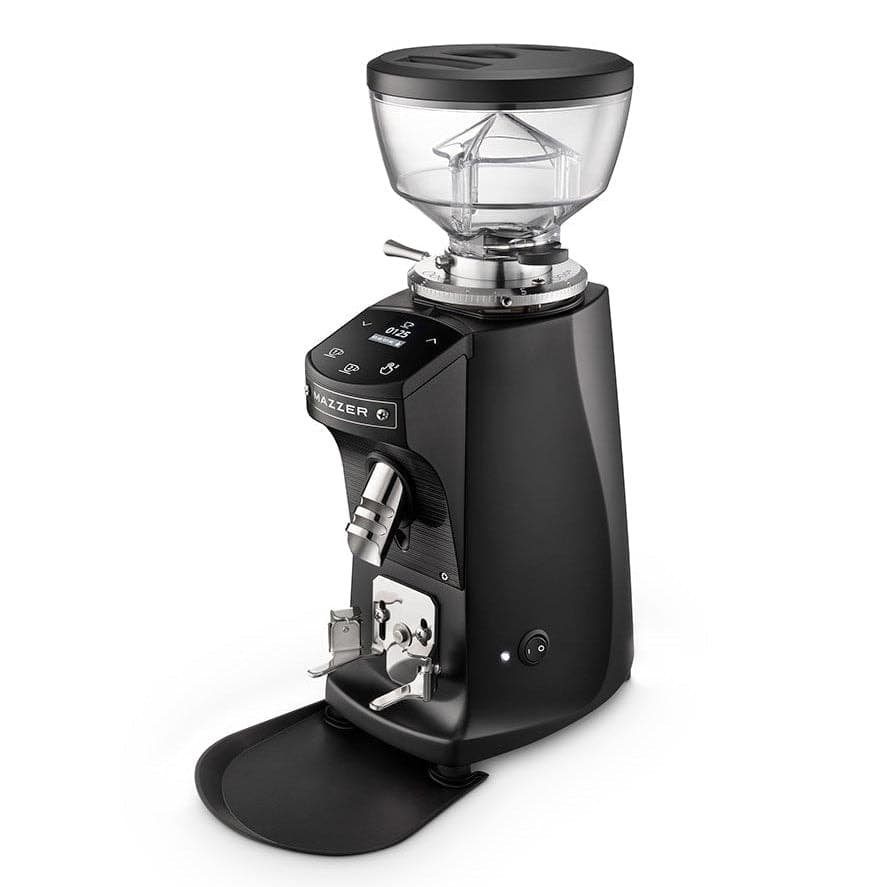
The Mazzer Mini is the smaller sibling. Mazzer calls it a compact light commercial grinder with stepless grind control. It pitches the Mini at small cafés and coffee carts, and the Super Jolly at small to medium cafés.
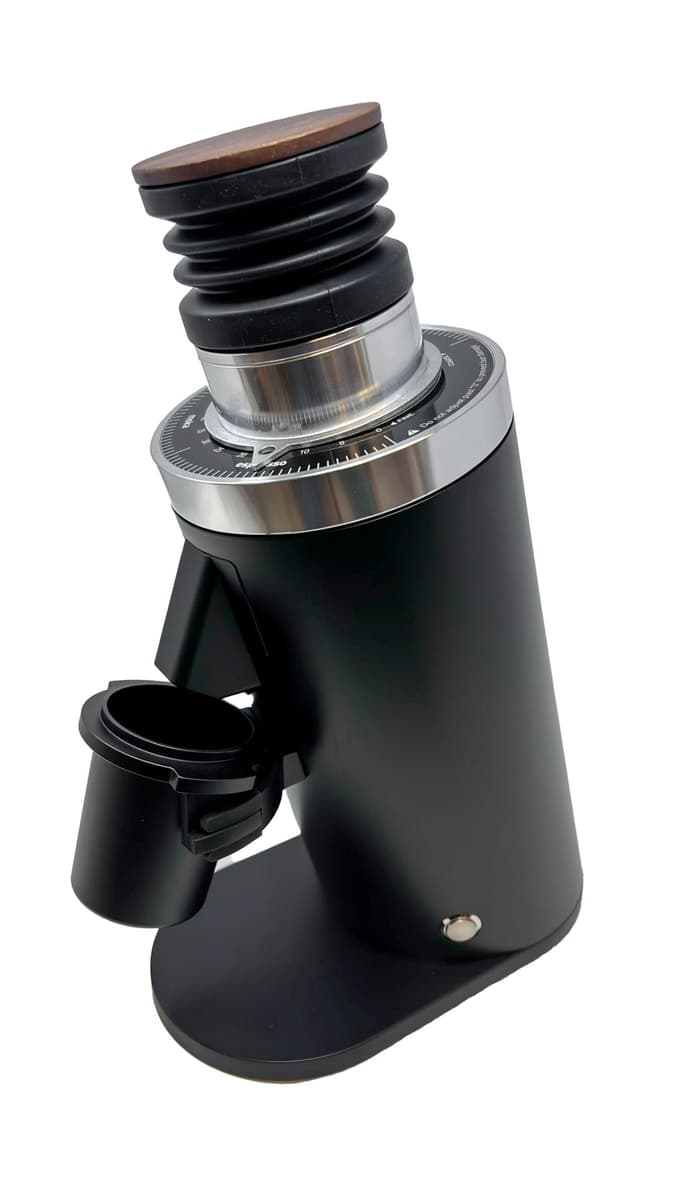
The DF64 Gen 2 uses the same 64 mm burr size in a single-dose home grinder.
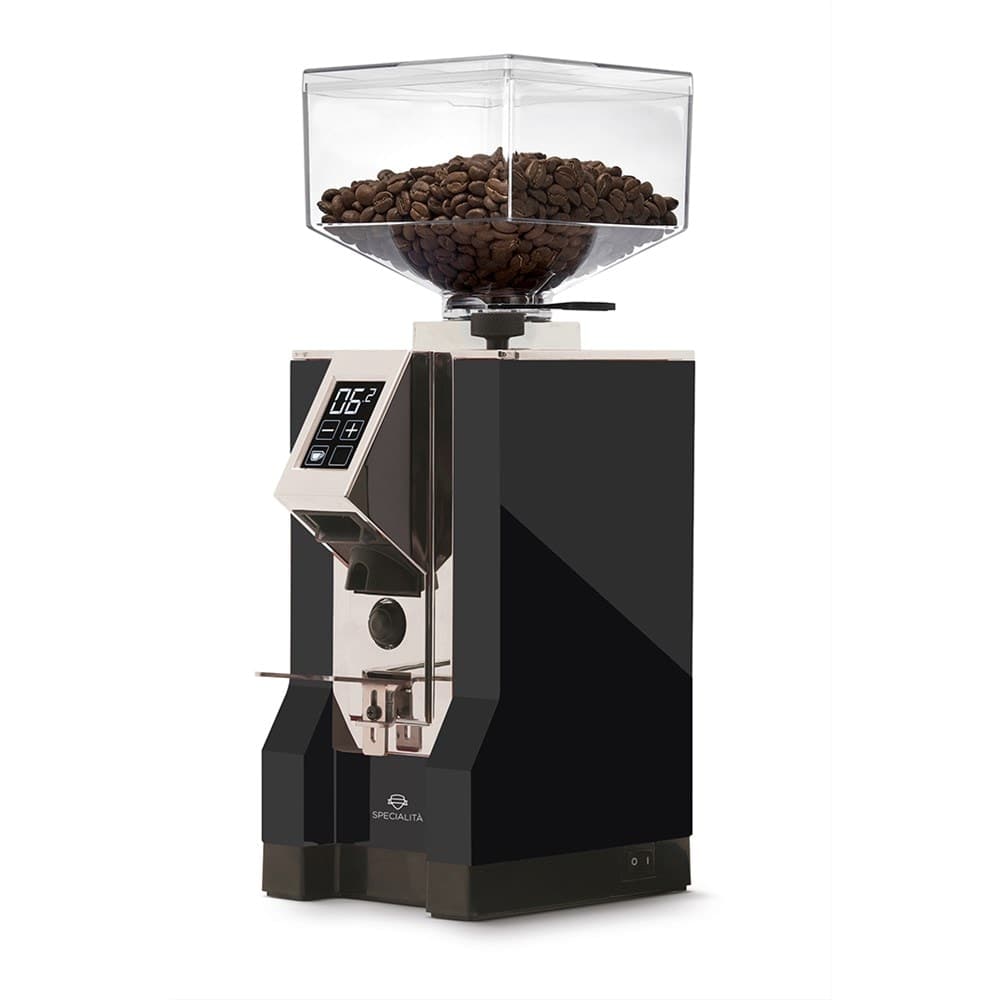
The Eureka Mignon Specialità is far smaller and built for home, with a similar stepless, timed workflow. If you are upgrading from a Rancilio Rocky, the grinder finder lists other espresso grinders to weigh it against.
Owning it
Mazzer promises easy chamber cleaning without losing the setting on its newer Super Jolly. On the V Up, Prima's note about the missing MTR system means a full clean may move your setting. Our guide to cleaning a burr grinder covers the routine.
Mazzer says its burrs are 100% made in Italy by Mazzer, and it sells burrs as their own line. Prima also points to aftermarket 64 mm options. For the swap itself, see how to replace grinder burrs.
Warranty depends on who sells it. Prima lists one year parts and labour through Prima. BrewMark does not publish settings for the Super Jolly, because Mazzer counts collar numbers from the point where the burrs touch and that point differs between units; its settings page gives Mazzer's own reference points, and dialing in a new grinder covers the rest.
Also worth a look
Sources
- Mazzer: Super Jolly Up
- Mazzer: Super Jolly
- Mazzer: Mini
- Seattle Coffee Gear: Mazzer Super Jolly V Up Commercial Espresso Grinder
- Prima Coffee: Mazzer Super Jolly V Up Electronic Espresso Grinder
- Home-Barista: Mazzer Super Jolly/Major vs Eureka/Niche SD grinder
- Mazzer: Tutorial (suggested grain size)
By Jeff Gluck · Checked 2026-10-22