
In brief
A scale is what makes a grind change mean anything. If you measure coffee with a scoop, the dose drifts from day to day, and you cannot tell whether the grinder or the scoop changed the cup. Weigh the beans and the water, and the grind is the only thing left moving.
For pour-over, you need 0.1 g resolution for the beans and a built-in timer. For espresso, you need 0.1 g on the shot itself, and it helps if the scale is small and shrugs off spills.
You do not need app control or flow-rate graphs to brew well. They help if you like data. Buy the simplest scale that reads finely enough for the way you brew.
What you'll need
- Check price — Amazon →
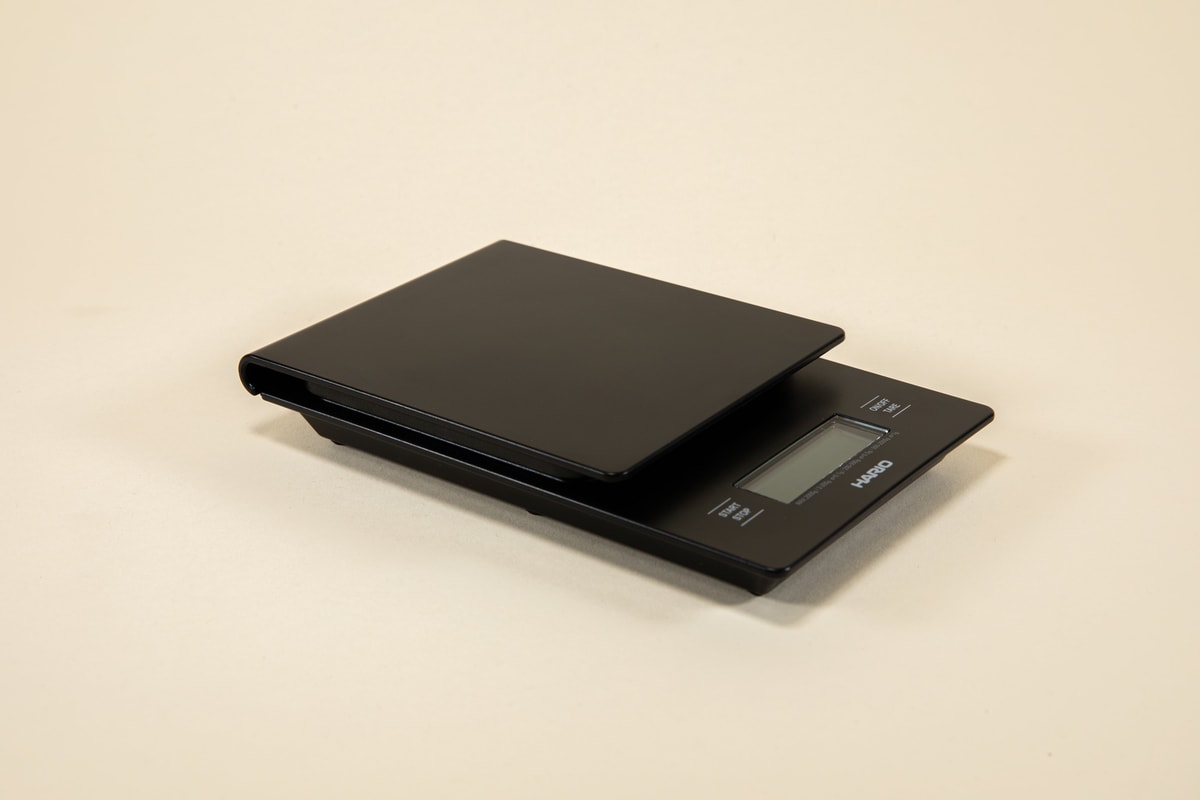 V60 Drip ScaleSimple pour-over scale with a timer; reads 0.1 g up to 200 g
- Check price — Amazon →
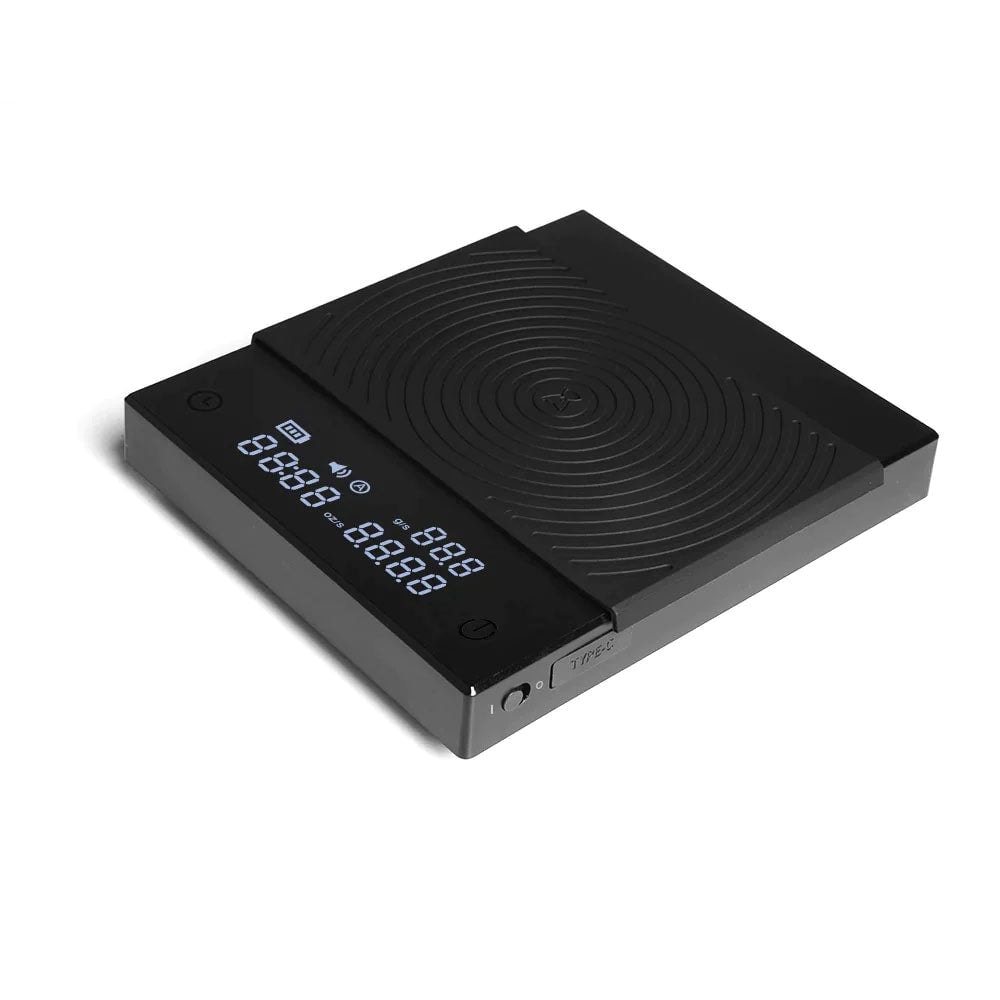 TIMEMORE Basic 2.0 Electronic Espresso Scale with TimerWeighs from 0.1 g up to 2 kg, with an automatic timer, a flow-rate function and a rechargeable battery
- Check price — Amazon →
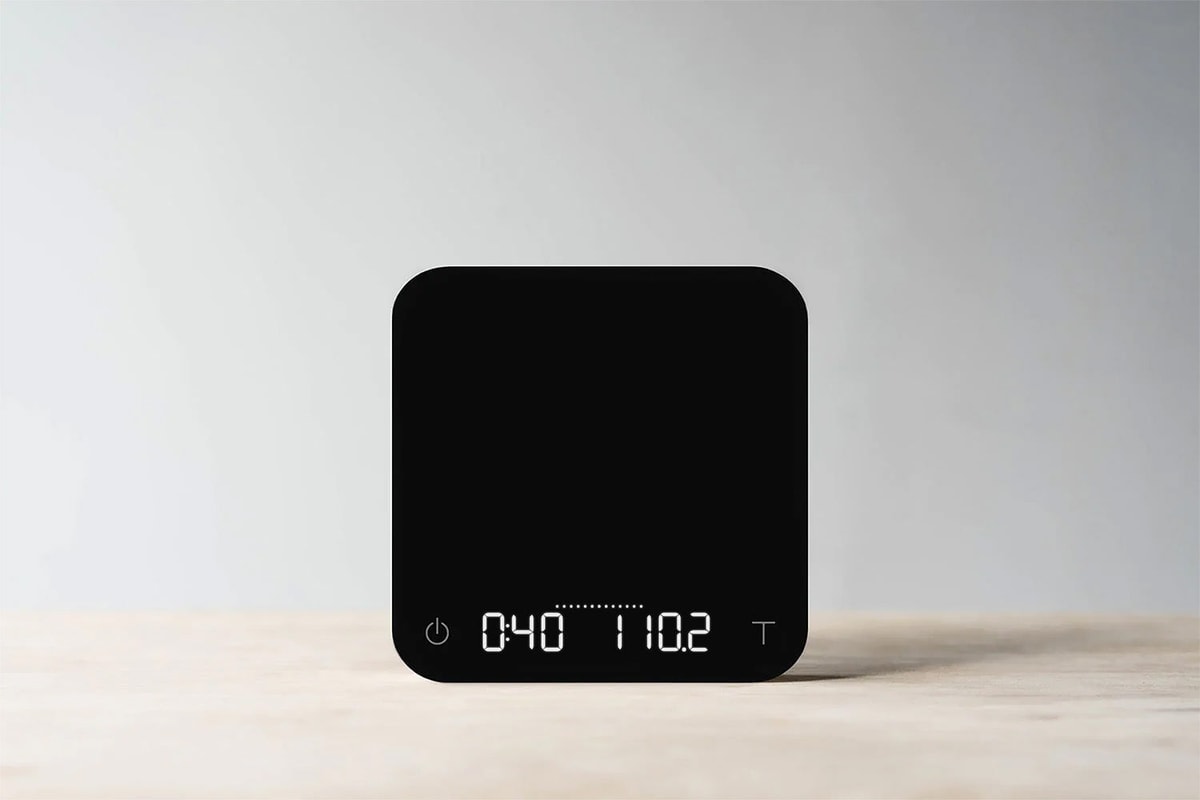 Pearl0.1 g Bluetooth scale with auto-start timer and flow-rate modes for pour-over
- Check price — Amazon →
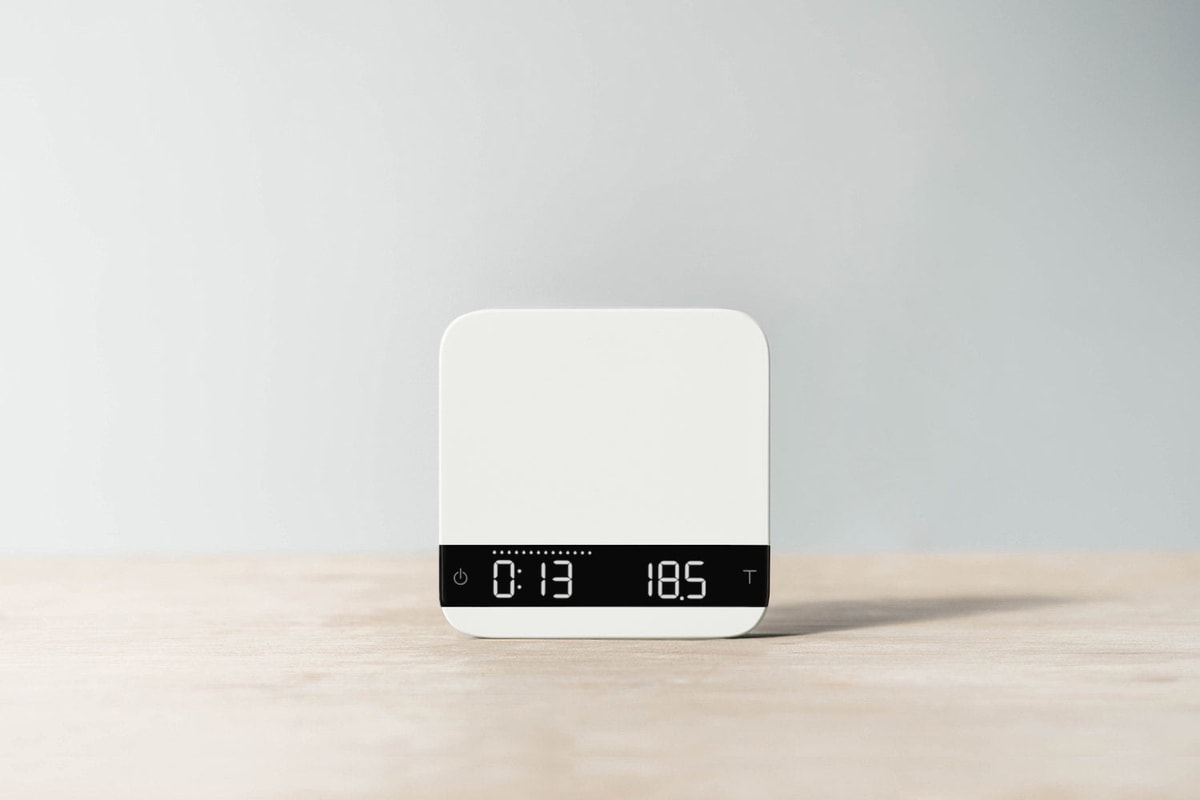 LunarCompact, water-resistant espresso scale with auto timer and tare modes
As an Amazon Associate, BrewMark earns from qualifying purchases.All the gear our guides use →
On this page · 8 sections
1. Work out what you need to weigh
List what goes on the scale: the beans before grinding, the water as you pour, or the espresso as it runs. Each asks something different.
Baratza's V60 recipe uses 20 g of coffee and 320 g of water. Perfect Daily Grind's espresso guide starts at a 1:2 ratio, so an 18 g dose makes about 36 g of espresso, and it suggests changing the dose in steps as small as 0.2 g. A scale reading only whole grams cannot show that change.
2. Check the resolution across the range you use
Look for 0.1 g readings, and check whether that holds at the weight you work at. Some scales get coarser as the load increases.
Hario's V60 Drip Scale is a good example. Hario lists it at 0.1 g from 2 to 200 g, 0.5 g from 200 to 500 g and 1 g from 500 g to 2 kg. That is fine for weighing beans and for pouring a single cup. Timemore says its Basic 2.0 measures from 0.1 g up to 2 kg, with a minimum detection weight of 0.5 g, but does not say the resolution stays at 0.1 g across that range. Acaia lists both the Pearl and the Lunar at 0.1 g up to 2 kg, and the Lunar can optionally read to 0.01 g.
3. Make sure it has a timer
Choose a scale with a built-in timer, so weight and time sit on one display. Brew time is how you judge a grind change. A pour-over that runs long or a shot that runs fast tells you which way to adjust.
All four scales here have one. Acaia's Pearl has an auto-start timer mode, and Timemore lists an automatic timer on the Basic 2.0. Starting hands-free saves a hand when you are holding a kettle.
4. Size it for your brewer
Measure the space where the scale will sit. Pour-over scales need room for a dripper and carafe. Espresso scales need to fit under the portafilter on the drip tray.
Acaia's Pearl measures 160 by 160 mm. Its Lunar measures 105 by 105 mm and only 15 mm tall, and Acaia sells it as its espresso scale. Hario's V60 Drip Scale is 120 by 190 mm, sized for a dripper and server.
5. Check how it handles water
Decide how wet the scale will get. Espresso machines drip, and pour-over spills. Hario says its V60 Drip Scale is not water resistant. Timemore describes the Basic 2.0's surface as waterproof, with a sealed charging port. Acaia describes the Lunar as water-resistant and covers water damage under its two-year warranty.
Battery matters too. The Timemore and both Acaia scales recharge over USB. Hario's runs on batteries, which ship in the box.
6. Weigh your beans before you grind
Once the scale arrives, weigh every dose before it goes into the grinder. This matters most on single-dosing grinders like the Fellow Ode Gen 2 or Niche Zero, where what goes in is what you brew. Keep the dose fixed and change only the grind while you dial in. The brew calculator works out water for any dose and ratio.
Can you use a kitchen scale?
You can for beans and pour-over water, if it reads to 0.1 g or at least 1 g and responds quickly. Most kitchen scales read in whole grams and have no timer. That is workable for a French press, but too coarse to follow an espresso shot.
Which scale suits espresso?
A small, water-resistant scale that reads 0.1 g and starts its timer on its own. Acaia's Lunar is built for this. A general scale like the Timemore Basic 2.0 also measures from 0.1 g, so it can work if it fits on your drip tray. For the rest of the routine, see how to choose an espresso machine for your grinder.
Sources
- Hario USA: V60 Drip Scale
- Timemore: Basic 2.0 Electronic Espresso Scale with Timer
- Acaia: Pearl
- Acaia: Lunar
- Perfect Daily Grind: A guide to dialling in espresso
- Baratza: Hario V60 brew guide
By Jeff Gluck · Checked Oct 21, 2026