
In brief
For espresso, the grinder matters as much as the machine, and it decides which machine makes sense. Perfect Daily Grind warns that even a slight error in grind size can make a huge difference to a shot. A machine can only work with the grind it is given.
The key link is the basket. Single-wall baskets let the coffee itself create the resistance, so they need a grinder that can go fine and adjust in small steps. Dual-wall, or pressurized, baskets create resistance for you, so they forgive a grinder that cannot.
So start from the grinder you own or plan to buy. Then choose a machine whose baskets and portafilter suit it.
What you'll need
- Check price — Amazon →
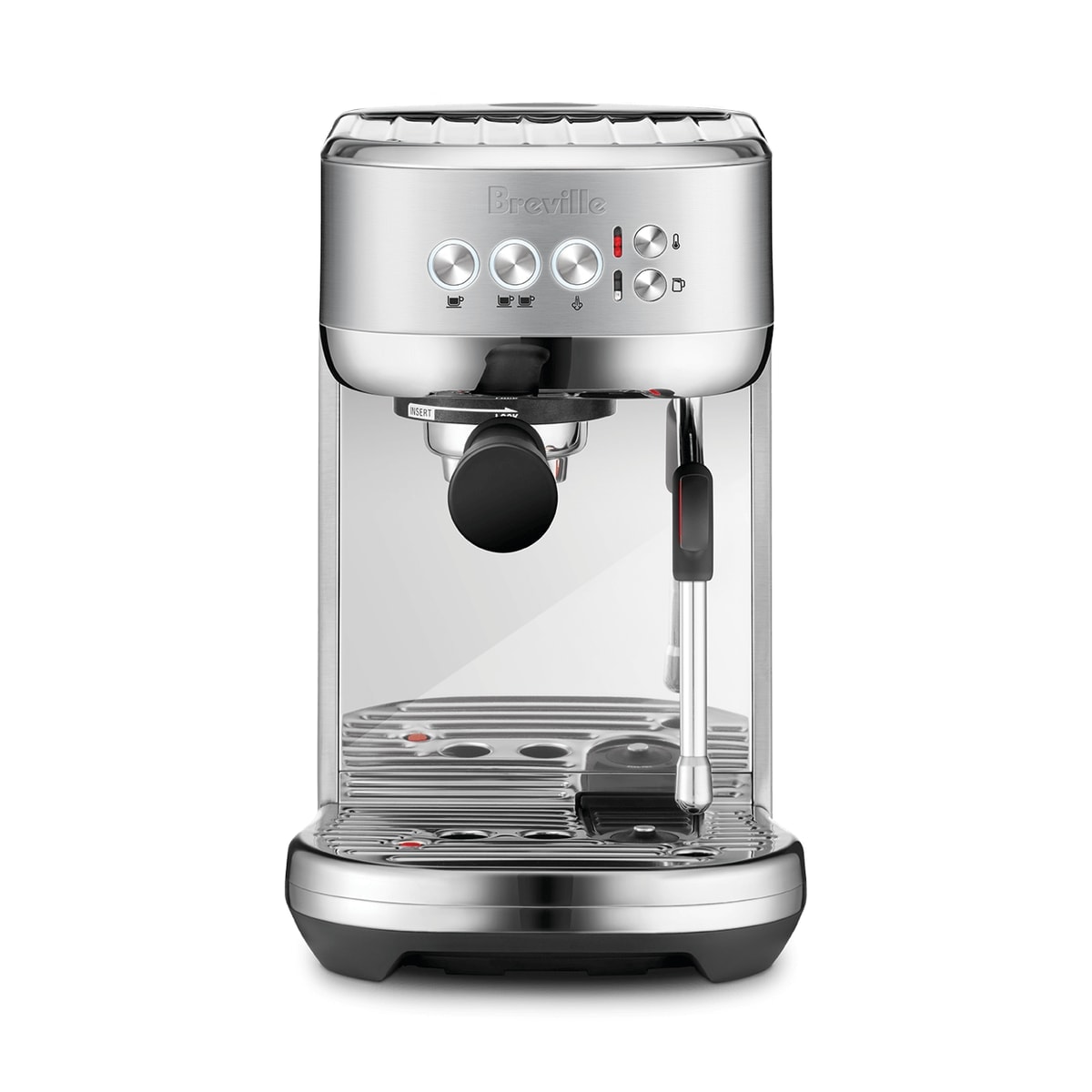 The Bambino PlusShips with single- and dual-wall baskets, so it works before and after a grinder upgrade
- No photoGaggia Classic Pro E2458 mm portafilter, brass boiler and 9-bar OPV, for use with an espresso grinderCheck price — Amazon →
- Check price — Amazon →
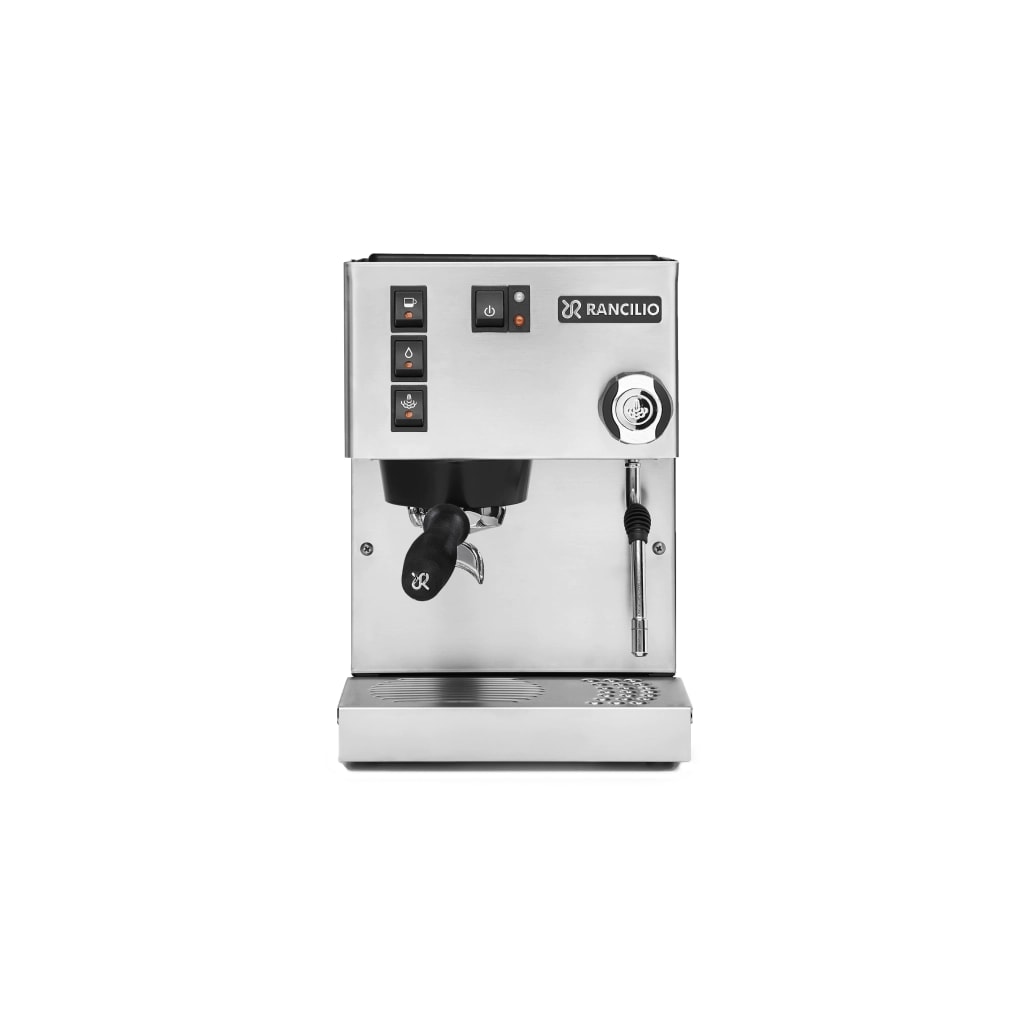 SilviaBrass group and insulated boiler, for a grinder that can make fine adjustments
- Check price — Amazon →
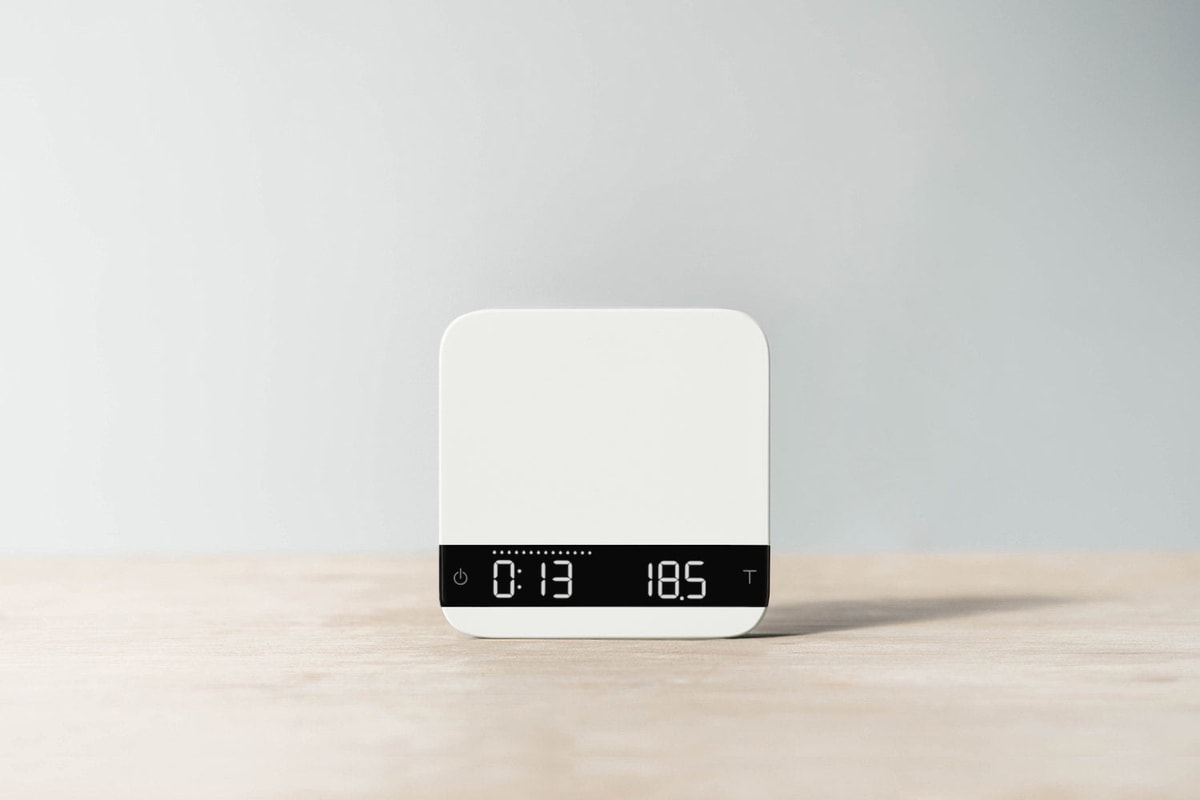 LunarCompact 0.1 g scale for weighing the dose and the shot as it runs
As an Amazon Associate, BrewMark earns from qualifying purchases.All the gear our guides use →
On this page · 8 sections
1. Check whether your grinder can make espresso
Find out whether your grinder has a real espresso range. Look for small steps at the fine end or stepless adjustment.
Baratza shows why this matters. It built the Encore ESP with a split dial: settings 1 to 20 are the espresso range, where each step changes the grind only a little. Settings 21 to 40 cover filter in larger steps. Baratza recommends its Sette series for precision within the espresso range. If your grinder's steps are coarse at the fine end, every adjustment overshoots. Stepless grinders avoid that problem.
2. Match the basket type to the grinder
Pick single-wall baskets for an espresso-capable grinder and dual-wall baskets for anything less. Breville's manual for the Barista Express Impress spells this out. Single-wall baskets "should be used when grinding fresh whole coffee beans" and let you experiment with grind and dose. Dual-wall baskets are for pre-ground coffee and beans more than 30 days past roasting. Breville says they regulate the pressure and help the extraction "regardless of the grind, dose, or freshness".
The Bambino Plus ships with both kinds, in 1-cup and 2-cup sizes. That makes it a safe first machine if your grinder is borderline. You can start on dual-wall baskets and move to single-wall ones when you upgrade. Gaggia lists its Classic Pro E24 basket capacity at 7 to 18 g and offers a pressurized filter basket kit as a separate part.
3. Check the portafilter size
Note the portafilter diameter, because it decides which dosing cups, tampers and baskets fit. The Bambino Plus and Barista Express use 54 mm portafilters. The Gaggia Classic Pro E24 uses 58 mm.
Grinder makers plan for both. Baratza's Encore ESP comes with a dosing cup and a 58 mm adapter ring, so grounds transfer cleanly into a 54 mm or 58 mm portafilter.
4. Pair the machine with your grinder
Use the grinder to narrow the list, then choose on milk steaming and budget.
| Grinder setup | Machine that suits it |
|---|---|
| Filter-only grinder or pre-ground | A machine with dual-wall baskets, such as the Bambino Plus |
| All-purpose grinder (Encore ESP) | Bambino Plus on single-wall baskets, or Gaggia Classic Pro E24 |
| Espresso-focused grinder (Sette 270, DF64 Gen 2, Niche Zero) | Gaggia Classic Pro E24 or Rancilio Silvia |
Grinders also differ in ways a spec sheet does not show. Coffee ad Astra measured 24 espresso grinders and found they "can clearly be separated" by how many fines they make. On average, flat burrs ground more uniformly than conical burrs, though individual models varied widely. The grinder finder ranks espresso grinders by budget.
5. Decide how you will steam milk
Choose based on how many milk drinks you make. The Bambino Plus steams milk automatically, with three temperature and three texture settings, or manually. The Gaggia Classic Pro E24 has a commercial-style steam wand and a brass boiler. Rancilio's Silvia has an insulated boiler, a brass brew group and a stainless steam wand.
If you mostly drink straight espresso, put the money into the grinder instead.
6. Dial in with a scale
Weigh every dose and every shot from the first day. Perfect Daily Grind suggests a 1:2 starting ratio, so 18 g of coffee makes about 36 g of espresso. Shots usually run 22 to 40 seconds, often 25 to 32. Change the grind in small steps and the dose in steps as small as 0.2 g. See how to choose a coffee scale and the espresso method page.
What about machines with a built-in grinder?
They save space and a second purchase. Breville's Barista Express has a conical burr grinder with 16 settings, plus single- and dual-wall baskets. The trade-off is that you cannot upgrade the grinder alone. Its settings page shows how its range maps onto other grinders.
Can a hand grinder work for espresso?
Yes, if it has fine enough steps at the espresso end. It is slower each morning, and you will want an espresso-focused model rather than a filter grinder. Pair it with a single-wall basket as you would an electric espresso grinder.
Sources
- Breville: Barista Express Impress instruction book (BES876)
- Breville: The Bambino Plus
- Breville: The Barista Express
- Gaggia North America: Gaggia Classic Pro E24
- Rancilio: Silvia
- Baratza: Encore ESP manual
- Baratza: Stepped vs. stepless, which is right for your grind?
- Perfect Daily Grind: A guide to dialling in espresso
- Coffee ad Astra: What I learned from analyzing 300 particle size distributions for 24 espresso grinders
By Jeff Gluck · Checked Oct 21, 2026