
In brief
A gooseneck kettle has a long, thin spout that pours a slow, narrow stream. That is the whole point of it. Pour-over recipes ask you to pour gently and close to the coffee, and an ordinary kettle cannot do that.
Choose on three things. Stovetop or electric. Fixed boil or variable temperature. And a size that holds enough water for your recipe with room to spare.
The kettle does not change your grind, but it changes how much the grind gets stirred up. Pouring hard churns fines to the bottom of the filter, where they slow the brew. A steady stream is the cheapest way to make any grinder look better.
What you'll need
- Check price — Amazon →
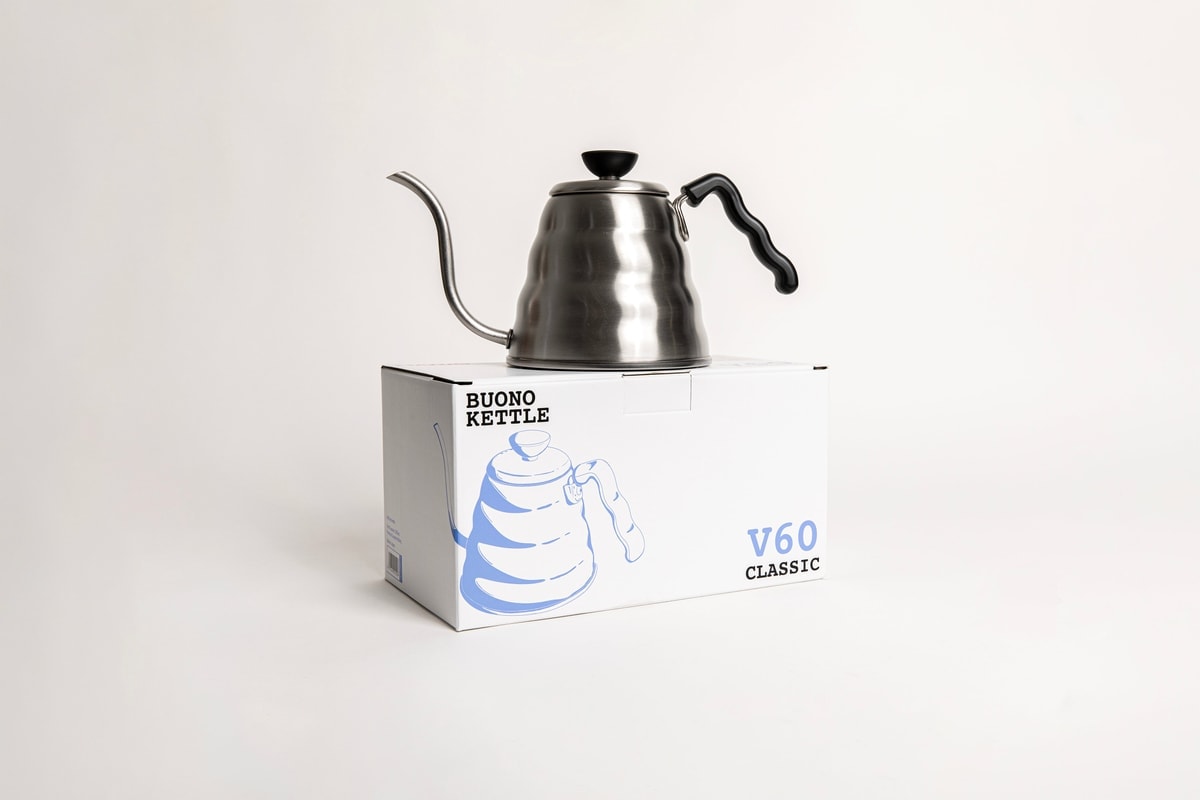 V60 "Buono" Drip Kettle 1.2LStovetop gooseneck with a slim spout; the simplest way to control your pour
- Check price — Amazon →
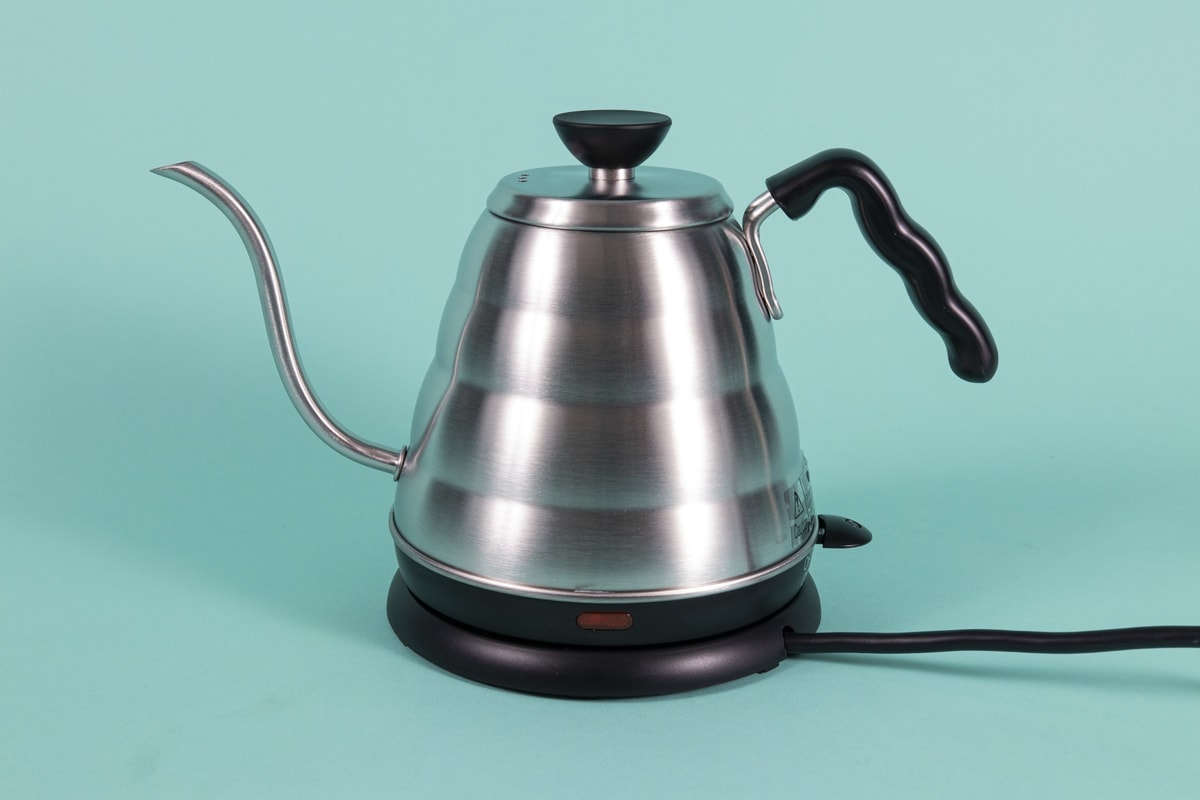 V60 "Buono" Electric Drip KettleElectric Buono that boils and switches off, for when you only need hot water
- Check price — Amazon →
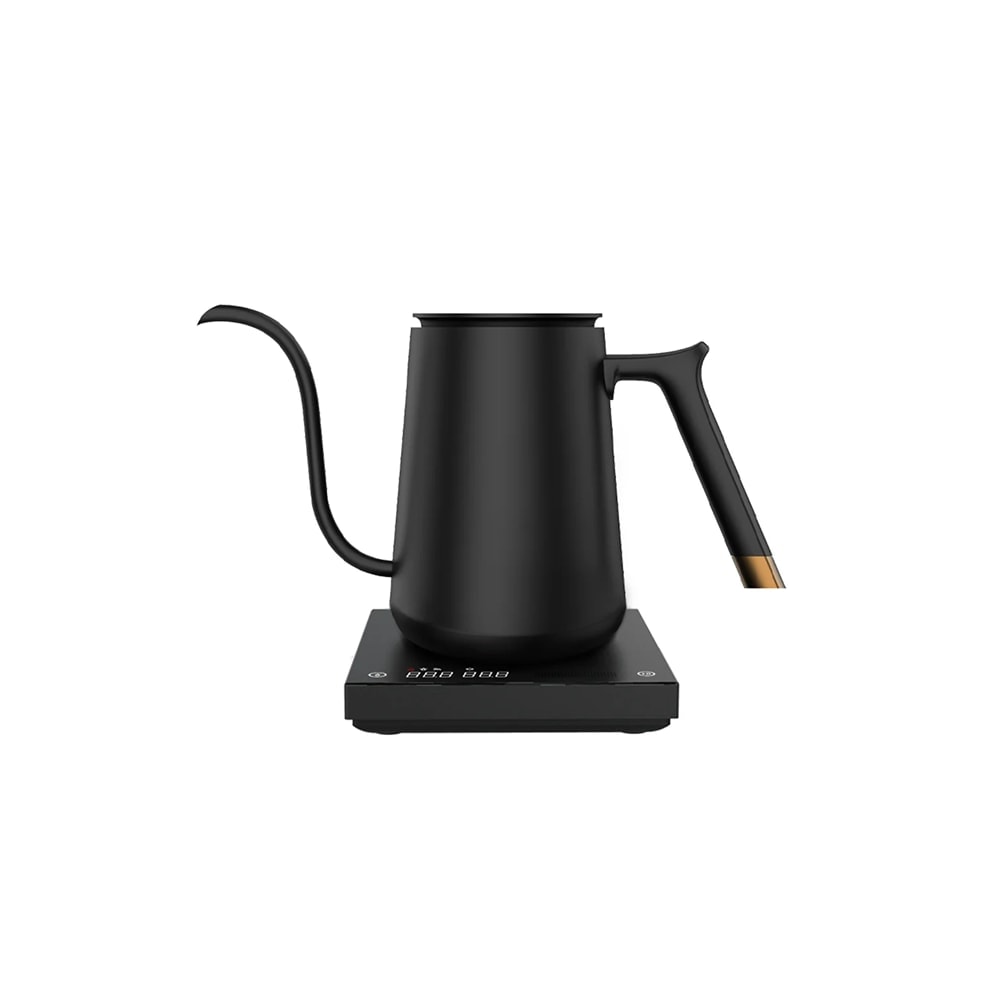 TIMEMORE Fish Smart Electric Coffee Kettle 600MLSet temperature to 1°C and hold it, in a compact 600 ml body
- Check price — Amazon →
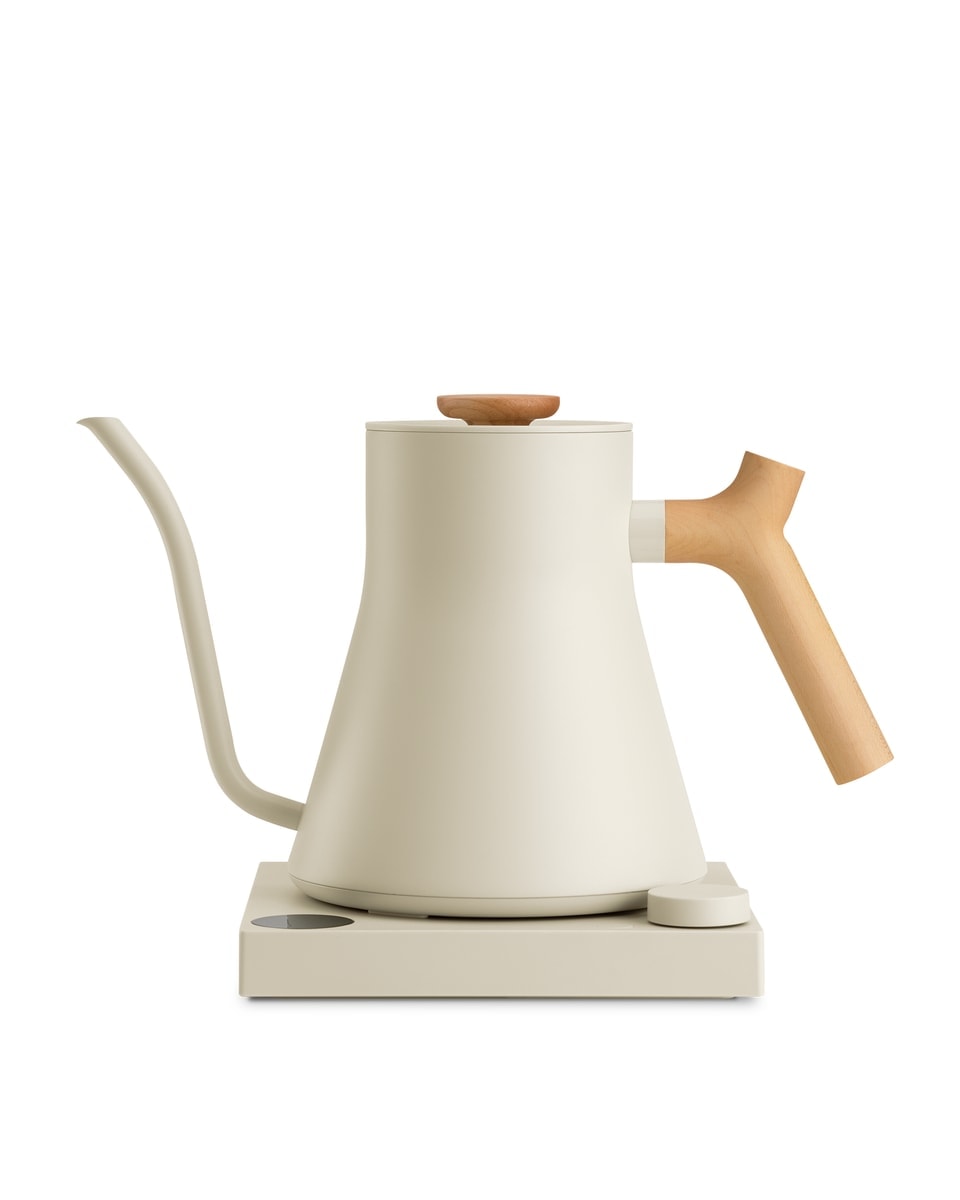 Stagg EKG Electric KettleVariable temperature with a hold mode up to 60 minutes and a 0.9 L body
As an Amazon Associate, BrewMark earns from qualifying purchases.All the gear our guides use →
On this page · 7 sections
1. Check what your recipe asks of the pour
Read your usual recipe and note how it wants you to pour. Baratza's V60 guide is typical. It says to keep the spout close to the coffee bed, pour slowly in circles, and avoid pouring too high or too fast, because that agitates the bed and causes clogging.
Hario makes the same point from the dripper's side. Its V60 has one large hole, so pour speed directly changes the strength of the cup. If you brew with a cone like this, a gooseneck is close to essential. If you brew mostly French press or a Hario Switch, it matters much less.
2. Pick a size that fits your batch
Choose a kettle that holds your full brew water plus enough to rinse the filter. Baratza's V60 recipe uses 320 g of water for one large cup.
Check the usable volume, not just the headline size. Hario lists its 1.2 L Buono stovetop kettle with a practical capacity of 800 ml. Its electric Buono holds 800 ml at most and needs at least 150 ml. Timemore's Fish Smart is a 600 ml kettle with a 560 ml maximum fill line. Fellow's Stagg EKG holds 0.9 L. For one or two cups, 600 ml is enough. For a Chemex or larger batches, look at 0.9 L and up.
3. Decide between stovetop and electric
Pick stovetop if you already have a kettle or stove you like, and electric if you want speed and convenience. Hario's stovetop Buono is stainless steel with a slim spout made for controlling the amount and speed of water. You heat it on the hob, or fill it from another kettle.
Electric goosenecks heat on their own base. Hario's electric Buono is cordless, has a 1000 W element and switches off automatically. Before you buy any stovetop kettle, check the maker's page for your hob type. Not every model works on induction or gas.
4. Decide whether you need temperature control
Buy variable temperature if you brew different roasts or like to adjust recipes. Skip it if you always brew near boiling.
Water temperature is a contested point. Baratza's V60 recipe uses water at 98°C. The SCA's standard for drip machines requires the coffee bed to sit between 90 and 96°C, which is cooler, though water loses heat as you pour. Timemore suggests 92 to 96°C for light roasts, 90 to 92°C for medium and 85 to 90°C for dark. None of these is wrong. A variable kettle lets you try them.
Fellow's Stagg EKG, now sold as the Stagg EKG Pro, sets any temperature from 40 to 100°C and holds it for up to 60 minutes. Timemore's Fish Smart covers the same 40 to 100°C range in 1°C steps, with a hold mode and a display of actual and target temperature. Hario's electric Buono has no temperature setting on its product page. It boils, then switches off.
5. Practise a steady pour and adjust the grind
Once the kettle arrives, brew your normal recipe with the same grind and compare. Baratza links hard pouring to clogging, so a gentler pour may make the brew run a little faster. If it runs too fast now, grind one step finer. If it still stalls, see how to fix a slow pour-over drawdown.
The V60 pour-over guide has a full recipe to practise with.
Do you need a gooseneck kettle for pour-over?
For cone drippers, nearly always. The V60's single hole means your pour sets the flow, and a wide kettle spout dumps water too fast. For flat-bottom drippers it helps but matters less. For immersion brewers you can manage without one.
Is a variable-temperature kettle worth it?
Only if you will use it. If you brew one medium roast every day, a stovetop gooseneck and a freshly boiled kettle will do the job. If you switch between light and dark roasts, the ability to set and hold a temperature saves guessing. See brew temperature for why it matters.
Sources
- Baratza: Hario V60 brew guide
- SCA Standard 310-2021: Home coffee brewers, specifications and test methods
- Hario Europe: About the V60 dripper
- Hario USA: V60 Buono Drip Kettle 1.2L
- Hario USA: V60 Buono Electric Drip Kettle
- Fellow: Stagg EKG Electric Kettle
- Timemore: Fish Smart Electric Coffee Kettle 600ML
By Jeff Gluck · Checked Oct 21, 2026