
In brief
Bitter coffee has two common sources: the brew and the beans. A brew that runs too far is over-extracted. Perfect Daily Grind says bitterness "increases later in the brew," and comes from grinding too fine, brewing too hot or brewing too long.
The beans matter as much. Dark roasts and robusta are more bitter by nature, and no grind change will make them taste like a light arabica.
Fix the brew first, because it costs nothing: grind coarser, then try slightly cooler water or a shorter brew. If the cup is still harsh, look at the coffee itself.
What you'll need
- Check price — Amazon →
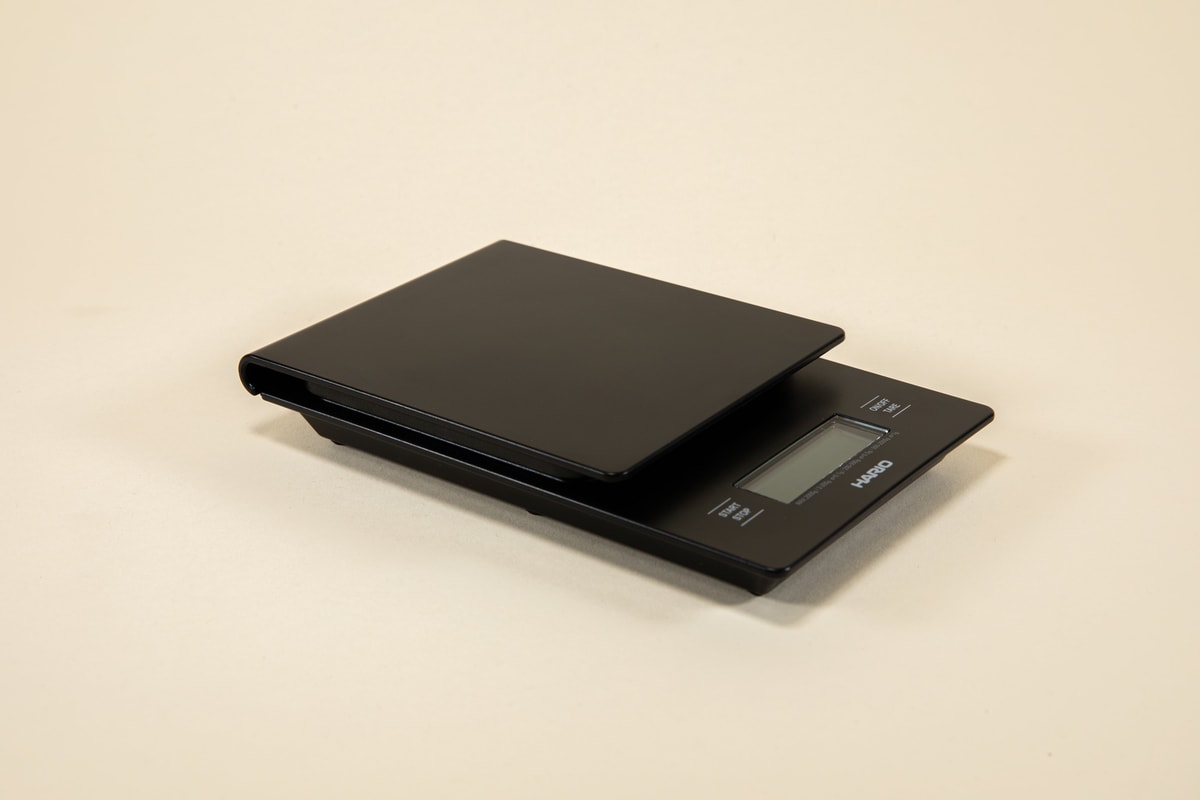 V60 Drip ScaleTimes the brew and weighs the dose, so you can see when it runs long or heavy
As an Amazon Associate, BrewMark earns from qualifying purchases.All the gear our guides use →
On this page · 8 sections
1. Taste for harshness, not just bitterness
Decide whether the bitterness is pleasant or harsh. Perfect Daily Grind points out that "a small amount of bitterness will help to ensure complexity." A good cup has some.
The problem is bitterness that dominates. Over-extracted coffee tastes bitter because, as Perfect Daily Grind puts it, the compounds that create sweetness and acidity are "overwhelmed." The finish is dry and lingering. If the cup is also sour, the problem is uneven extraction, covered at the end.
2. Grind coarser
Move your grinder one or two settings coarser and brew again with nothing else changed. Coarser particles have less surface area, so they extract more slowly. Perfect Daily Grind's first suggestion for bitter coffee is a larger grind.
Baratza's V60 guide gives the same step for a brew that takes too long: go one or two settings coarser. On a pour-over, coarser grounds also drain faster, which shortens contact time.
For espresso, Breville says a slow shot means the grind may be too fine, or the dose too high. Coarsen first, then check the dose.
3. Use slightly cooler water
Drop the water temperature by a few degrees. Perfect Daily Grind suggests water "a couple of degrees cooler" for coffee that is too bitter. Its general range is about 195–205°F (91–96°C).
Not everyone agrees on the top of the range. Baratza's V60 recipe uses 210°F (98°C). If you brew that hot and the cup is harsh, temperature is a reasonable second change to try.
4. Shorten the brew
Cut the contact time. Perfect Daily Grind notes that short brews are more acidic "and longer ones more bitter," and suggests brewing for a shorter time.
How you do that depends on the brewer:
| Brewer | How to shorten contact time |
|---|---|
| Pour-over | Grind coarser so it drains faster; pour gently so fines do not clog the filter |
| French press | Press and pour sooner; do not leave coffee sitting on the grounds |
| AeroPress | Press sooner |
| Espresso | Stop the shot earlier, or coarsen the grind |
Baratza adds one more pour-over cause: if the bed dries out or the filter clogs, flow slows and the cup turns hollow and over-extracted. See how to fix a slow pour-over drawdown if your brews stall.
5. Check the dose and ratio
Weigh your coffee and water. Baratza's V60 recipe uses 20 g of coffee to 320 g of water, which is 1:16. Too much coffee for your brewer builds a deeper bed, and Perfect Daily Grind notes that deep beds may over-extract. For espresso, Breville names a high dose as a cause of slow shots.
The brew calculator gives the water weight for any dose and brew ratio.
6. Look at the beans
If the brew is dialed in and the coffee is still harsh, the beans may be the cause. Perfect Daily Grind explains that roasting breaks down chlorogenic acids into bitter compounds. Light and medium roasts give "a pleasant, coffee-like bitter taste quality." Darker roasts produce "a lingering, harsh type of bitter sensation."
Species matters too. Perfect Daily Grind says robusta "is far more bitter than arabica," with more chlorogenic acids and nearly double the caffeine. Unripe beans also carry more chlorogenic acid. If you want less bitterness, try a lighter roast of an arabica coffee.
Is bitter coffee always over-extracted?
No. Roast level and species both add bitterness that has nothing to do with how you brewed. A dark roast brewed perfectly will still taste more bitter than a light roast. That is why coarsening the grind helps some bitter cups a lot and others hardly at all. If coarser grinding makes the cup sour and thin but still bitter, the bitterness is coming from the beans.
Why is my coffee both bitter and sour?
Usually because the extraction was uneven. Part of the coffee extracted too much and part too little. In espresso this is the main sign of channeling. In pour-over, a clogged filter can send water through some of the bed and leave the rest under-extracted. Fix the flow before changing grind size.
Sources
- Perfect Daily Grind: Bitterness in coffee, what is it and is it always bad?
- Perfect Daily Grind: Coffee extraction and how it helps create the perfect cup
- Baratza: Hario V60 brew guide
- Breville: Espresso machine problems and fixes
By Jeff Gluck · Checked Oct 21, 2026