
In brief
Channeling is when pressurized water finds weak spots in the puck and rushes through them. Breville describes it as water flowing "quickly through weaker spots in the tamped coffee puck." The coffee along those paths over-extracts, and the rest under-extracts.
That is why a channeled shot can taste sour, bitter and weak at the same time. Perfect Daily Grind lists four common causes: grinding too fine, uneven distribution, an uneven tamp and the wrong dose for the basket.
Fix them in order of how often they cause trouble. Distribute the grounds evenly, tamp level and do not tap afterward, match your dose to the basket, and only then fine-tune the grind.
What you'll need
- Check price — Amazon →
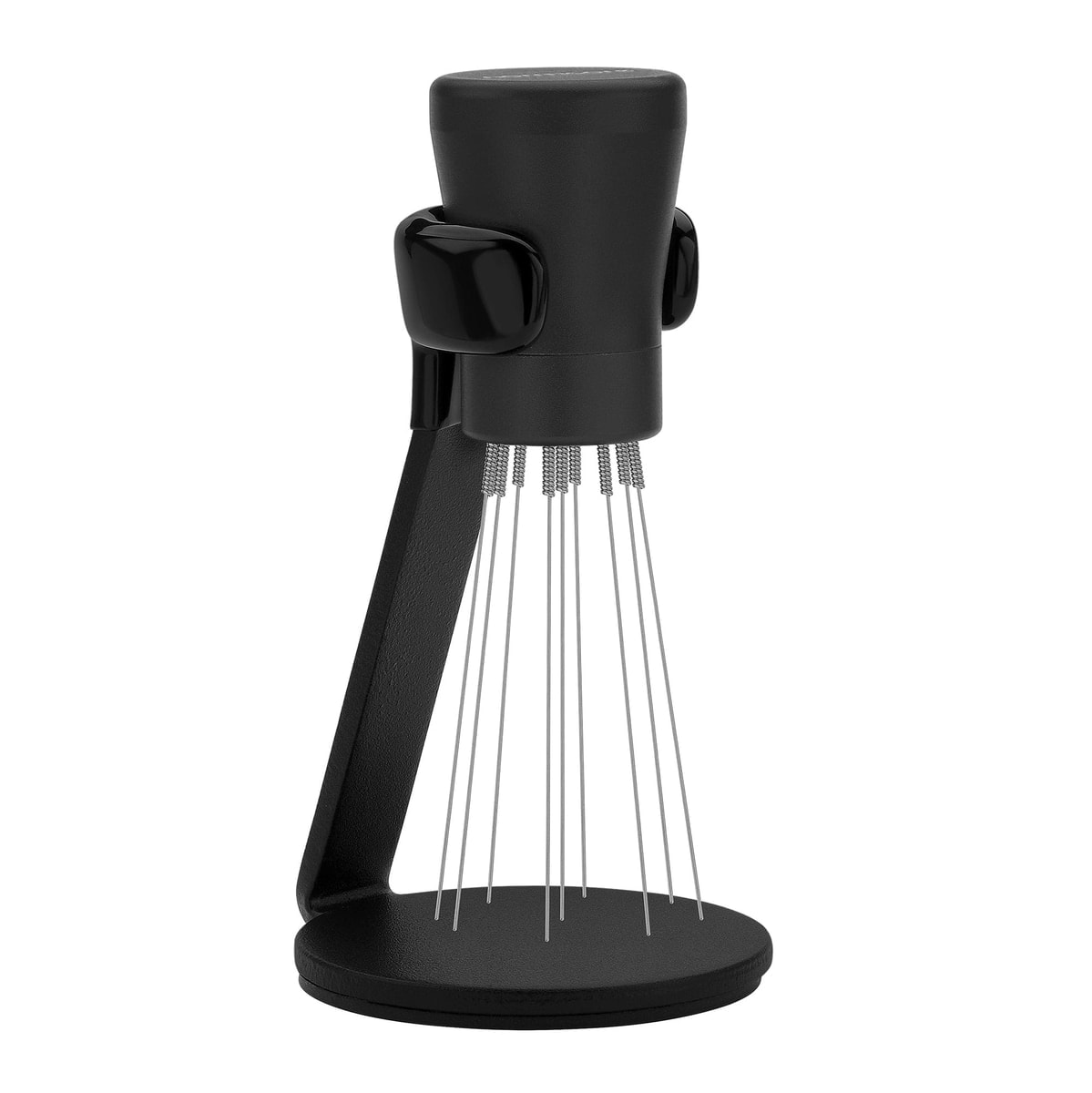 Normcore 0.25mm WDT Distribution Tool V2.1Fine needles break up clumps so the puck has even density before tamping
- Check price — Amazon →
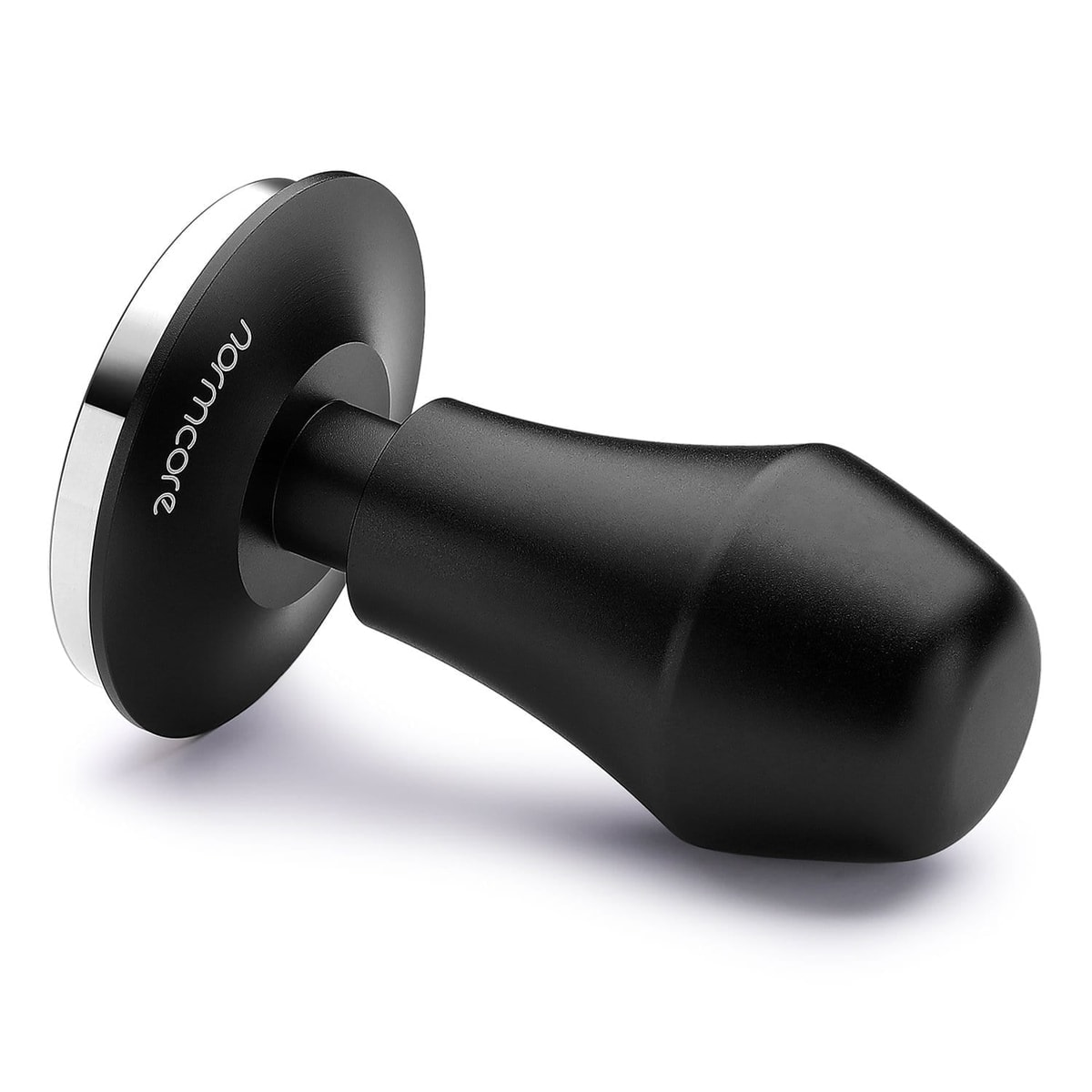 Normcore Spring Loaded Tamper V4The plate rests on the basket rim, so the tamp lands level every time
As an Amazon Associate, BrewMark earns from qualifying purchases.All the gear our guides use →
On this page · 8 sections
1. Confirm you are channeling
Watch the shot and taste it before changing anything. Perfect Daily Grind's taste signs are bitter, sour and muddy flavors together. Its visual signs are several streams instead of one centered flow, streams spraying at odd angles, gaps in the flow, and quick blonding, where the stream turns pale early.
A bottomless portafilter is the clearest way to see it, because you can watch the underside of the basket as the shot runs. Breville describes the same symptom from a spouted portafilter: "multiple thin streams of espresso."
If the shot runs evenly but tastes sour, it may simply be under-extracted. See how to fix sour coffee instead.
2. Break up clumps with a needle tool
Stir the grounds in the basket with a needle distribution tool before you tamp. This is the Weiss Distribution Technique, or WDT. Clumps and uneven density create paths of more and less resistance, which Perfect Daily Grind names as a main cause of channeling.
Normcore describes its WDT tool as made to "break up clumps, loosen compacted grounds, and distribute coffee more evenly before tamping." Its V2.1 uses 0.25 mm stainless needles.
3. Tamp level, then leave the basket alone
Press straight down and keep the tamper flat. Breville's advice is to "tamp the espresso straight down (without any tilting), and don't tap it after tamping." Perfect Daily Grind explains why: a sloped tamp sends water through the lower side of the puck first and over-extracts it.
If you want to settle the grounds by tapping, do it before you tamp, never after.
A tamper that fits your basket closely helps. Perfect Daily Grind recommends tampers with the right diameter. Normcore's spring-loaded tamper has a leveling plate that rests on the basket rim, so the tamp "lands level every time," and comes in sizes from 39 mm to 58.5 mm.
4. Match the dose to the basket
Weigh your dose and use the amount your basket is designed for. Perfect Daily Grind explains that an underfilled basket lets water flow around the puck, while an overfilled one can crack the puck when the group head presses on it. Breville adds that a dose that is too high can also slow the shot.
Weighing every dose to a tenth of a gram with a scale keeps this variable steady while you work on the others.
5. Adjust the grind last
Only after distribution, tamp and dose are consistent, change the grind in small steps. Perfect Daily Grind lists grinding too fine as a cause of channeling: a very fine grind makes the puck so dense that water forces its own paths through it.
Breville's guidance on shot speed is the other half. A shot that runs too fast needs a finer grind. A shot that runs too slow may be ground too fine. If your shots channel and run slow, try a slightly coarser setting.
Small changes matter here. A stepless or finely stepped grinder makes them easier, which is why many espresso grinders are stepless. Your grinder's page, such as the Eureka Mignon Specialità, shows its usual espresso range.
6. Pull the shot and compare
Pull a shot after each change and compare it with the last. Change one thing at a time. If two changes go in together, you will not know which one fixed the problem.
A useful order is distribution first, then tamp, then dose, then grind. That way the grind setting you land on reflects an even puck.
Why does a channeled shot taste sour and bitter at once?
Because two extractions are happening in the same basket. Perfect Daily Grind explains that channeling causes "a combination of under and overextraction." Coffee along the channels is overworked and turns bitter, while the denser areas the water skips stay sour. Changing the grind alone moves both halves at once, which is why distribution comes first.
Can the machine cause channeling?
Rarely, compared with puck preparation. Breville's list of machine faults points to mineral buildup as the cause of low or inconsistent pressure and weak flow, and descaling as the fix. If your puck prep is consistent and shots still behave unpredictably, check whether the machine needs descaling. See how to descale a coffee maker.
Sources
- Perfect Daily Grind: What is channeling and how does it affect espresso extraction?
- Breville: Espresso machine problems and fixes
- Normcore: 0.25mm WDT Distribution Tool V2.1
- Normcore: Spring Loaded Tamper V4
By Jeff Gluck · Checked Oct 21, 2026