
In brief
A slow drawdown means water cannot get through the coffee bed and filter fast enough. The two usual causes are a grind that is too fine and fines, the dust-sized particles every grinder makes, settling at the bottom and blocking the paper.
Start with the grind: go one or two settings coarser, as Baratza recommends. Then fix what moves fines around. Pour low and gently, keep swirls short, and do not let the bed run dry between pours.
If the bed still stalls, try a thinner, faster filter paper. A stalled brew is not only slow. Coffee ad Astra explains that clogging slows the flow "in a poorly controlled way" and makes extraction through the bed less even.
What you'll need
- Check price — Amazon →
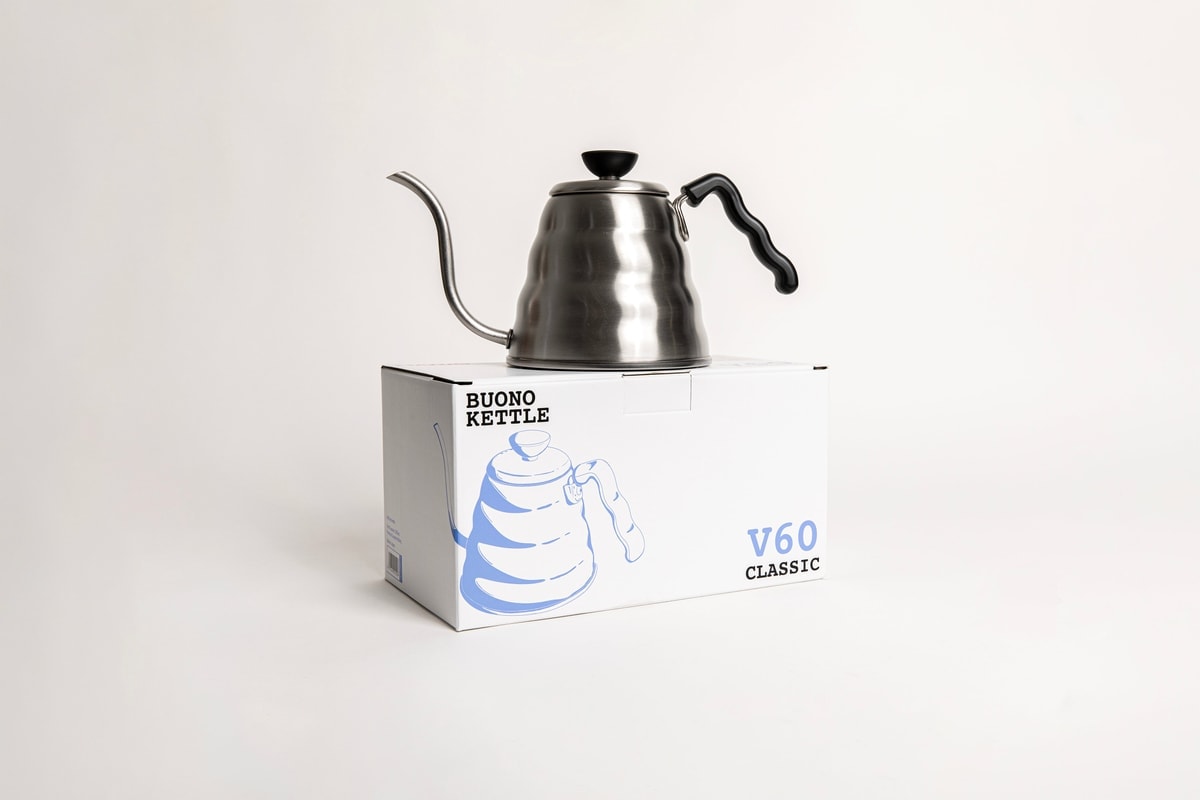 V60 "Buono" Drip Kettle 1.2LA slim gooseneck spout lets you pour low and slowly without churning up fines
- Check price — Amazon →
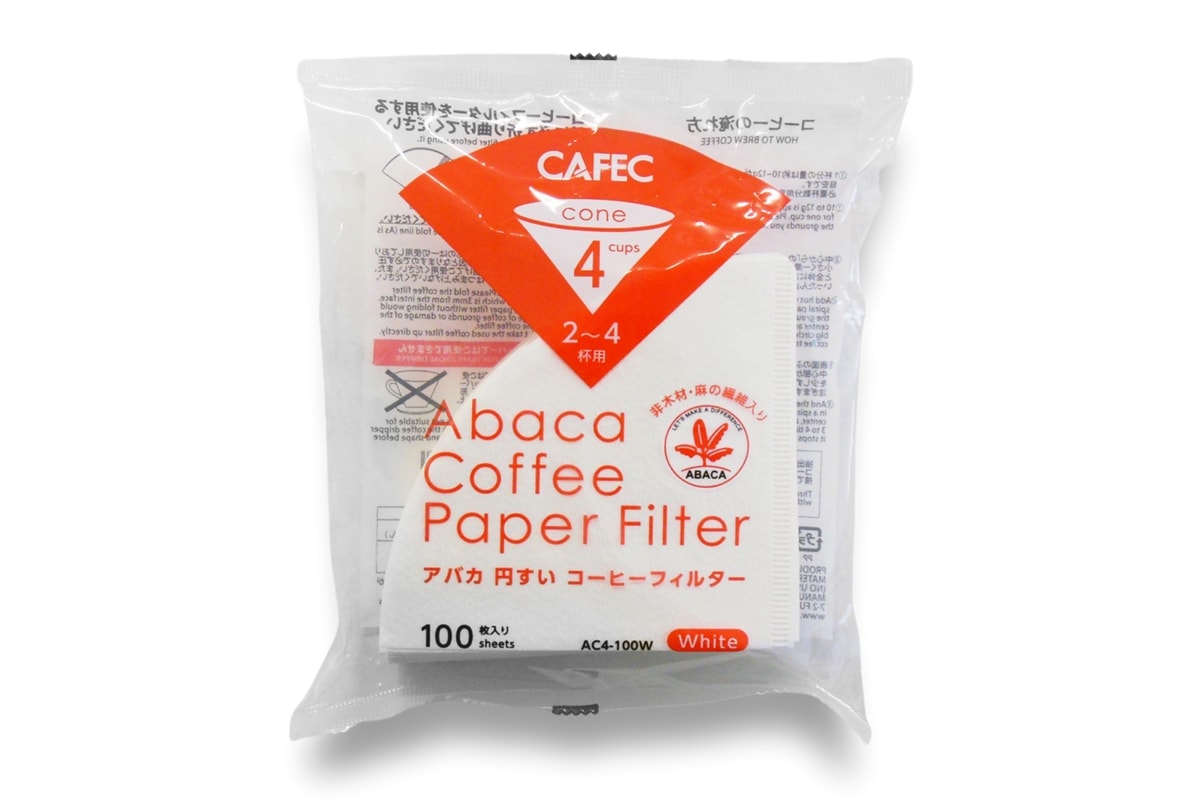 CAFEC Abaca Cup 4 Cone Paper FilterCreped on both sides for faster flow than standard cone papers
As an Amazon Associate, BrewMark earns from qualifying purchases.All the gear our guides use →
On this page · 9 sections
1. Time your brew and taste it
Time the whole brew from the first pour to the last drip. Baratza's V60 recipe of 20 g coffee to 320 g water aims to finish in under three minutes. Your recipe may differ, so use it as a reference, not a rule.
Then taste. Baratza says a brew that stalls because of clogging can taste hollow, bland, or "both over-extracted and strangely flat." A brew that is a little slow but tastes sweet and clear may not need fixing. One that is slow and also bitter or flat does.
2. Grind one or two settings coarser
Move your grinder one or two settings coarser and brew the same recipe again. This is Baratza's first fix for a brew that takes too long. Larger particles leave bigger gaps for water to flow through.
Coffee ad Astra explains why grinding finer has a limit in pour-over. Past a certain point the filter starts to clog and flow can slow to a crawl. Its advice is to stay coarser than the point where the cup turns astringent.
The grind converter is useful if a recipe gives a setting for a different grinder. For typical starting points, see the V60 grind size guide.
3. Pour low and gently
Keep the kettle spout close to the coffee bed and pour slowly. Baratza's V60 guide gives exactly this advice: "Keep the pouring spout close to the coffee bed, pour slowly."
A high, fast pour churns the slurry. Coffee ad Astra's fines-migration article explains that any motion that brings more fines near the filter helps clog it. A gooseneck kettle makes a low, slow pour much easier than a standard spout.
4. Keep swirls short
If you swirl or spin the brewer, keep each one to about two seconds. Coffee ad Astra's author spun right after the bloom and after each pour, and found two-second spins made the better cup. Spinning breaks up channels in the bed, but too much pushes fines to the bottom.
The difference can be large. In Coffee ad Astra's test, seven-second spins gave a 5:18 drawdown, while two-second spins gave 4:28. The article's conclusion is to spin just enough to break up channels, but not so much that fines clog the bottom of the filter.
5. Do not let the bed dry out
Pour your next addition before the bed drains completely. Baratza lists letting "the coffee bed dry out" as one cause of a hollow, over-extracted cup. Time your pours so there is still water over the bed when the next one starts.
6. Try a faster filter paper
If you have fixed the grind and the pour and the brew still stalls, change the filter. Baratza suggests thinner filter papers to improve flow.
Papers differ in how fast they drain. CAFEC says its Abaca cone filters have crinkles on both sides of the paper, which lets water "get through the dripper much faster than conventional filter paper." They fit V60 02-style cones.
7. Check the dose and the grinder
If none of this helps, use a little less coffee or look at the grinder. A larger dose builds a deeper bed that takes longer to drain. Coffee ad Astra found that even a top grinder with a narrow particle spread produced harsher cups as it went finer, so no grinder removes the limit entirely.
A grinder with worn or misaligned burrs can make more fines than it should. See how to replace grinder burrs. If you are still using a blade grinder, upgrading to a burr grinder is the bigger fix.
Why did my drawdown slow down with a new bag?
Different coffees grind differently, so a setting that drained well for one bag can stall with the next. Treat a new bag as a fresh dial-in and start a setting or two coarser than you expect. The routine is in how to adjust grind for a new bag of coffee.
Should you sift out the fines?
You can, with a fine sieve, but most home brewers do not need to. Fixing the grind setting, the pour and the filter solves most slow drawdowns without extra equipment.
Sources
- Baratza: Hario V60 brew guide
- Coffee ad Astra: Why spin the slurry?
- Coffee ad Astra: The physics of fines migration
- Coffee ad Astra: Why can't we grind coffee finer for pour over?
- CAFEC: Abaca Cup 4 cone paper filter
By Jeff Gluck · Checked Oct 21, 2026