
Which to buy · Every setting
Eureka Mignon Silenzio vs Fellow Opus
Conical against flat — the Opus's scale curves where the other runs straight. The Opus is numbered 1–11; the Mignon Silenzio turns 0–24 rotations.
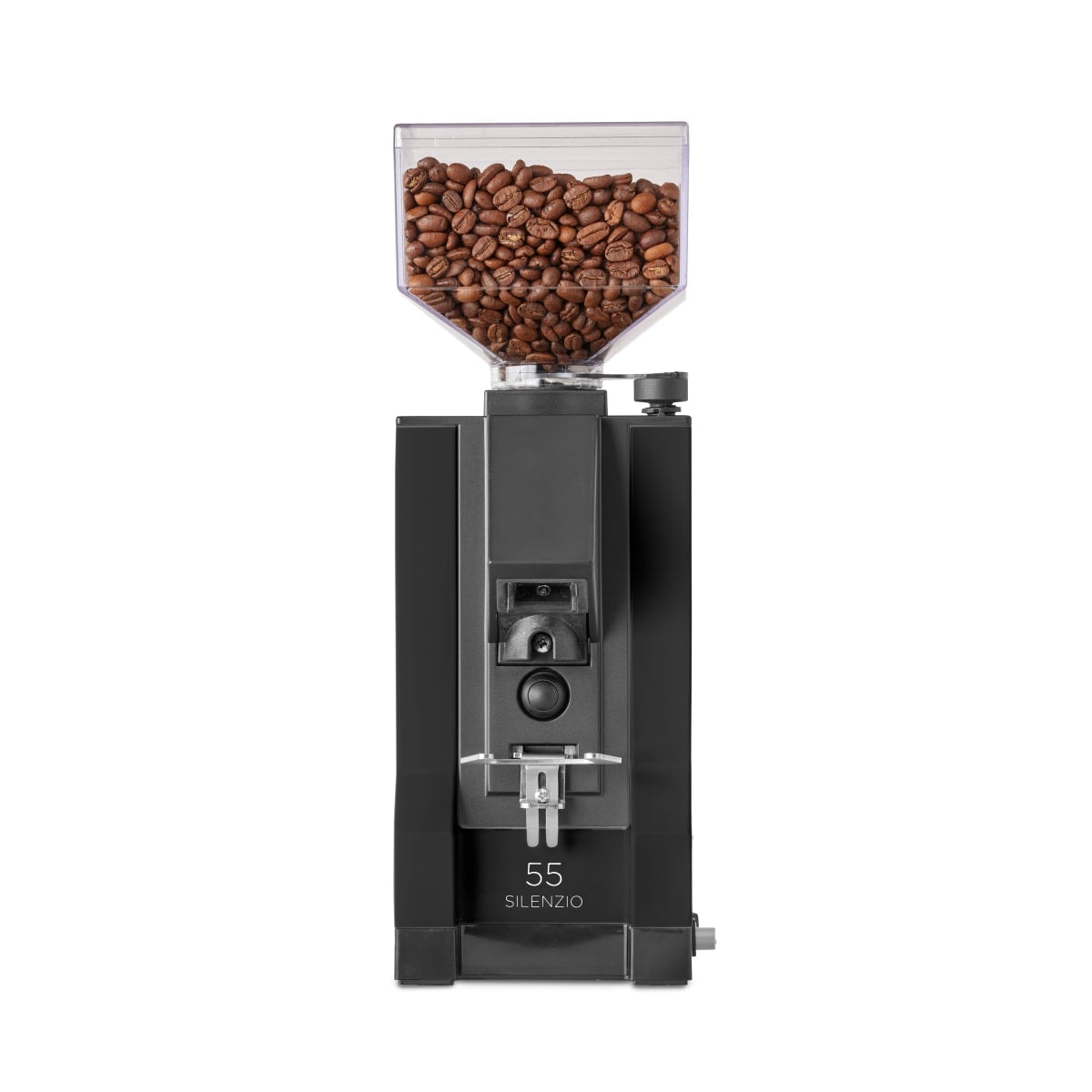
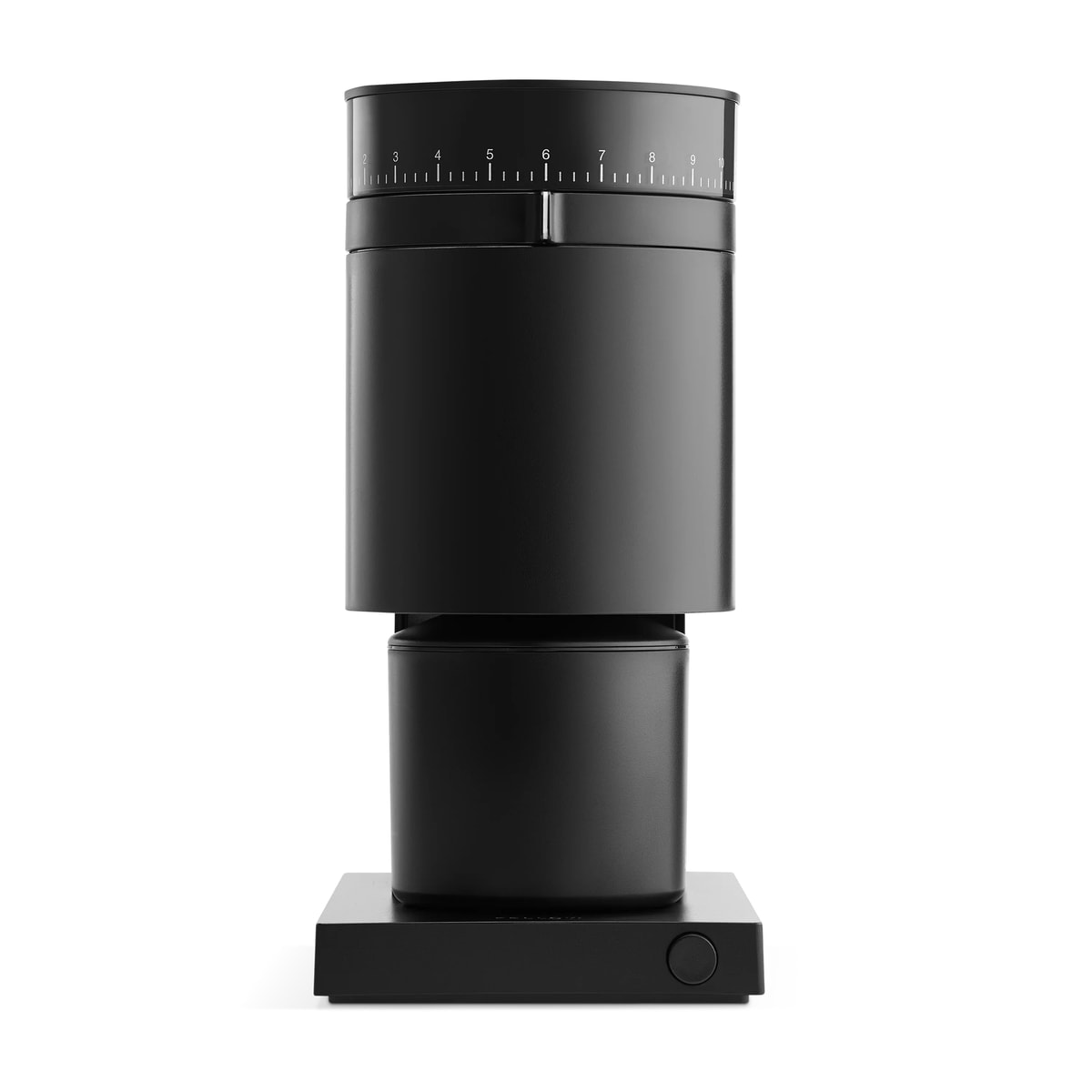
Which to buy
Choose the
Mignon Silenzio if you…
- want 55 mm flat burrs and stepless adjustment
- grind from a 300 g hopper straight into a portafilter — a hands-free fork holds it
- want timer dosing started by a microswitch on the portafilter
Choose the
Opus if you…
- want fixed steps you can return to exactly — 41 on the dial, plus a micro-adjust ring
- want a timed auto-stop at 30, 60, 90 or 120 seconds
- want 40 mm conical burrs
Shop links are affiliate links: BrewMark earns a commission if you buy through one, at no extra cost to you. The verdicts were written without regard to it.
Fellow now sells the Opus 2 in place of the original; the settings on this page are for the original. Eureka now lists the Silenzio as the Mignon Silenzio 55, with 55 mm burrs.
Sources: Fellow — Opus (archived) · Fellow — Opus gear guide · Eureka — Mignon Silenzio 55
| Mignon Silenzio | Opus | |
|---|---|---|
| Brand | Eureka | Fellow |
| Scale | Rotations | Numbered dial |
| Dial range | 0.0 rotations – 24.0 rotations | 1 – 11 |
| Burrs | Flat | Conical |
| Espresso → filter | 6.5 rotations | 5.7 numbers |
| Filter → coarse | 7 rotations | 3.9 numbers |
Converting a setting
If a recipe quotes a setting for one of these grinders, read across for the equivalent on the other. Rows are spaced evenly by grind size, not by dial number — on a conical burr those are not the same thing.
| Mignon Silenzio | Opus |
|---|---|
| 1.5 | 1.2 |
| 3 | 1.2 |
| 4 | 2 |
| 5.5 | 3.2 |
| 1+1 | 5.3 |
| 1+2 | 7.1 |
| 1+3 | 8 |
| 1+4 | 8.2 |
| 1+5 | 8.3 |
| 2+0 | 9.1 |
| 2+1 | 9.3 |
| 2+2 | 10.2 |
| 2+3 | 11 |
| Opus | Mignon Silenzio |
|---|---|
| 1.2 | 1.5 |
| 2 | 4 |
| 3.2 | 5.5 |
| 5.3 | 1+1 |
| 7.1 | 1+2 |
| 8 | 1+3 |
| 8.2 | 1+4 |
| 8.3 | 1+5 |
| 9.1 | 2+0 |
| 9.3 | 2+1 |
| 10.2 | 2+2 |
| 11 | 2+3 |
Side by side, by brew method
Where each grinder lands for the same brew, worked out from its own dial curve.
| Method | Mignon Silenzio | Opus |
|---|---|---|
| Espresso | 2.5 | 1.2 |
| Moka pot | 4 | 1.3 |
| AeroPress (short steep) | 5.5 | 3.2 |
| Pour over — V60 / cone | 1+1.5 | 6.3 |
| Siphon | 1+2 | 7.2 |
| Pour over — flat bottom | 1+2.5 | 7.3 |
| Steep and release — Clever / Switch | 1+3 | 8 |
| Drip / batch brew | 1+3 | 8 |
| Cupping | 1+3.5 | 8 |
| Chemex | 1+4 | 8.2 |
| French press | 1+5.5 | 9 |
| Cold brew | 2+1.5 | 10 |
The shape of each dial
Where the connectors bunch, that grinder’s dial is compressed and single steps count for more. Comparing the two shapes tells you which gives finer control, and where.
Eureka Mignon Silenzio
Fellow Opus
Dialing in the Mignon Silenzio
The Silenzio is the quieter Mignon, sharing the micrometric stepless adjustment that makes small movements meaningful at the fine end. Built for espresso; filter is possible at the far edge of the dial.
Dialing in the Opus
Marketed as all-purpose, and it genuinely does cover more range than the Ode, but the espresso end is workable rather than good — expect to chase it. Where it earns its place is the coarse end: cold brew and French press come out notably even. If you bought the Opus mainly for espresso, dial it as a brew grinder first and judge it there.