
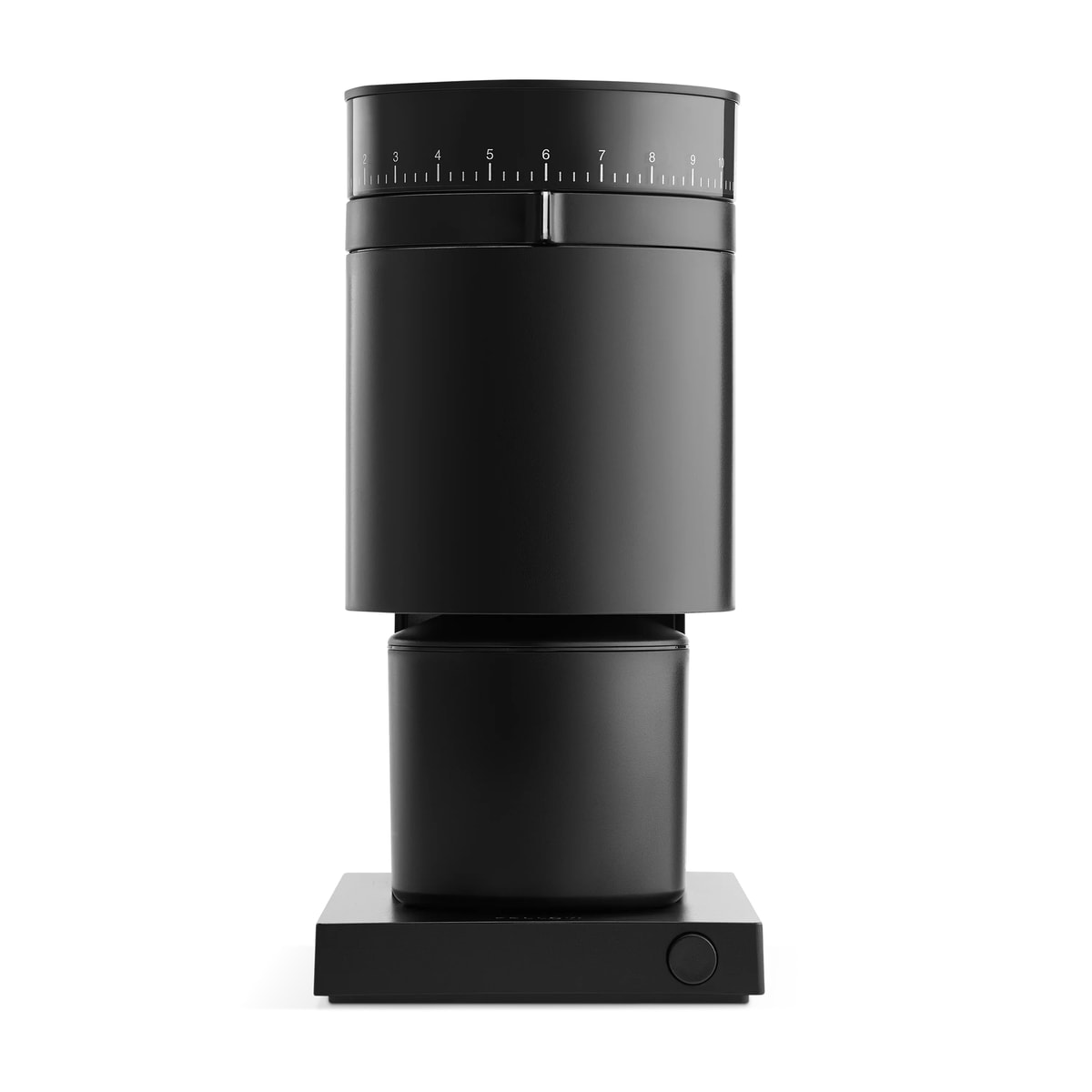
In brief
The original Opus is Fellow's all-purpose electric grinder. It has 40 mm conical burrs, an outer ring with 41+ settings and an inner ring for micro adjustment. Fellow says it grinds from "the finest espresso for a true 9-bar shot" to "the coarsest coffee for cold brew."
The original Opus is discontinued: Fellow no longer sells it new. Its shop now lists only the Opus 2 and the Ode Gen 2, and the original survives only as a gear guide. Fellow calls the Opus 2 "a significant step up," with 48 mm burrs, a stepless dial, faster grinding and two catch cups.
If you are buying new, look at the Opus 2 or the current grinders under How it compares. This page is for people weighing a used original. Its trade-off is breadth over depth. It covers filter well and espresso adequately, with real retention.
What it does well
- Quiet, at about 74 dB under load in CoffeeGeek's measurement
- An ionizer that CoffeeGeek says noticeably cuts static
- Good to really good paper-filter pour-over, per CoffeeGeek
- Reaches espresso, which Fellow's brew-only Ode does not
- Useful extras: a dosing insert for 54 and 58 mm portafilters (CoffeeGeek) and timed auto stop (Fellow)
Where it falls short
- Real retention: CoffeeGeek says it is 'not a zero retention grinder'
- Only a few useful steps in the espresso range, per CoffeeGeek
- Fines show up in French press and metal-filter brews, per CoffeeGeek
- Mostly plastic, and the micro-adjust ring is confusing, per CoffeeGeek
Specs
- Type
- Conical burrs
- Burrs
- 40 mm conical, Fellow's C6-40
- Adjustment
- 41+ settings on the outer ring, plus an inner ring for micro adjustment
- Motor
- 350 rpm burr speed, about 140 W draw (CoffeeGeek)
- Capacity
- 100 g load bin, 110 g grounds bin (CoffeeGeek)
- Size
- 21 × 13 × 27 cm, about 2.4 kg (CoffeeGeek)
- Warranty
- 3 years with registration, per CoffeeGeek at launch
Where to start on the dial
Pour-over 4.2AeroPress 3.3Drip 5.1Espresso 2
Every method on the settings chart →On this page · 5 sections
What it does well
It is quiet and tidy. CoffeeGeek measured about 74 dB under load and called it "very quiet." CoffeeGeek also reported "a distinct lack of static and mess" and concluded "the ionizer really does work."
Filter results are solid. CoffeeGeek rated paper-filter pour-over "good to really good" and AeroPress "in the good range." It ground about 10 g every 6.5 seconds.
The details are thoughtful. CoffeeGeek liked the lid that doubles as a bean measure, the magnetic base and the timer modes. Fellow's gear guide lists a timed auto stop and a catch-cup insert for portafilter dosing, which CoffeeGeek says fits 54 and 58 mm portafilters.
Where it falls short
Retention is the big one. CoffeeGeek says "this is not a zero retention grinder" and found up to about 2 g staying inside. Clearing it took lid-flapping and banging, which it called "bordering on ludicrous."
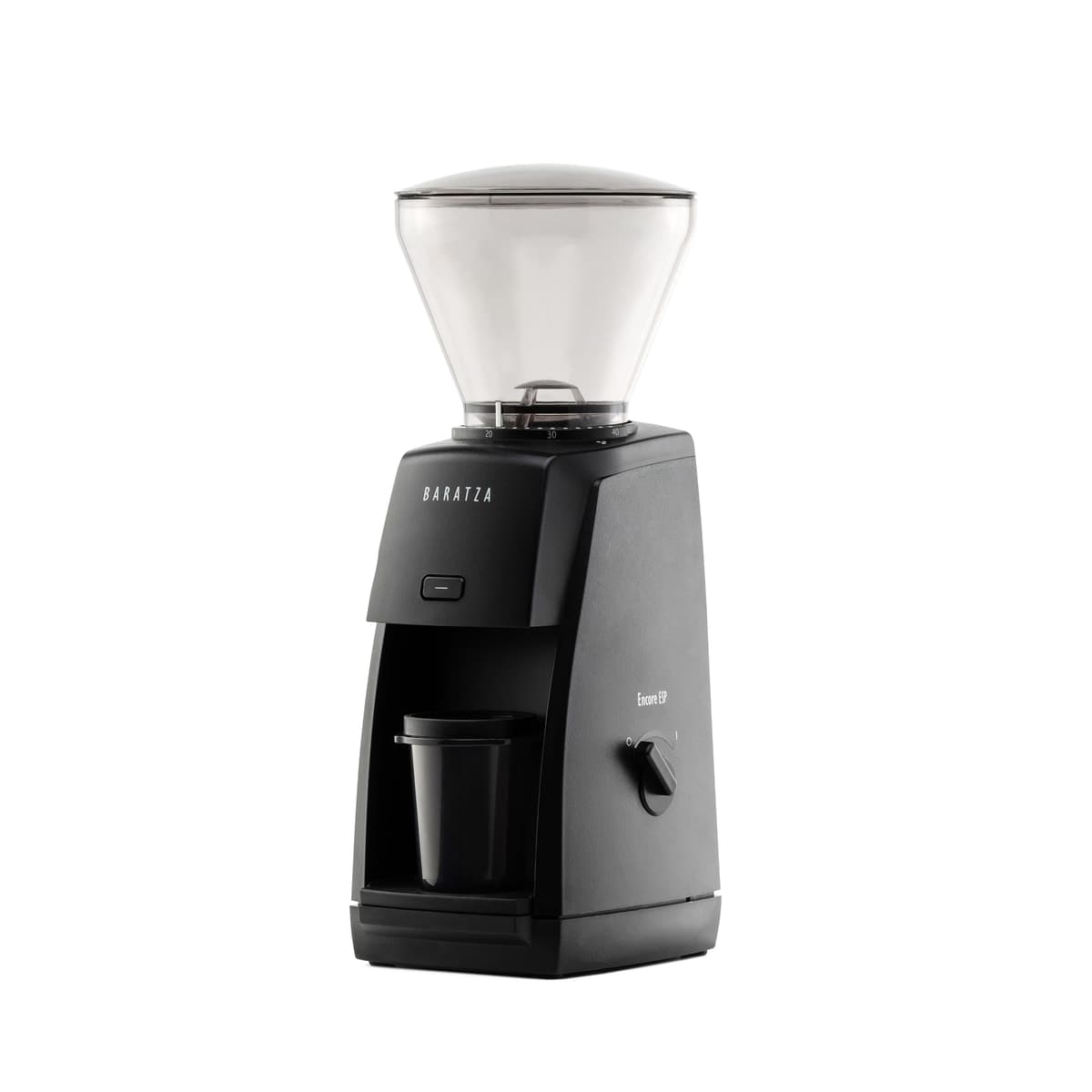
Espresso is workable, not a strength. CoffeeGeek found only two or three useful espresso steps and rated it okay to good for espresso. It says the Opus is "no better, and possibly worse" than the Encore ESP for espresso.
Coarse and metal-filter brews show fines. CoffeeGeek saw "a distinct excessive amount of fines" in the press-pot cup and found metal-filter pour-over "a bit slow and drawn out." It also calls the build "very plastic" and found the micro-adjust ring "a bit confusing."
Who should buy it, and who shouldn't
Buy one used if you want one compact grinder that is quiet in a shared kitchen. It suits someone who brews pour-over most days and pulls an occasional shot on a forgiving machine.
Skip it if espresso is your main drink, or if you want to weigh beans in and get the same weight out. Skip it too if you mostly brew French press. If you want a new grinder with a warranty, look at the Opus 2 or the alternatives below.
How it compares
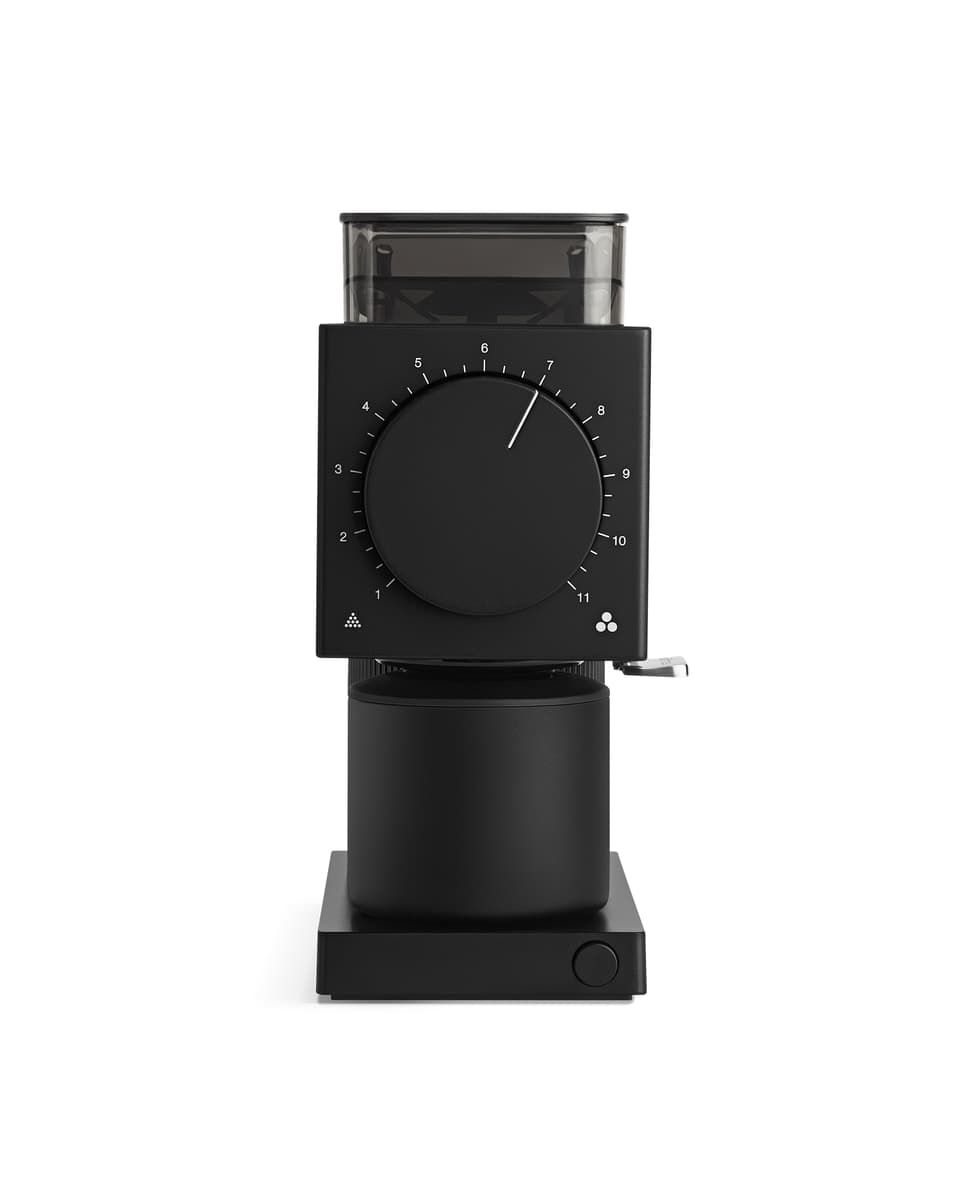
Fellow Ode Gen 2 vs Fellow Opus is the in-house choice. The Ode is flat-burred and brew-only, while the Opus adds espresso. Baratza Encore ESP vs Fellow Opus is the closest like-for-like, two conical all-rounders.
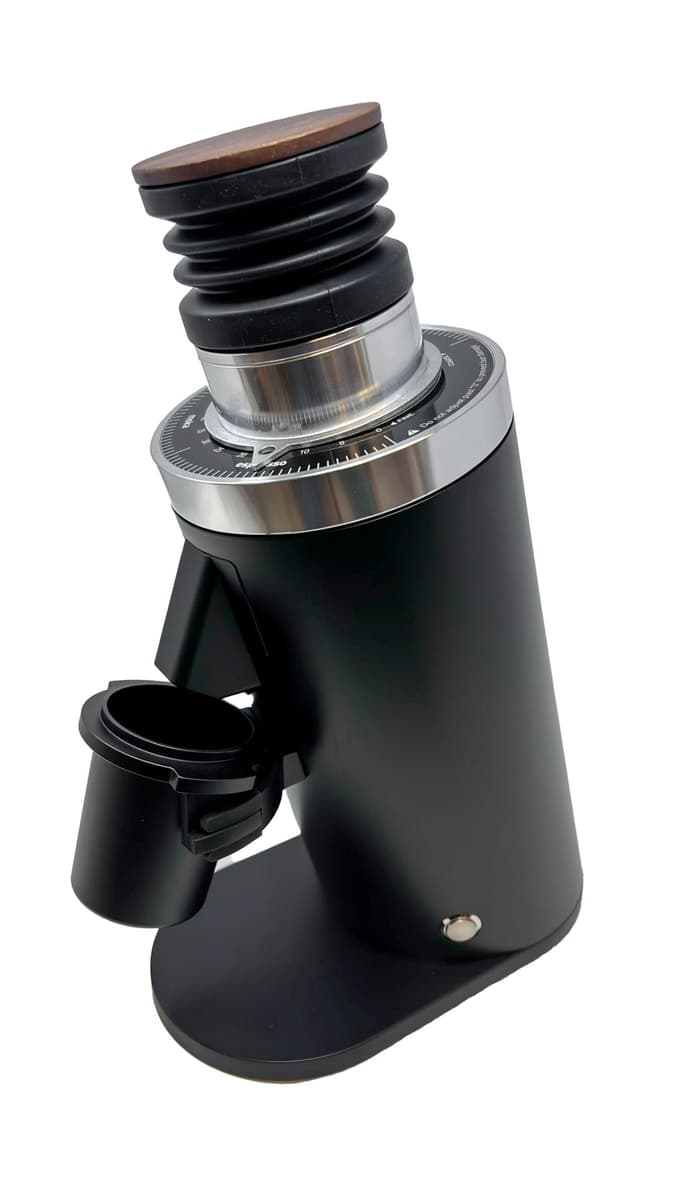
Baratza Encore vs Fellow Opus sets a stepped filter grinder against the Opus. For espresso-first buyers, DF64 Gen 2 vs Fellow Opus shows single-dose flat burrs against an all-purpose conical.
The Breville Smart Grinder Pro vs Fellow Opus page covers another multipurpose electric. The grind converter translates Opus settings to any of them.
Owning it
Fellow says anti-static performance is best for about 60 grinding cycles between cleans. Remove the catch cup and brush out the exit chute. Our burr grinder cleaning guide covers a deeper clean.
Fellow's gear guide names replacement Opus burrs and has a video on installing and calibrating them. Fellow says the inner ring "calibrates as burrs wear." See how to replace grinder burrs and how to calibrate a grinder.
On a used unit, check whether the original owner registered it, since CoffeeGeek reported a three-year registered warranty at launch. Use the settings chart on this page as your starting point.
Also worth a look
Sources
- CoffeeGeek: Fellow Opus conical burr grinder first look
- Fellow: Opus gear guide
- Fellow: Opus 2 conical burr grinder
- Fellow: home page grinder range
By Jeff Gluck · Checked 2026-10-21