
In brief
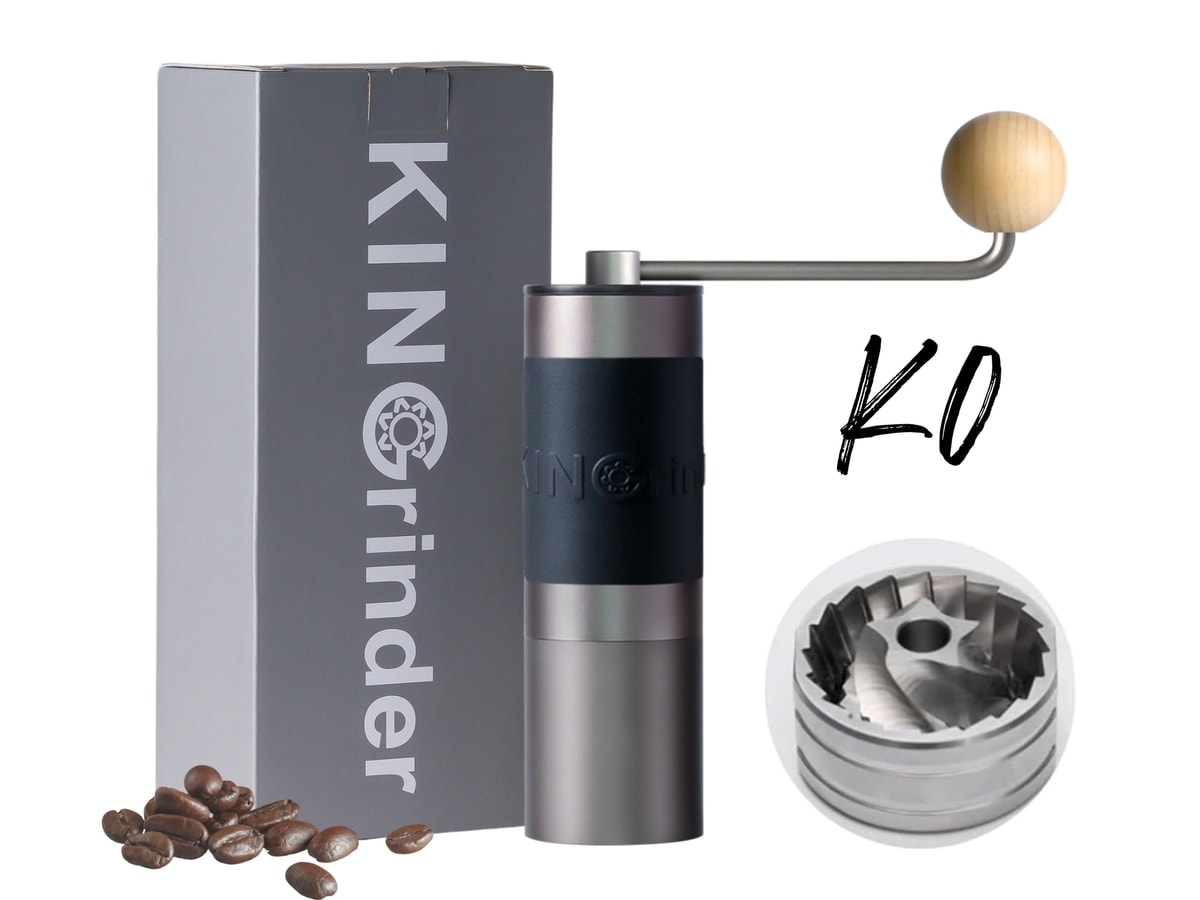
The K0 is the smallest K-series hand grinder from KINGrinder: a 38 mm stainless steel burr in an aluminum body, with internal adjustment that moves 18 microns per click. KINGrinder's own comparison page calls it "an ideal grinder to whom just began to drinking coffee."
Independent reviews of the K0 are scarce. The sources here are the maker's store page and comparison page, plus a roaster's retail write-up from Intelligentsia, so most of what follows is the maker's or a seller's account rather than a lab test. Read the praise with that in mind.
The picture they paint is a solid, simple, filter-first grinder that can stretch to espresso if you work at it.
What it does well
- Intelligentsia calls the thick aluminum body 'very solid feeling'
- 18 microns per click gives fine control, per KINGrinder and Intelligentsia
- Intelligentsia says the dual-bearing axle keeps it aligned 'out of the box'
- KINGrinder says it disassembles by hand and cleans with a brush
Where it falls short
- KINGrinder's comparison page lists it as not for espresso, though Intelligentsia says it can make an espresso grind
- The 38 mm burr is smaller than the K2's 48 mm, per Sigma Coffee
- Capacity is 20 to 25 g, per KINGrinder, one cup at a time
- KINGrinder's store listed all options out of stock
Specs
- Type
- Hand grinder, Conical burrs
- Burrs
- 38 mm stainless steel (KINGrinder)
- Adjustment
- Internal, 40 clicks per revolution, 18 microns per click
- Capacity
- 20 to 25 g
- Weight
- Just over 1.25 lb (Intelligentsia)
- Body
- Aluminum, rubber grip sleeve, dual bearings
- Power
- Hand, lid and handle can attach together
Where to start on the dial
Pour-over 87 clicksAeroPress 72 clicksDrip 108 clicks
Every method on the settings chart →On this page · 5 sections
What it does well
The body feels substantial. Intelligentsia describes a thick aluminum body that is "very solid feeling" at just over 1.25 lb, with a rubber sleeve for grip. It adds that the catch cup has metal threads so it does not work loose while grinding, and that the grip is long enough for a smooth stroke that helps prevent stalling.
Alignment is handled by design. Intelligentsia says a dual bearing system on the axle keeps the grinder "well aligned out of the box."
Adjustment is fine for the price. Intelligentsia reports 40 clicks to a revolution, each 18 microns of vertical burr movement, which matches KINGrinder's own "only 18 microns" claim. That small step lets you dial in a brew in small increments.
It is easy to look after. KINGrinder says you can disassemble it by hand and clean it with a brush, and that the all-metal design is durable. Intelligentsia notes the lid and handle can be attached to each other or kept apart, which suits a travel bag.
For pour-over, Intelligentsia suggests starting around 65 clicks and adjusting for the coffee and recipe. Treat that as a starting point, not a rule.
Where it falls short
Espresso is the gray area. KINGrinder's comparison page lists the K0 as not for espresso, while Intelligentsia says that although it is "only marketed for filter" it is "totally capable of preparing espresso," at around 36 clicks from burr lock. With a 38 mm burr and a single-cup capacity, expect more effort and less consistency than on the larger K-series burrs. The finder gives it a low espresso rating.
The burr is the small one. Sigma Coffee describes the K2's burr as larger than the "38mm burr set in the K0." Sigma Coffee adds that the K2's larger burr eases coarse grinding.
Capacity is one cup. KINGrinder lists 20 to 25 g, and Intelligentsia says the body is wide enough for a 25 g dose. If you brew for two, you will grind twice.
Availability is patchy. KINGrinder's UK store page said all options were out of stock, and Intelligentsia's page showed the K0 out of stock too, so check before you plan around it.
Who should buy it, and who shouldn't
Buy it if you brew pour-over, AeroPress or drip, want an all-metal grinder that does not feel like a toy, and prefer a small grinder to a bulky one. The 18-micron step is a real advantage over cheaper dials.
Skip it if espresso is your main brew, or if you grind for several cups. The K1 and K2 make more sense for those jobs, per KINGrinder's own positioning.
How it compares
The KINGrinder K1 shares the K0's 38 mm burr and 18-micron clicks. KINGrinder's comparison page positions the K1 for espresso, where it lists the K0 as not for espresso.
The KINGrinder K2 moves to a 48 mm burr. Sigma Coffee calls it a step up and says the larger burr makes it better in coarser ranges.
The KINGrinder P1 is a lighter plastic-bodied option with 30 clicks per rotation, per KINGrinder. The Timemore C2 is another small hand grinder to shortlist at this price.
Owning it
Keep it clean with a brush rather than water. Our guide to cleaning a hand grinder covers the routine.
If you take the burr apart, re-find your starting point. Intelligentsia describes counting clicks from "burr lock," which is the same idea as the zero point; the calibration guide shows how to set it. With 40 clicks per revolution, write down your recipe settings in clicks and revolutions.
Also worth a look
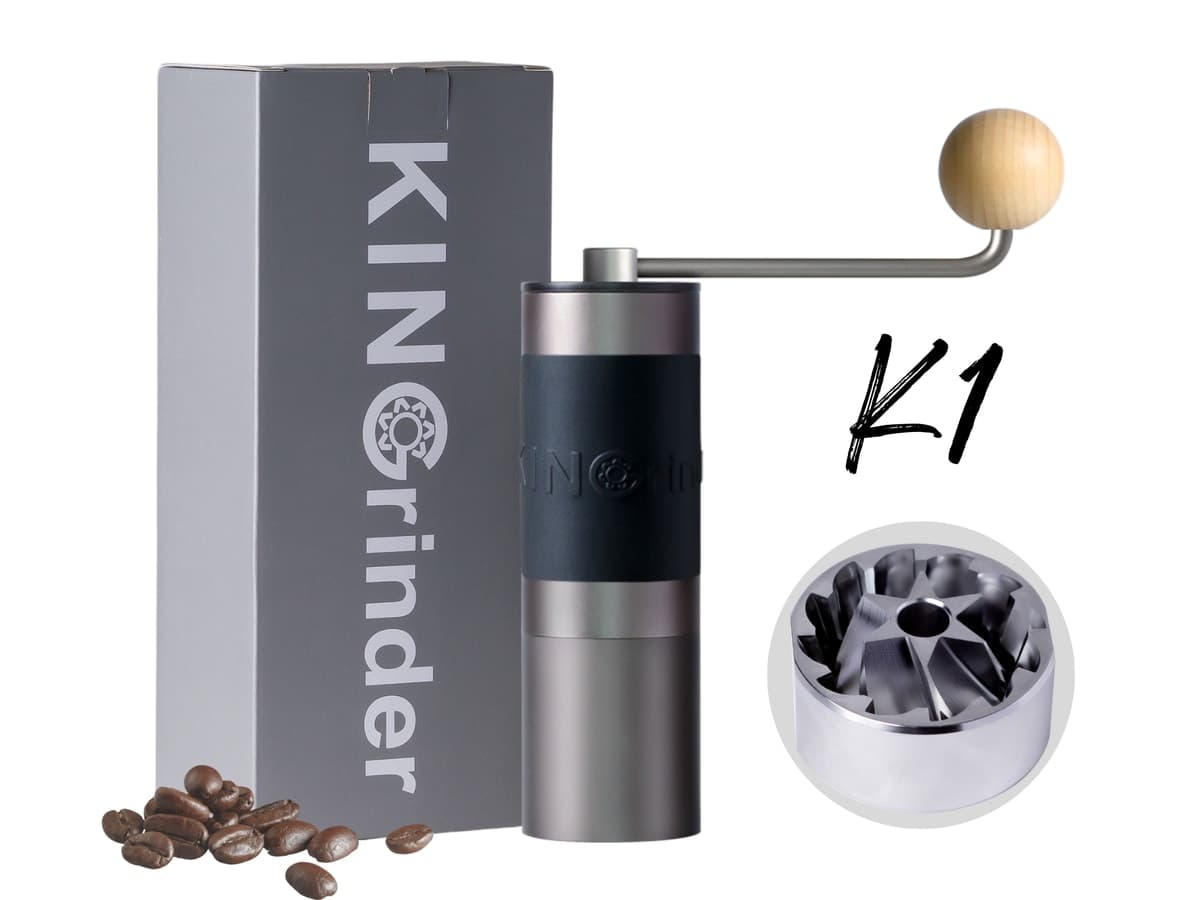 KINGrinder K1Same 38 mm burr and 18-micron clicks; KINGrinder's comparison page positions the K1 for espresso
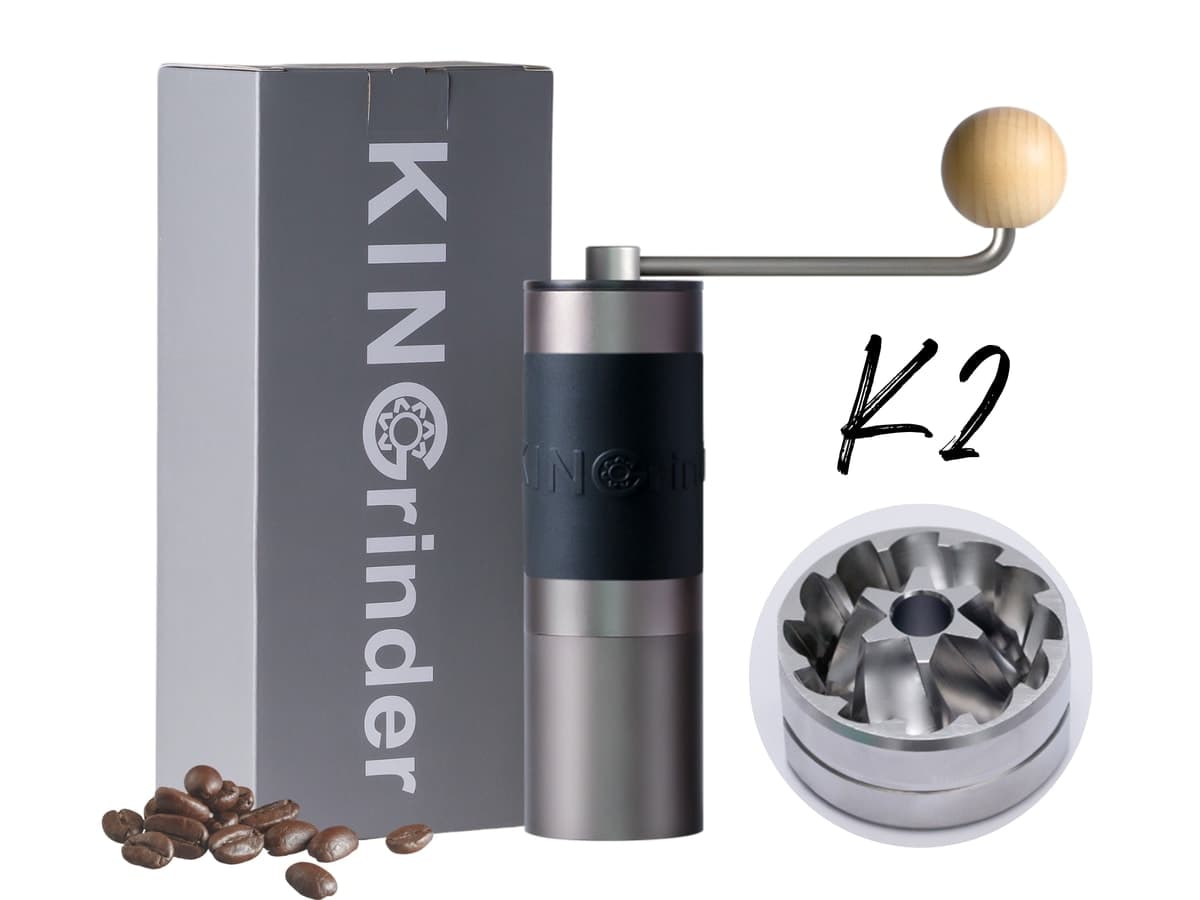 KINGrinder K2Larger 48 mm burr that Sigma Coffee says is better for coarser grinds
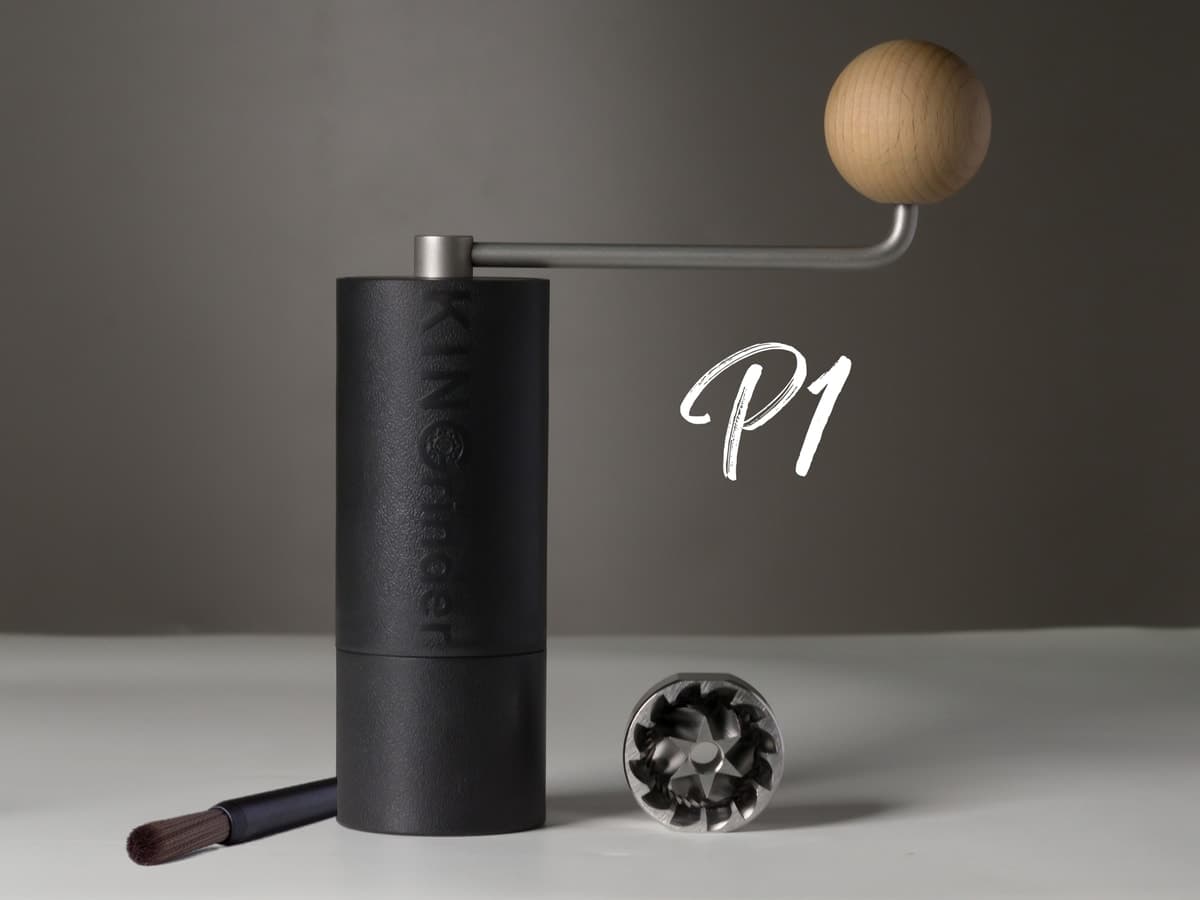 KINGrinder P1Lighter plastic-bodied entry grinder with 30 clicks per rotation
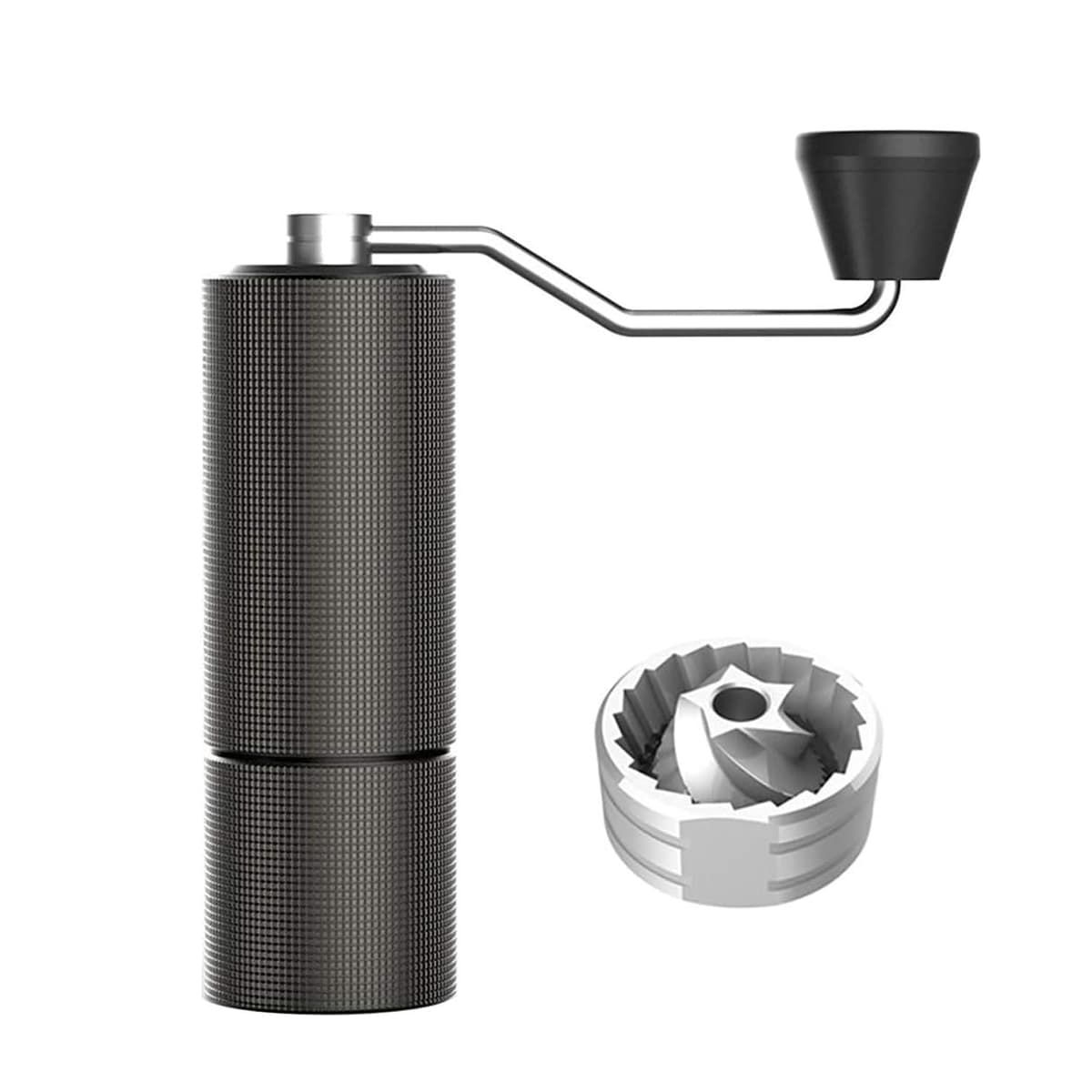 Timemore C2Compact hand grinder at a similar entry-level job
Sources
- KINGrinder: K0 Straight Handle Manual Coffee Grinder (store)
- KINGrinder: Comparison of the KINGrinder models
- Intelligentsia: KINGrinder K0 Grinder
- Sigma Coffee: KINGrinder K2 Hand Coffee Grinder
By Jeff · Checked 2026-10-22