
In brief
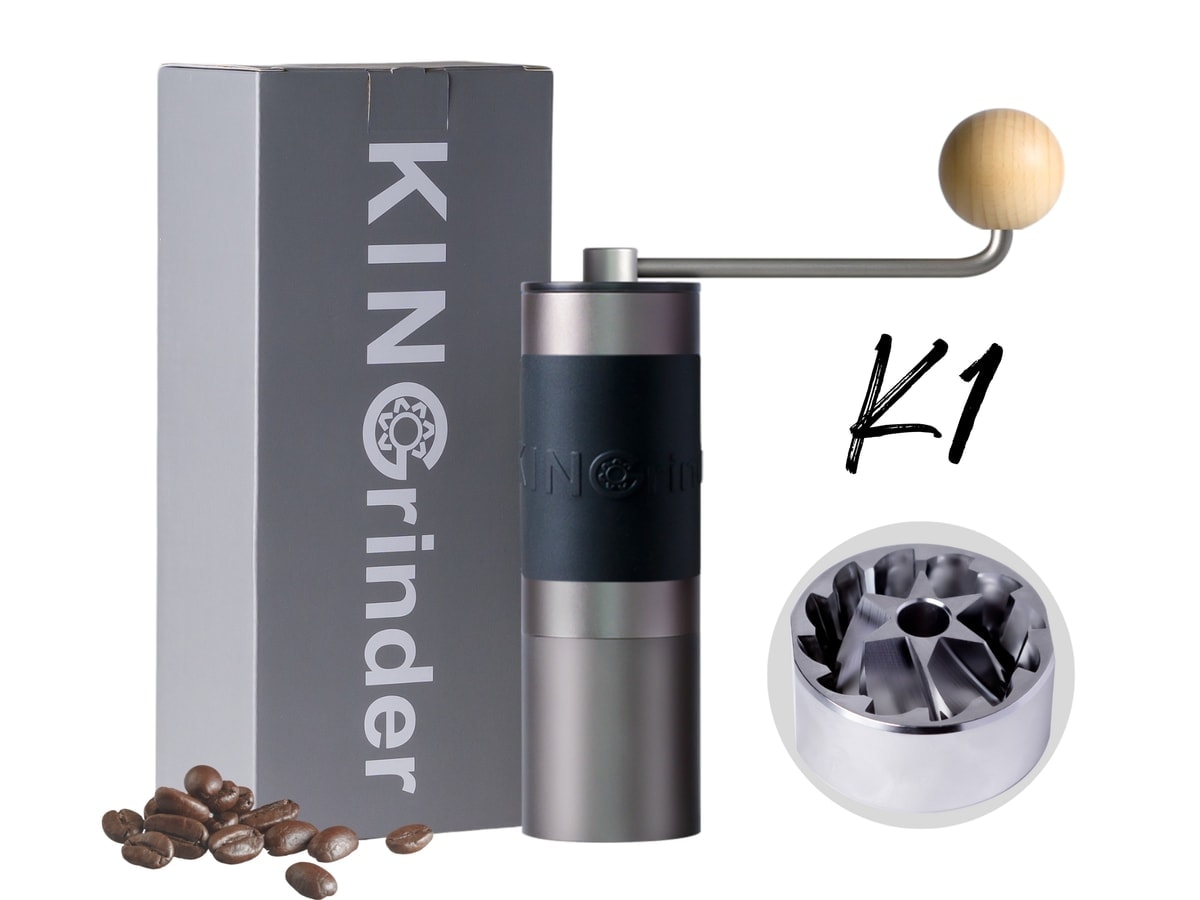
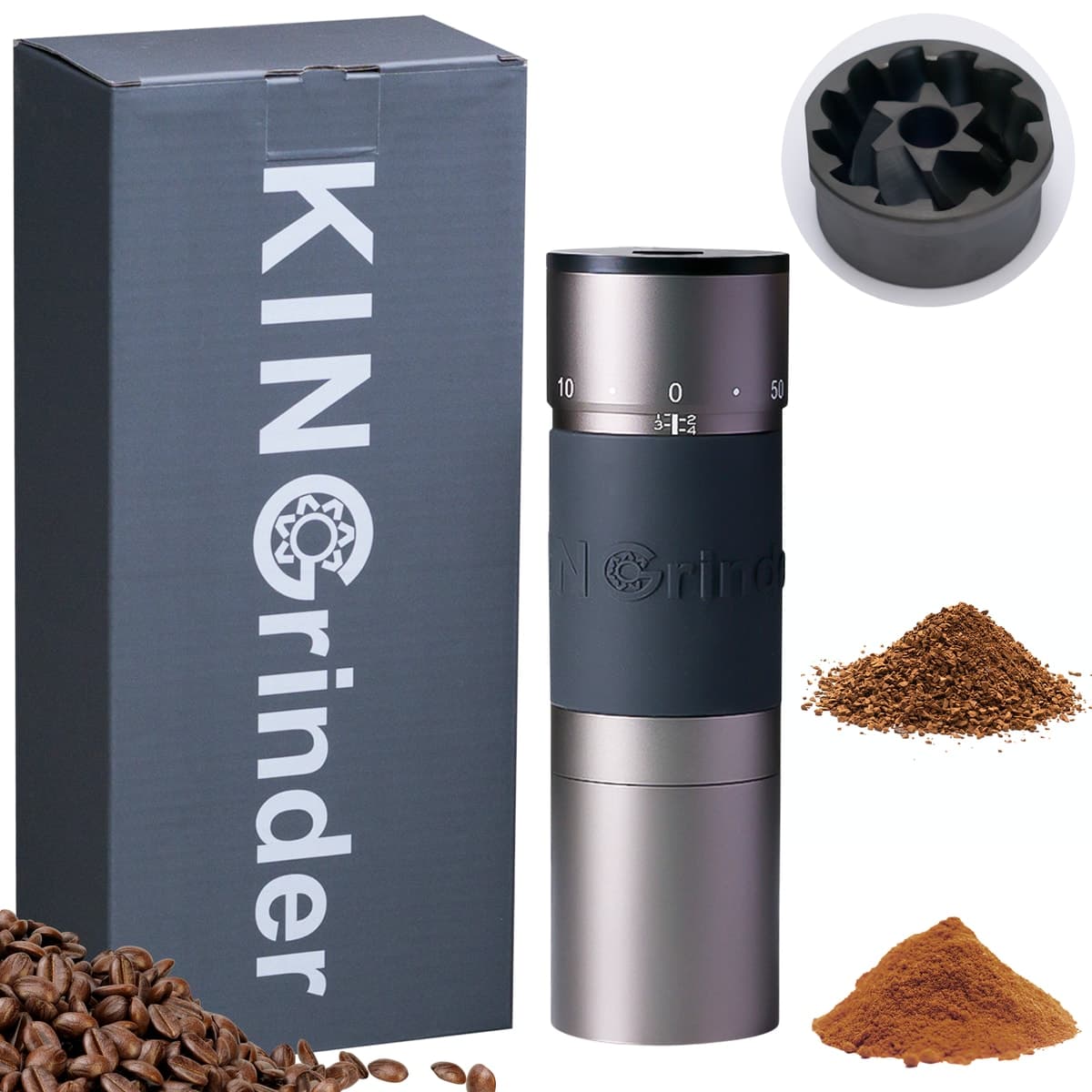
The K1 is a small KINGrinder hand grinder with a stainless steel burr set, an aluminum body and internal adjustment that moves 18 microns per click. KINGrinder's store page promises "durable and sturdy" construction and a grind range from fine to coarse. Its comparison page puts the burr at 38 mm and lists espresso as a use.
Independent reviews of the K1 are scarce. Most of what follows is from KINGrinder, a seller write-up that GSM Gotech published with affiliate links, and notes on the K0 and K2 that sit next to it in the range. None of these is a measured test, so treat the specifics as the maker's account.
The K1 is easy to place: it shares its burr size with the K0 and sits one step below the K2.
What it does well
- 18-micron clicks give fine steps, per KINGrinder
- KINGrinder lists a stainless steel burr set in an aluminum body
- A reviewer at GSM Gotech says the double-bearing design keeps grinding smooth
- KINGrinder says it takes apart by hand and cleans with a brush
Where it falls short
- Independent tests of the K1 are scarce; most sources here are the maker and sellers
- KINGrinder's comparison page lists the K1 as single-cup capacity
- The K2 steps up to a 48 mm burr, per Sigma Coffee
- KINGrinder's store listed all options out of stock
Specs
- Type
- Hand grinder, Conical burrs
- Burrs
- 38 mm stainless steel (KINGrinder)
- Adjustment
- Internal, 18 microns per click, fine to coarse
- Capacity
- 20 to 25 g
- Body
- Aluminum, double bearings
- Cleaning
- Disassembles by hand, brush clean
- Power
- Hand
Where to start on the dial
Pour-over 86 clicksAeroPress 76 clicksDrip 108 clicksEspresso 48 clicks
Every method on the settings chart →On this page · 5 sections
What it does well
Adjustment is fine for the price. KINGrinder says each click moves 18 microns, which suits a one-cup grinder where small changes matter when you dial in a recipe. GSM Gotech repeats the 18-micron figure and describes 140 grind settings.
The build is metal. KINGrinder says the aluminum body is more robust and long-lasting than a plastic one, and GSM Gotech describes a stainless steel conical burr set with a double bearing design, which it says makes grinding "more smooth."
It is easy to clean. KINGrinder says you can disassemble the grinder by hand and clean it with a brush, and pitches it for camping and hiking.
It is positioned for espresso. KINGrinder's comparison page lists the K1 for espresso, while it lists the K0 as not for espresso. GSM Gotech suggests it for French press, drip, espresso and AeroPress. The finder gives its espresso ability a low rating, so treat that as possible rather than easy.
Where it falls short
Evidence is thin. GSM Gotech's page is promotional, with no test results and no stated cons. No independent measurement of its grind distribution turned up in the sources gathered here, so how many fines it makes is unreported.
Capacity is limited. KINGrinder lists 20 to 25 g, so it is a one-cup grinder. If you brew for two, you grind twice.
The burr is the smaller of KINGrinder's K series. Sigma Coffee notes that the K2's burr is larger than the K0's 38 mm set, and describes the K2 as a step up that suits coarser grinds. By the comparison page the K1 shares the 38 mm class with the K0.
Stock may be a problem. KINGrinder's store page said all options were out of stock, so check availability before planning around it.
Who should buy it, and who shouldn't
Buy it if you want an all-metal hand grinder with fine steps for pour-over, AeroPress or drip, and an occasional espresso shot. KINGrinder's own pitch is that it is an easy first step into better coffee.
Skip it if you grind for several cups at a time, if you want a large burr for coarse brews, or if you want the safety of independent reviews. The K2 has more written about it, including a hands-on espresso comparison, and Sigma Coffee describes it as pour-over focused and espresso capable.
How it compares
The KINGrinder K0 shares the K1's 38 mm burr and 18-micron clicks. Intelligentsia describes the K0 with 40 clicks per revolution and says it is capable of espresso despite being marketed for filter.
The KINGrinder K2 has a 48 mm burr and a 595 g body, per Sigma Coffee. It is the natural step up.
The KINGrinder K4 is the model KINGrinder's comparison page recommends for espresso, with an external adjustment and a titanium-coated burr. The KINGrinder P1 is a lighter, cheaper plastic-bodied option.
Owning it
Clean it with a brush rather than water, and keep the parts together. Our guide to cleaning a hand grinder covers the routine.
Because adjustment is internal, find your starting point after any teardown. The calibration guide explains the zero point, and the new-grinder guide shows how to build your first set of settings.
Also worth a look
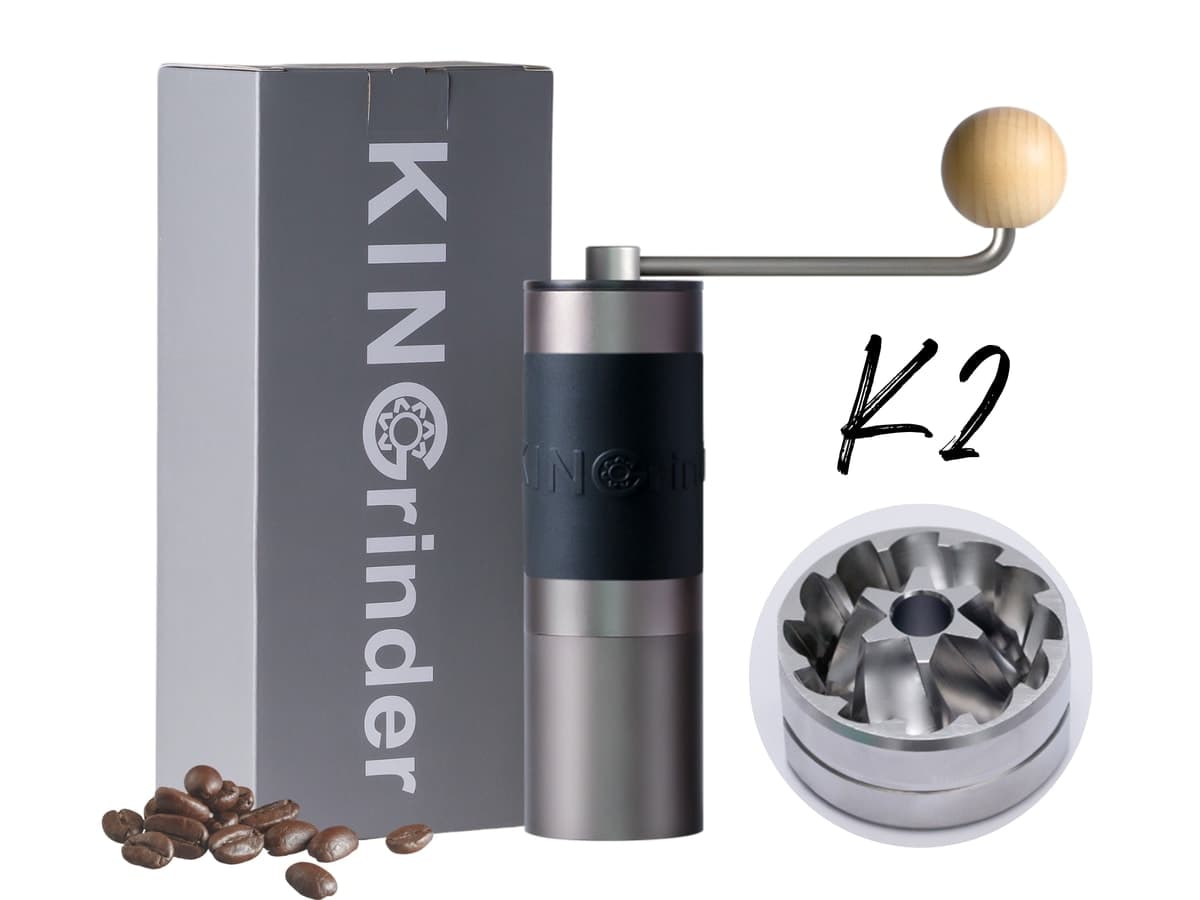 KINGrinder K248 mm burr that Sigma Coffee says is better for coarser grinds
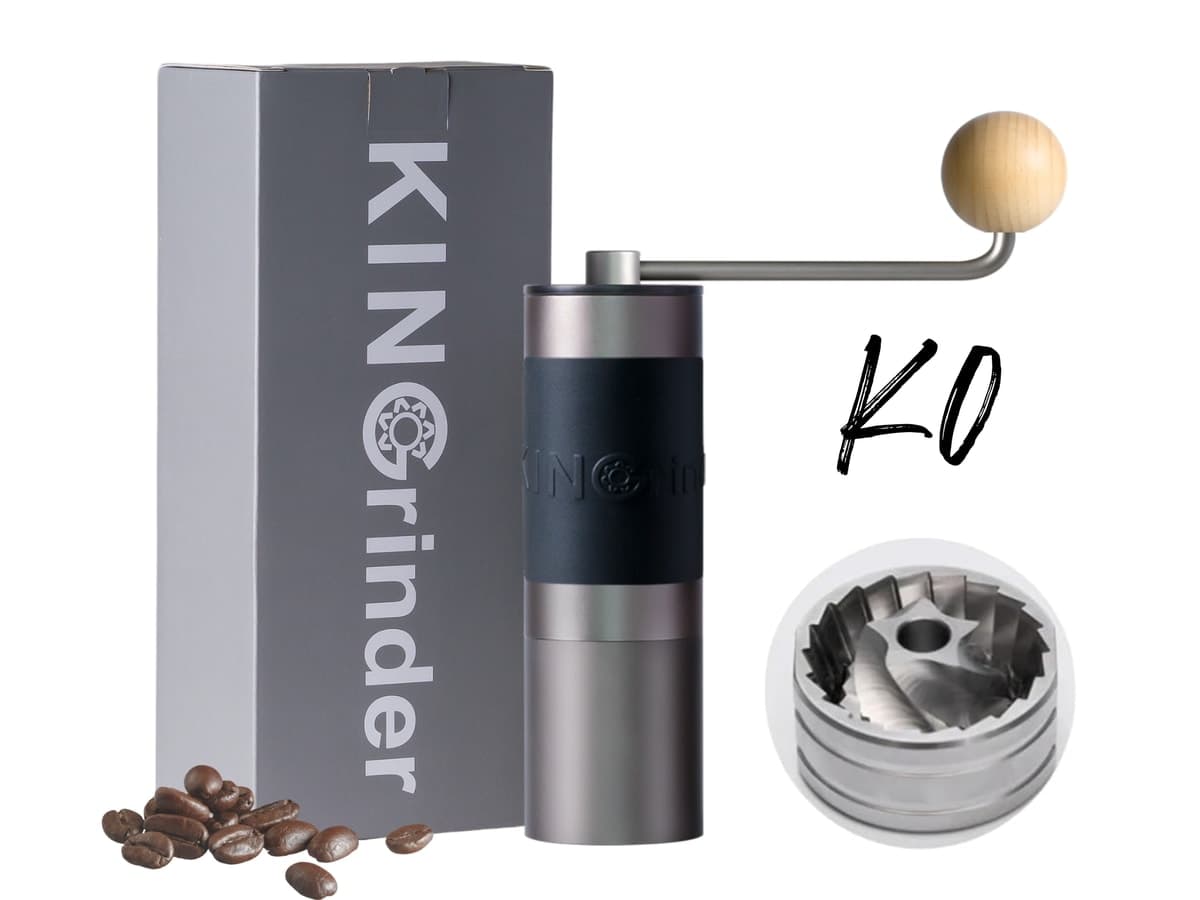 KINGrinder K0Same 38 mm burr and clicks; KINGrinder's comparison page says it is not for espresso
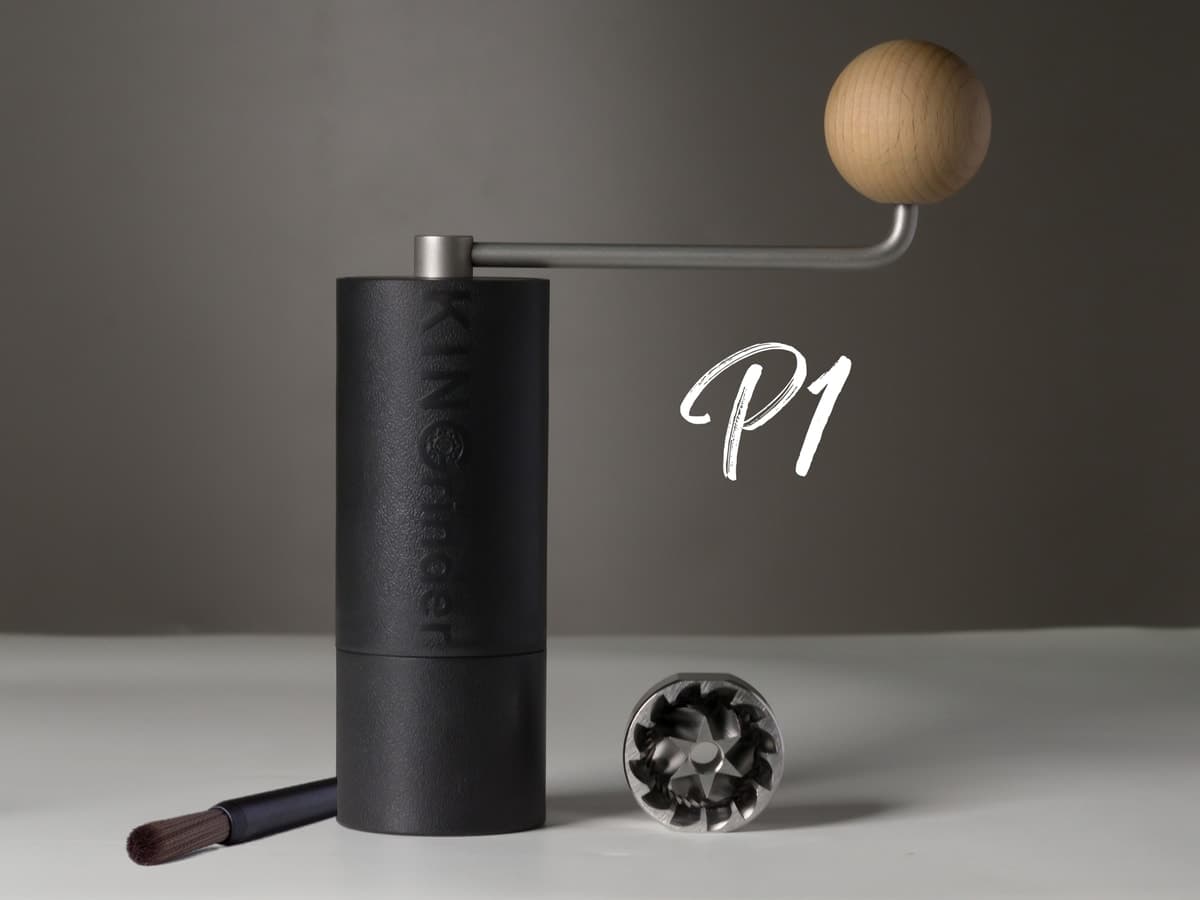 KINGrinder P1Lighter, cheaper plastic-bodied grinder with 30 clicks per rotation
 KINGrinder K4KINGrinder's espresso-focused model with an external dial
Sources
- KINGrinder: K1 Manual Coffee Grinder (store)
- KINGrinder: Comparison of the KINGrinder models
- GSM Gotech: Review KINGrinder K1 Iron Grey Manual Hand Coffee Grinder
- Intelligentsia: KINGrinder K0 Grinder
- Sigma Coffee: KINGrinder K2 Hand Coffee Grinder
- Pub Palaver: Espresso grinder review, KINGrinder
By Jeff · Checked 2026-10-22