
In brief
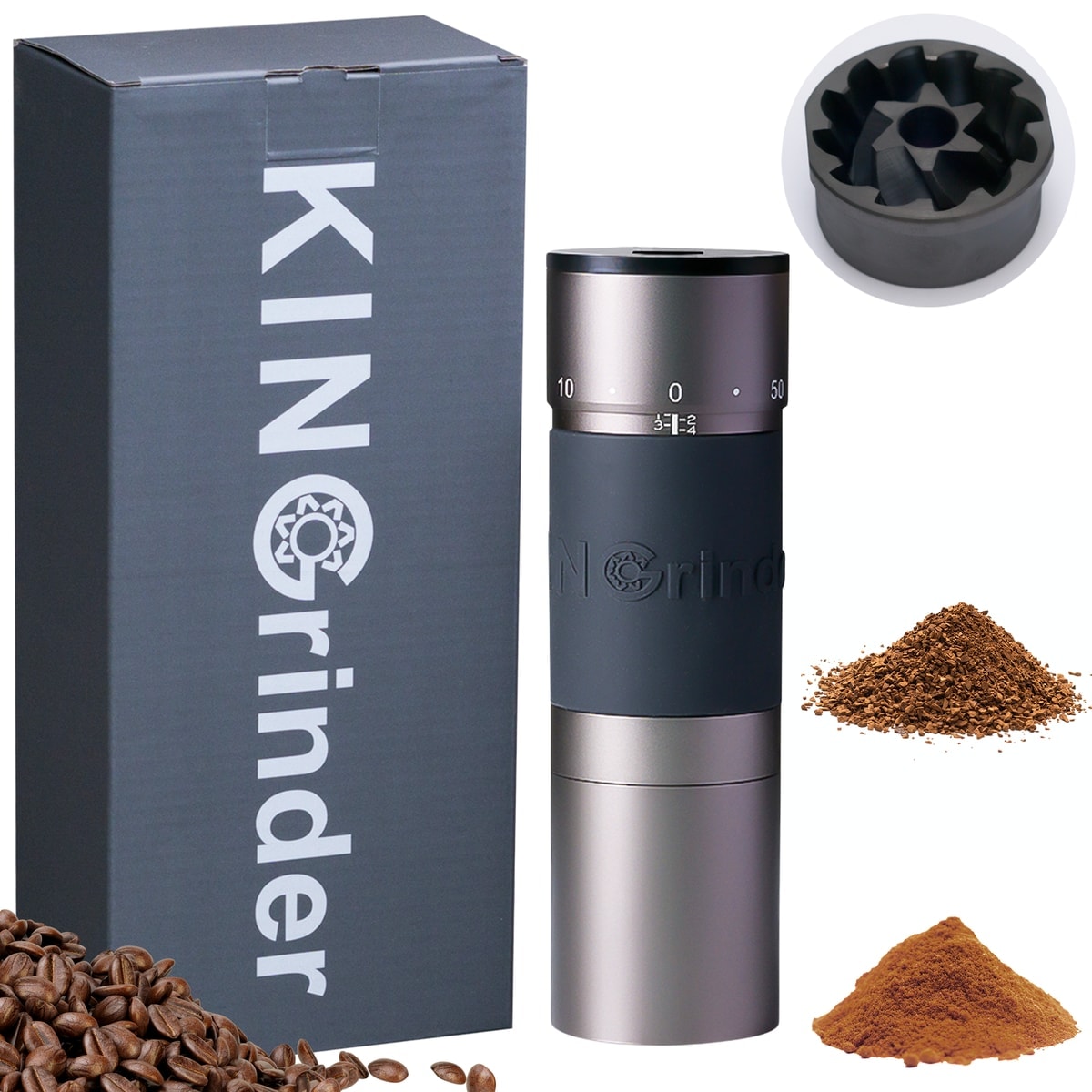
The K4 is KINGrinder's espresso-leaning hand grinder. KINGrinder says it pairs a titanium-coated burr, the same as its K3, with an external dial at 16 microns per click. It calls the K4 "the perfect manual coffee grinder for the espresso."
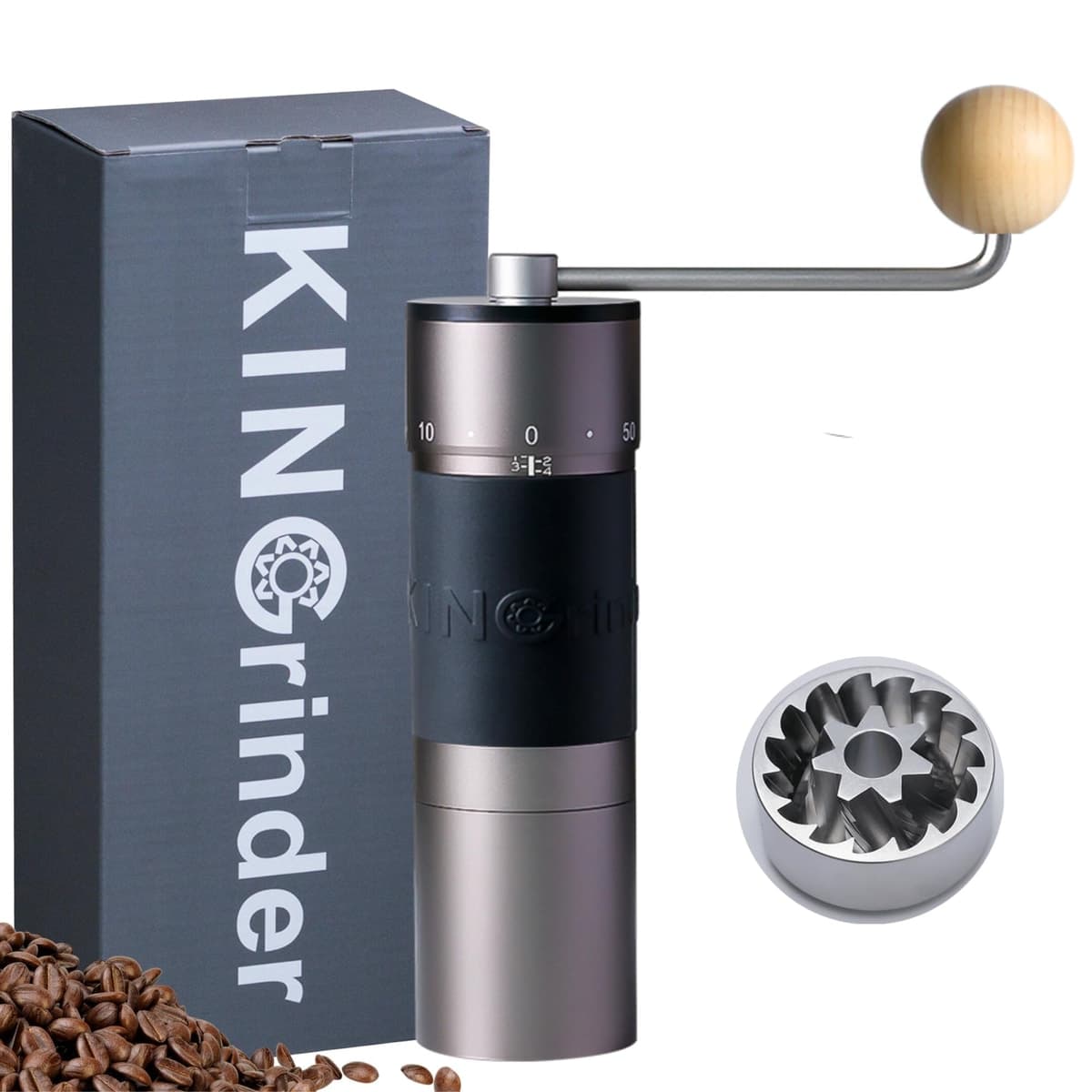
It is the K6's near twin. KINGrinder says the two share the same weight, dial, hopper and shape, and that "the major and only different is the burr set." The K4's coated burr is meant for espresso; the K6's stainless heptagonal burr is meant to do everything.
The trade-off is filter. KINGrinder itself prefers the K6 for pour-over, especially with light roasts.
What it does well
- KINGrinder calls it 'tailor-made for the espresso'
- External dial: no need to remove the catch cup to change grind, per KINGrinder
- Titanium-coated burrs, which Pub Palaver says may last longer than plain stainless
- Pub Palaver rates the K4 and K6 teardrop knob 'superior' to KINGrinder's round one
Where it falls short
- KINGrinder prefers the K6 for pour-over and light roasts
- Pub Palaver found the top-mounted dial moves your hand away from the handle and strains the wrist
- Sold in the US mainly through KINGrinder's Amazon store; few independent retailers
Specs
- Type
- Hand grinder, Conical burrs
- Burrs
- Conical, titanium-coated (same coating as the K3, per KINGrinder)
- Adjustment
- External dial, 60 clicks per rotation, 16 microns per click
- Capacity
- 30–35 g
- Weight
- Over 600 g
- Power
- Hand
Where to start on the dial
Espresso 27 clicksMoka pot 50 clicksAeroPress 66 clicks
Every method on the settings chart →On this page · 5 sections
What it does well
It is built around espresso. KINGrinder says the coated burr and 16-micron steps make the K4 "tailor-made for the espresso." Its model comparison rates the capacity at two double shots.
The dial sits outside the body. KINGrinder explains that the exterior adjustment means "you don't need to remove the receiver to set the desire grind size." Its model comparison lists 60 clicks per rotation.
The burrs should wear well. Pub Palaver notes the K3 and K4 have titanium-coated burrs, which "may make them last longer." It also rates the K4 and K6 teardrop knob "superior" and "just nicer to use."
The kit is complete. KINGrinder's unboxing post shows the grinder arriving with a brush, a dual-language manual and a spare circlip.
Where it falls short
Light-roast filter is not its strength. KINGrinder says the K4 brings out sweetness from medium and medium-dark roasts in pour-over. For "the sour fruit flavor on the light-roasted coffee beans," it points to the K6.
The dial position is not for everyone. Pub Palaver found the top-mounted ring moves your hand away from the handle and adds wrist strain. Its author would prefer a ring at the bottom.
Independent testing is thin. Pub Palaver's espresso tests used the K2 and K6, and it judges the K4 from its shared design. KINGrinder's own retailer page lists Amazon stores and a handful of shops outside the US, so US buying options are limited.
Who should buy it, and who shouldn't
Buy it if you pull espresso from medium or darker roasts and want to spend little. It also suits moka pot and AeroPress, and the settings chart on this page covers each method.
Skip it if you mostly brew pour-over with light roasts. KINGrinder recommends the K6 for that. Skip it too if you need very fine espresso control, where 16-micron clicks feel coarse.
How it compares
The KINGrinder K6 has the same body and dial with a stainless heptagonal burr. KINGrinder calls it the versatile one. See K4 vs K6 for both settings scales.
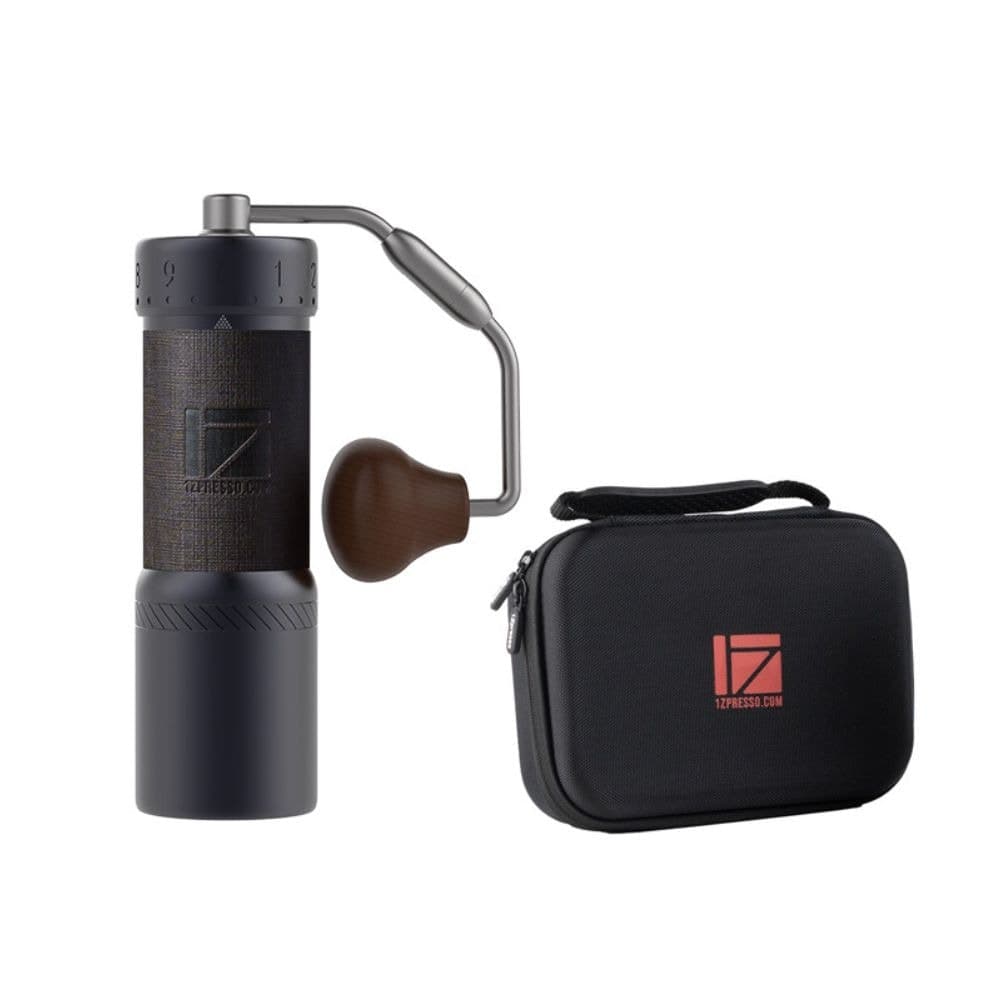
The 1Zpresso JX-Pro moves 12.5 microns per click, according to 1Zpresso's comparison table. See JX-Pro vs K4.
The 1Zpresso J-Ultra costs more and moves just 8 microns per click, per 1Zpresso. If you are starting out with filter instead, K4 vs Timemore C3 shows a cheaper filter-first option.
Owning it
Find your zero first. KINGrinder says to turn the adjustment nut gently clockwise until it stops, then count clicks back out. It warns the printed number at zero may not match the click count, which is why the zero point matters.
KINGrinder's FAQ advises against grinding within 16 clicks of zero, to protect the burrs. Our calibration guide covers finding a reliable zero.
KINGrinder has a dedicated cleaning guide for its exterior-adjustment models. You remove the catch cup and back off the adjustment nut. Then take out the circlip and top bearing, and lift out the burr set on its shaft.
KINGrinder admits the exterior-adjustment design is tricky to take apart at first, but says it gets easier with practice. Keep the spare circlip that comes in the box, since that small clip holds the burr assembly in place.
Our guide to cleaning a hand grinder covers the routine.
Also worth a look
Sources
- KINGrinder: Comparison of the KINGrinder models
- KINGrinder: Showdown of K4 and K6
- KINGrinder: Grind setting, exterior adjustment
- KINGrinder: K4 grinder unboxing
- KINGrinder: Store (Japan)
- KINGrinder: Official retailers
- KINGrinder: FAQ (Traditional Chinese)
- KINGrinder: Friendly cleaning, exterior adjustment
- 1Zpresso: J-Ultra (with model comparison table)
- Pub Palaver: Espresso hand grinder review, KINGrinder K2, K3, K4, K5 and K6
By Jeff Gluck · Checked 2026-10-21