
Which to buy · Every setting
KINGrinder K4 vs KINGrinder K6
Two KINGrinder models whose numbers do not mean the same thing. Both count 240 clicks — and the same number is not the same grind.
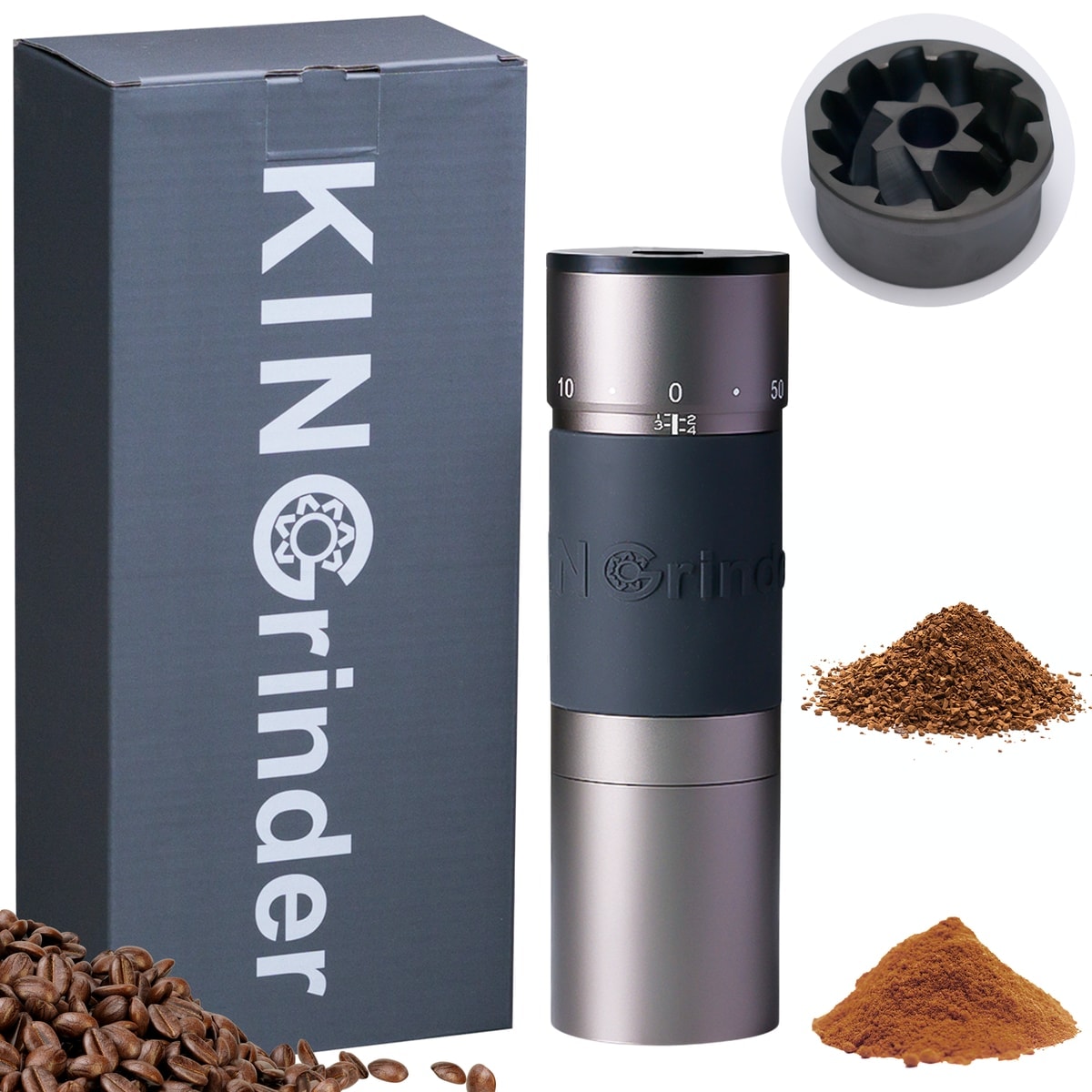
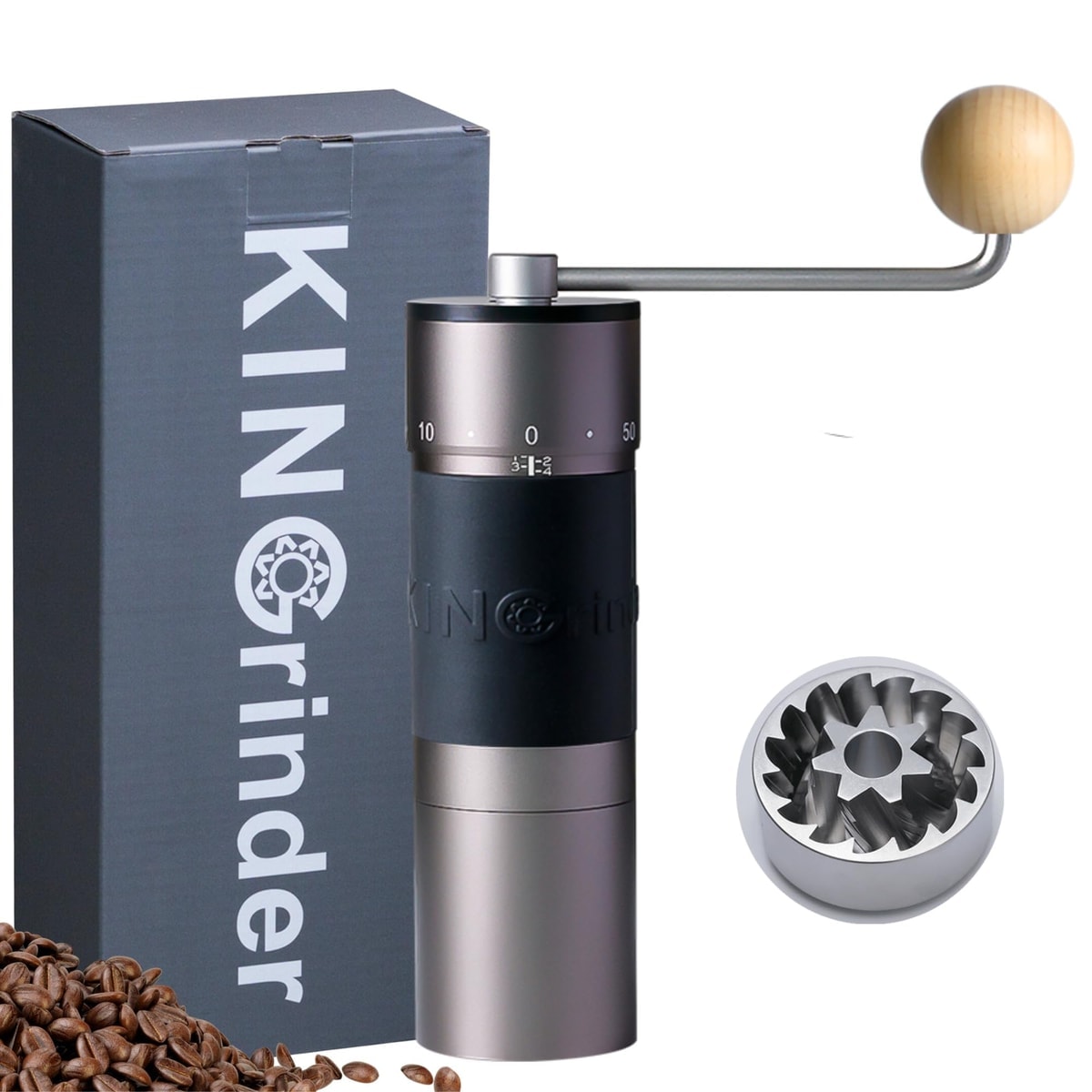
Which to buy
Choose the
K4 if you…
- pull mostly espresso — KINGrinder calls the K4 "tailor-made for the espresso"
- brew medium to dark roasts — KINGrinder lists the K4 for those
- want titanium-coated conical burrs
Choose the
K6 if you…
- brew mostly pour over — KINGrinder prefers the K6 for it, for fruit acidity in light roasts
- want 48 mm heptagonal stainless steel burrs
- pull espresso with light to medium roasts — KINGrinder's Japan store lists the K6 for those
Shop links are affiliate links: BrewMark earns a commission if you buy through one, at no extra cost to you. The verdicts were written without regard to it.
Sources: KINGrinder — Showdown of K4 and K6 · KINGrinder — model comparison · KINGrinder — Store (Japan)
| K4 | K6 | |
|---|---|---|
| Brand | KINGrinder | KINGrinder |
| Scale | Clicks | Clicks |
| Dial range | 0 clicks – 240 clicks | 0 clicks – 240 clicks |
| Burrs | Conical | Conical |
| Espresso → filter | 69.5 clicks | 71.6 clicks |
| Filter → coarse | 48.3 clicks | 57.5 clicks |
The same number means different things
Both grinders use a clicks, which makes it tempting to copy a number straight across. Setting 120 clicks sits at grind index 30.2 on the K4 but 50.8 on the K6 — far enough apart to change the cup.
Converting a setting
If a recipe quotes a setting for one of these grinders, read across for the equivalent on the other. Rows are spaced evenly by grind size, not by dial number — on a conical burr those are not the same thing.
| K4 | K6 |
|---|---|
| 63 clicks | 31 clicks |
| 84 clicks | 52 clicks |
| 101 clicks | 71 clicks |
| 114 clicks | 83 clicks |
| 124 clicks | 94 clicks |
| 135 clicks | 105 clicks |
| 151 clicks | 119 clicks |
| 167 clicks | 133 clicks |
| 178 clicks | 144 clicks |
| 180 clicks | 152 clicks |
| 181 clicks | 156 clicks |
| K6 | K4 |
|---|---|
| 31 clicks | 63 clicks |
| 52 clicks | 84 clicks |
| 71 clicks | 101 clicks |
| 83 clicks | 114 clicks |
| 94 clicks | 124 clicks |
| 105 clicks | 135 clicks |
| 119 clicks | 151 clicks |
| 133 clicks | 167 clicks |
| 144 clicks | 178 clicks |
| 152 clicks | 180 clicks |
| 156 clicks | 181 clicks |
| 158 clicks | 181 clicks |
| 160 clicks | 181 clicks |
Side by side, by brew method
Where each grinder lands for the same brew, worked out from its own dial curve.
| Method | K4 | K6 |
|---|---|---|
| Espresso | 75 clicks | 44 clicks |
| Moka pot | 98 clicks | 68 clicks |
| AeroPress (short steep) | 114 clicks | 83 clicks |
| Pour over — V60 / cone | 130 clicks | 100 clicks |
| Siphon | 136 clicks | 106 clicks |
| Pour over — flat bottom | 141 clicks | 110 clicks |
| Steep and release — Clever / Switch | 147 clicks | 115 clicks |
| Drip / batch brew | 151 clicks | 119 clicks |
| Cupping | 155 clicks | 122 clicks |
| Chemex | 166 clicks | 132 clicks |
| French press | 180 clicks | 150 clicks |
| Cold brew | 181 clicks | 157 clicks |
The shape of each dial
Where the connectors bunch, that grinder’s dial is compressed and single steps count for more. Comparing the two shapes tells you which gives finer control, and where.
KINGrinder K4
KINGrinder K6
Dialing in the K4
External adjustment at a notably low price, which is the whole proposition. Its click resolution is finer than most grinders in its bracket, so small movements do less than you might expect — move in larger increments than you would on a C3.
Dialing in the K6
KINGrinder's all-rounder, and the value benchmark hand grinders get measured against. External adjustment, 60 clicks a rotation, at 16 microns a click — a coarser step than the 1Zpresso J and X series manage, and the one place you feel the price: espresso is dialable, but in slightly bigger jumps than a stepless grinder gives you. The 48mm stainless heptagonal burrs are what separate it from the rest of the KINGrinder line. If you only ever pull shots, the K4 is the espresso-specific sibling with titanium-coated burrs; the K6 is the one that covers pour over through espresso without being built for either.