
Which to buy · Every setting
Breville Barista Touch Impress (built-in) vs Eureka Mignon Specialita
Conical against flat — the Barista Touch Impress (built-in)'s scale curves where the other runs straight. The Mignon Specialita turns 0–24 rotations; the Barista Touch Impress (built-in) is numbered 1–30.
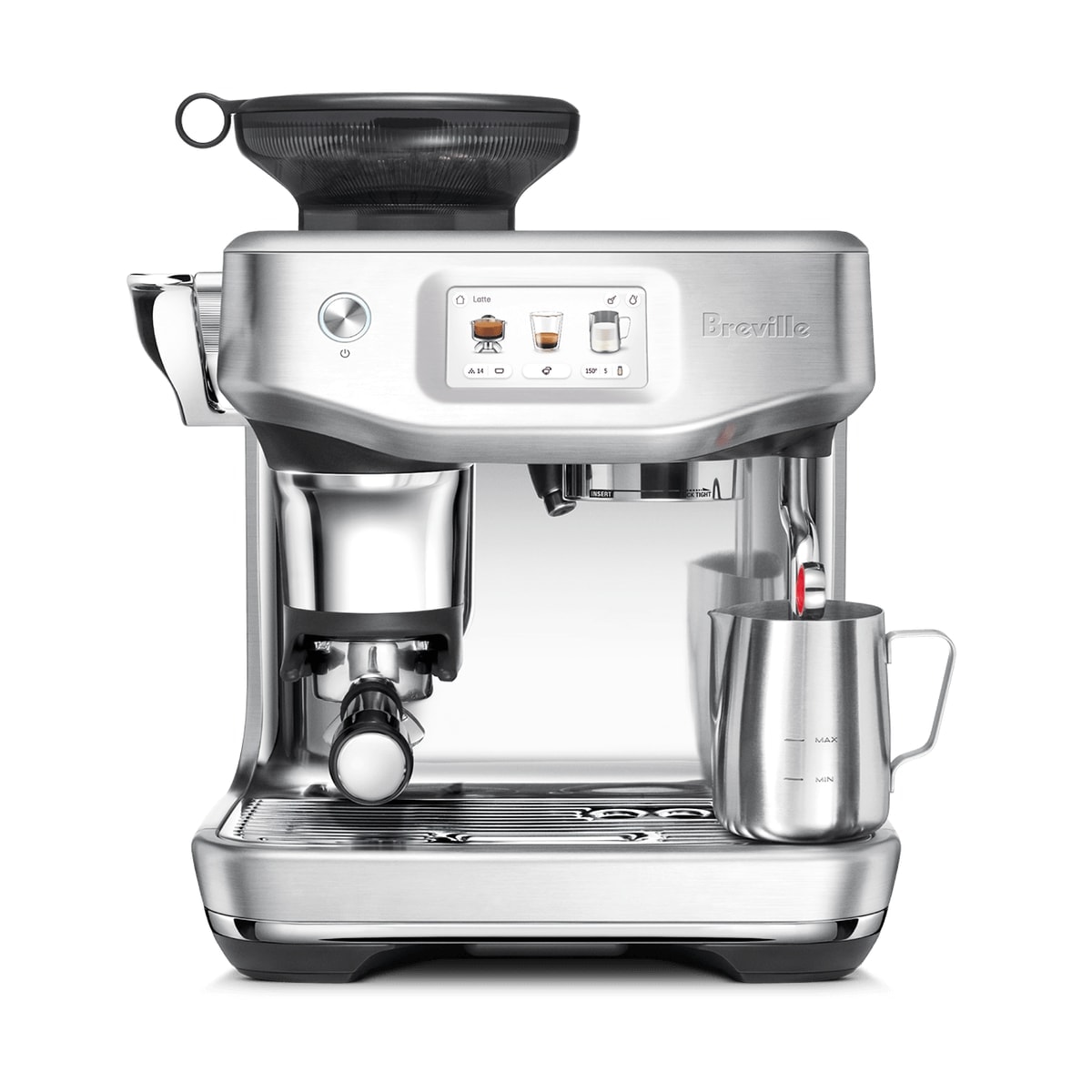
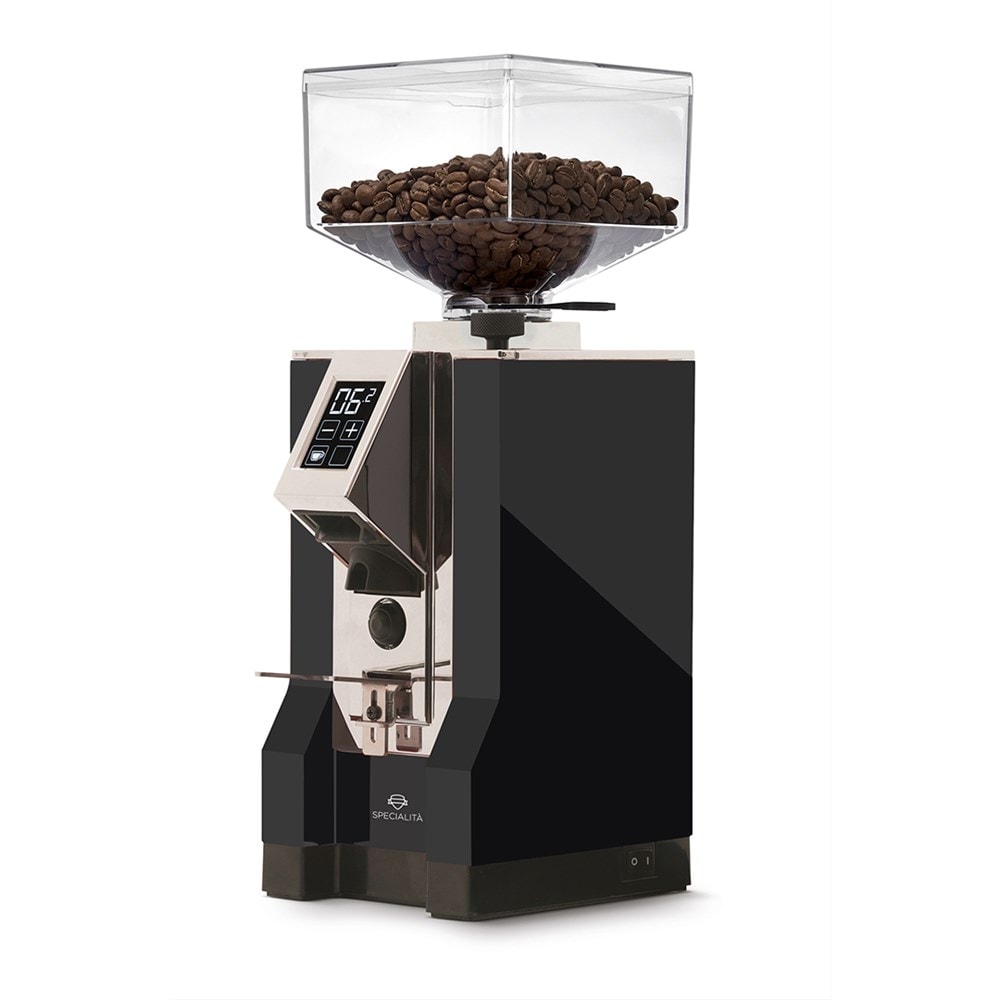
Which to buy
Choose the
Barista Touch Impress (built-in) if you…
- want the grinder in the machine, with dosing and tamping assisted by the Impress Puck System
- want step-by-step touchscreen guidance for grinding, dosing and tamping
- pull espresso only — Breville gives espresso grind settings and no filter range
Choose the
Mignon Specialita if you…
- want a separate grinder for espresso and brew — Eureka lists it as all purpose
- want stepless adjustment rather than 30 settings
- want 55 mm hardened steel flat burrs
Shop links are affiliate links: BrewMark earns a commission if you buy through one, at no extra cost to you. The verdicts were written without regard to it.
Sources: Eureka — Mignon Specialità · Breville — Barista Touch Impress · Breville — Barista Touch Impress manual
| Barista Touch Impress (built-in) | Mignon Specialita | |
|---|---|---|
| Brand | Breville | Eureka |
| Scale | Numbered dial | Rotations |
| Dial range | 1 – 30 | 0.0 rotations – 24.0 rotations |
| Burrs | Conical | Flat |
| Espresso → filter | 12 numbers | 6.5 rotations |
| Filter → coarse | 10.2 numbers | 7 rotations |
Converting a setting
If a recipe quotes a setting for one of these grinders, read across for the equivalent on the other. Rows are spaced evenly by grind size, not by dial number — on a conical burr those are not the same thing.
| Barista Touch Impress (built-in) | Mignon Specialita |
|---|---|
| 4 | 1.5 |
| 7 | 3 |
| 10 | 4 |
| 13 | 5.5 |
| 15 | 1+1 |
| 17 | 1+2 |
| 18 | 1+3 |
| 20 | 1+4 |
| 21 | 1+5 |
| 22 | 2+0 |
| 24 | 2+1 |
| 25 | 2+2 |
| 27 | 2+3 |
| Mignon Specialita | Barista Touch Impress (built-in) |
|---|---|
| 1.5 | 4 |
| 3 | 7 |
| 4 | 10 |
| 5.5 | 13 |
| 1+1 | 15 |
| 1+2 | 17 |
| 1+3 | 18 |
| 1+4 | 20 |
| 1+5 | 21 |
| 2+0 | 22 |
| 2+1 | 24 |
| 2+2 | 25 |
| 2+3 | 27 |
Side by side, by brew method
Where each grinder lands for the same brew, worked out from its own dial curve.
| Method | Barista Touch Impress (built-in) | Mignon Specialita |
|---|---|---|
| Espresso | 6 | 2.5 |
| Moka pot | 10 | 4 |
| AeroPress (short steep) | 13 | 5.5 |
| Pour over — V60 / cone | 16 | 1+1.5 |
| Siphon | 17 | 1+2 |
| Pour over — flat bottom | 17 | 1+2.5 |
| Steep and release — Clever / Switch | 18 | 1+3 |
| Drip / batch brew | 18 | 1+3 |
| Cupping | 19 | 1+3.5 |
| Chemex | 20 | 1+4 |
| French press | 22 | 1+5.5 |
| Cold brew | 25 | 2+1.5 |
The shape of each dial
Where the connectors bunch, that grinder’s dial is compressed and single steps count for more. Comparing the two shapes tells you which gives finer control, and where.
Breville Barista Touch Impress (built-in)
Eureka Mignon Specialita
Dialing in the Barista Touch Impress (built-in)
Built into an espresso machine and tuned for it, with the grind range weighted heavily toward the fine end. Perfectly capable within espresso; if you also brew filter you will find the coarse end short.
Dialing in the Mignon Specialita
A stepless espresso grinder first, everything else second. The micrometric adjustment means small movements do real work at the fine end, and the settings below should be read as starting positions rather than detents. It will grind for filter and does it competently, but you are working at the far edge of a dial designed for a different job.