
Which to buy · Every setting
Fellow Ode Gen 1 vs Turin DF64E V2
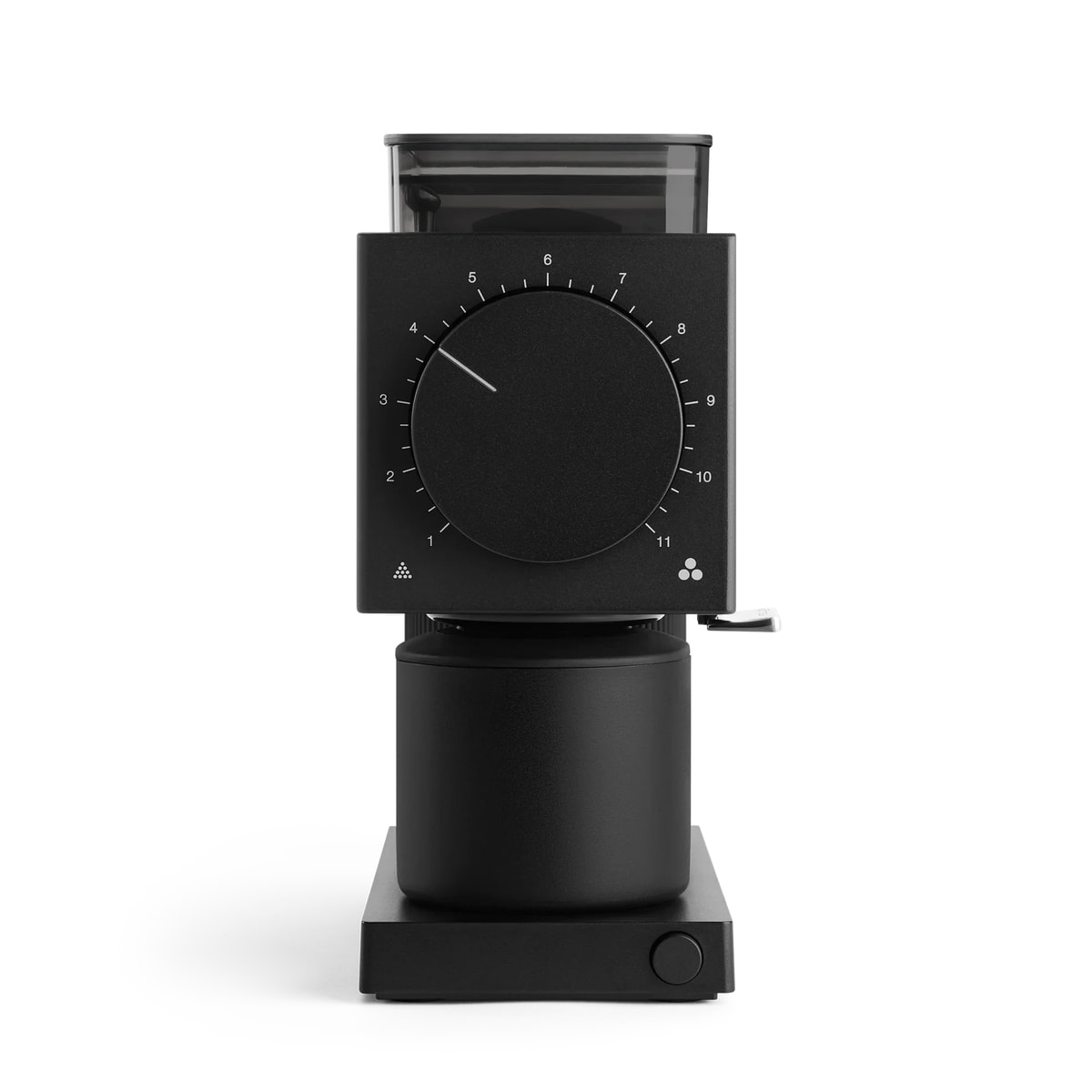
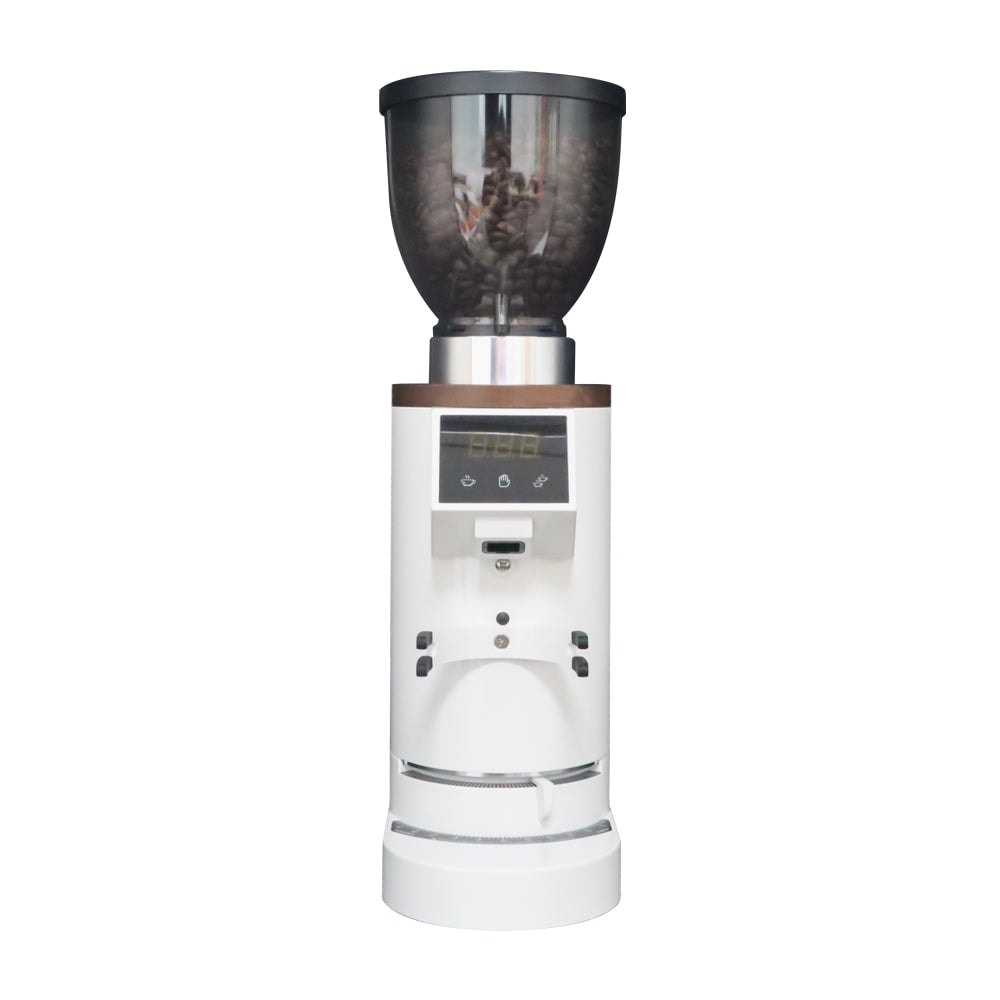
Two grinders cross-shopped at the same money. The Ode Gen 1 is numbered 1–11; the DF64E V2 is numbered 0–60.
Which to buy
Choose the
Ode Gen 1 if you…
- brew filter only — Fellow says the Ode does not grind for espresso
- want 31 fixed steps you can return to exactly
- want a grinder that stops itself when the last bean is ground
Choose the
DF64E V2 if you…
- pull espresso only — Turin recommends the DF64E for espresso only
- want programmable single and double buttons with a timer display
- mostly single-dose but sometimes want a hopper — it comes with a 225 g hopper and a bellows
Shop links are affiliate links: BrewMark earns a commission if you buy through one, at no extra cost to you. The verdicts were written without regard to it.
Neither is sold new. Fellow now sells the Ode Gen 2 in place of the original, and Turin sells the DF64 Gen 2 (2.7) in place of the DF64E. The settings on this page are for the Ode Gen 1 and the DF64E.
Sources: Fellow — Ode Gen 1 (archived) · Fellow — Ode Brew Grinder · Turin — DF64E (archived May 2023)
| Ode Gen 1 | DF64E V2 | |
|---|---|---|
| Brand | Fellow | Turin |
| Scale | Numbered dial | Numbered dial |
| Dial range | 1 – 11 | 0 – 60 |
| Burrs | Flat | Flat |
| Espresso → filter | 2.6 numbers | 23 numbers |
| Filter → coarse | 7.4 numbers | 22 numbers |
The same number means different things
Both grinders use a numbered dial, which makes it tempting to copy a number straight across. Setting 6 sits at grind index 56.7 on the Ode Gen 1 but 1.7 on the DF64E V2 — far enough apart to change the cup.
Converting a setting
If a recipe quotes a setting for one of these grinders, read across for the equivalent on the other. Rows are spaced evenly by grind size, not by dial number — on a conical burr those are not the same thing.
| Ode Gen 1 | DF64E V2 |
|---|---|
| 1 | 5 |
| 1.1 | 10 |
| 1.2 | 14.9 |
| 2.2 | 19.6 |
| 3 | 24.3 |
| 3.2 | 28.6 |
| 5 | 31.7 |
| 6.1 | 34.7 |
| 7.1 | 37.8 |
| 8.1 | 40.8 |
| 9.1 | 43.9 |
| 10 | 46.9 |
| 11 | 50 |
| DF64E V2 | Ode Gen 1 |
|---|---|
| 5 | 1 |
| 10 | 1.1 |
| 14.9 | 1.2 |
| 19.6 | 2.2 |
| 24.3 | 3 |
| 28.6 | 3.2 |
| 31.7 | 5 |
| 34.7 | 6.1 |
| 37.8 | 7.1 |
| 40.8 | 8.1 |
| 43.9 | 9.1 |
| 46.9 | 10 |
| 50 | 11 |
Side by side, by brew method
Where each grinder lands for the same brew, worked out from its own dial curve.
| Method | Ode Gen 1 | DF64E V2 |
|---|---|---|
| Espresso | 1.1 | 8 |
| Moka pot | 1.2 | 14 |
| AeroPress (short steep) | 2.2 | 19.6 |
| Pour over — V60 / cone | 3.1 | 26.9 |
| Siphon | 4 | 28.7 |
| Pour over — flat bottom | 4.1 | 29.8 |
| Steep and release — Clever / Switch | 4.2 | 30.9 |
| Drip / batch brew | 5 | 31.7 |
| Cupping | 3 | 32.4 |
| Chemex | 6.1 | 34.6 |
| French press | 8 | 39.7 |
| Cold brew | 9.2 | 45.6 |
The shape of each dial
Where the connectors bunch, that grinder’s dial is compressed and single steps count for more. Comparing the two shapes tells you which gives finer control, and where.
Fellow Ode Gen 1
Turin DF64E V2
Dialing in the Ode Gen 1
The original Ode had noticeably more fines than the Gen 2 that replaced it, which is why the Gen 2 burr upgrade became such a common retrofit. If you are running Gen 1 burrs, expect to sit slightly coarser than published Ode numbers to get the same cup.
Dialing in the DF64E V2
The DF64 platform with a different motor and control scheme, sold under the Turin badge. Grind behaviour tracks the DF64 family closely; as with the rest of that platform, the burrs fitted define the character.